
Blog
How to Attract Qualified Bidders for Asset Liquidation

TL;DR:
- Attracting qualified bidders is essential for maximizing recovery during asset liquidation, requiring internal alignment and targeted outreach. A thorough prequalification process and clear bid documentation are vital to ensure competition and reduce disqualification risks. Implementing strategic bidding and engagement tactics significantly improves participation quality and overall auction outcomes.
Attracting qualified bidders is the single most important factor in achieving competitive price realization during industrial asset liquidation. A qualified bidder is defined as a participant who meets verified financial, technical, and legal criteria relevant to the assets being sold. Without a structured approach to finding qualified bidders, asset managers risk thin competition, suppressed recovery values, and extended carrying costs. Research confirms that 3 to 5 qualified bidders per package is the minimum for a competitive field, with 5 or more optimal for high-value transactions. This guide delivers a step-by-step framework for asset managers and corporate decision-makers to build that field deliberately and efficiently.
How to attract qualified bidders: prerequisites and preparation
The most overlooked step in attracting top bidders is internal alignment before any outreach begins. Defining clear evaluation criteria upfront is the most critical and most skipped step in the entire bidder attraction process. Asset managers who skip this step often issue vague invitations that attract unqualified respondents, creating administrative burden without improving competition.
Before sending a single bid invitation, the internal team must agree on the following:
- Asset scope and condition: Document all assets with serial numbers, condition reports, and technical specifications. Ambiguity in asset descriptions drives away serious buyers.
- Budget and reserve thresholds: Establish minimum acceptable recovery values and communicate them internally so evaluation teams can assess bids consistently.
- Qualification criteria and weighting: Decide in advance how price, financial capacity, past performance, and technical capability will be weighted. Transparent weighting attracts more confident, higher-quality respondents.
- Bid invitation deadlines and communication protocols: Set firm timelines for invitation distribution, Q&A windows, and bid submission. Inconsistent communication signals disorganization and deters serious bidders.
- Qualified bidder database: Maintain a current list of vetted buyers segmented by asset class, geographic reach, and transaction history. This list is a strategic asset in its own right.
Pro Tip: Build your qualified bidder database before a liquidation event is triggered. Reactive list-building under time pressure produces incomplete outreach and missed opportunities.
The goal of this preparation phase is to reduce perceived bid risk for prospective participants. When bidders see clear criteria, firm timelines, and organized documentation, they invest the time to submit serious proposals.

How to develop bid documents that attract top bidders
The bid document is the primary communication tool between the selling organization and the market. A poorly structured document produces low-quality responses regardless of how many invitations are sent. The format chosen for the bid document matters significantly.
| Document type | Best use case | Key advantage |
|---|---|---|
| RFP (Request for Proposal) | Complex asset sales requiring methodology evaluation | Allows assessment of qualitative factors: approach, team, and execution plan |
| ITB (Invitation to Bid) | Straightforward asset packages with clear specifications | Drives price competition on well-defined scope |
| RFQ (Request for Quotation) | Commodity or surplus equipment with standard specs | Fastest turnaround, lowest administrative burden |
For complex industrial asset sales involving plant closures, processing facilities, or multi-site equipment packages, the RFP format is the correct choice. RFPs allow evaluation of qualitative factors such as the buyer’s removal methodology, timeline, and team capacity that a price-only ITB cannot capture. This distinction matters when the asset sale involves coordination requirements, environmental compliance, or phased removal schedules.
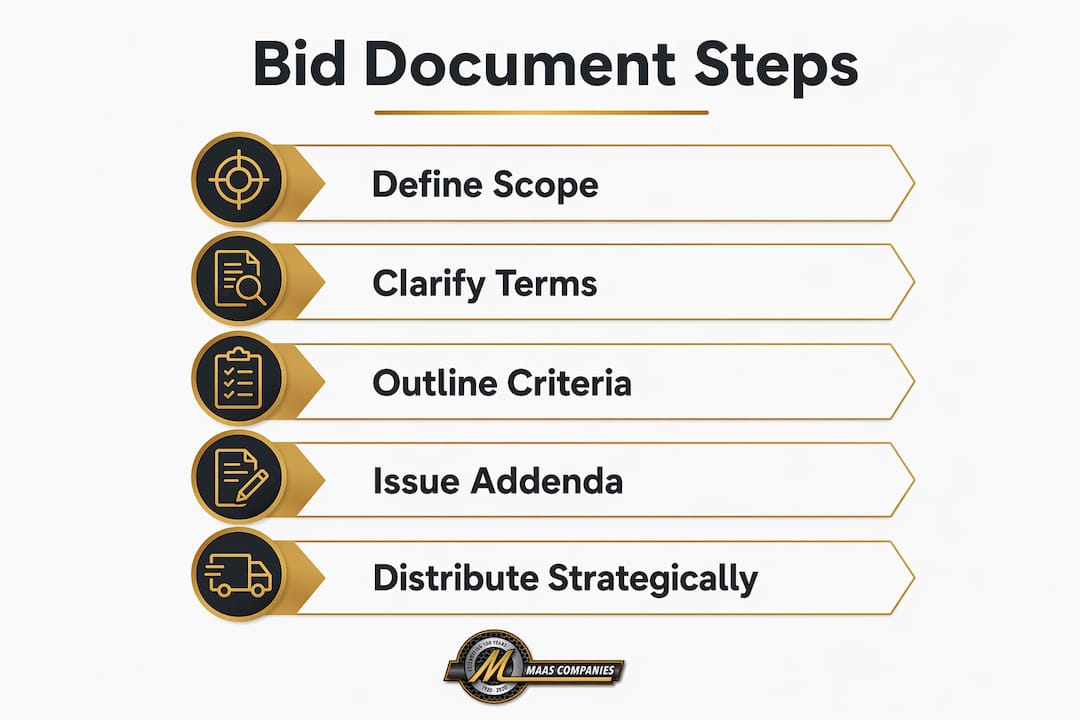
A well-structured bid document for industrial asset liquidation must include:
- Scope of work: Precise asset lists, location details, access conditions, and removal responsibilities
- Schedule: Inspection dates, bid submission deadline, award timeline, and removal completion date
- Insurance and bonding requirements: Minimum coverage levels and certificate submission requirements
- Submission format: Required documentation, pricing structure, and any mandatory forms
- Evaluation criteria: Explicit weighting of price versus qualifications versus timeline
Scope clarity in bid documents directly reduces post-award disputes and change orders. Pre-bid site visits or virtual walkthroughs serve the same function: they align bidder assumptions with actual conditions before pricing is submitted.
Pro Tip: Issue all addenda through a single centralized channel and require acknowledgment from each bidder. Unacknowledged addenda are a common source of bid protests and disqualifications.
Distribution strategy is as important as document quality. Posting bid documents on specialized industrial auction platforms, industry association networks, and targeted email campaigns to your qualified bidder database maximizes reach to the right audience. Centralized bidding platforms improve transparency, reduce miscommunication, and create audit trails that protect the integrity of the selection process.
How to prequalify bidders and manage bid invitations efficiently
Prequalification is the mechanism that separates serious buyers from speculative respondents. A structured prequalification process tiers bidders by risk profile and performance history, enabling faster award decisions and reducing the probability of default after award.
The core prequalification criteria for industrial asset buyers include:
- Financial stability: Bank references, audited financials, or bonding capacity sufficient to cover the transaction value
- Licensing and legal standing: Active business registration, relevant removal or demolition licenses, and no outstanding legal judgments
- Safety record: EMR (Experience Modification Rate) scores, OSHA recordable incident rates, and safety program documentation
- Past performance: Verified references from comparable asset purchases, including transaction size and removal complexity
- Insurance certificates: Current general liability, workers’ compensation, and any specialized coverage required by the asset type
Refusal to provide basic documentation such as safety records or financial references is a direct disqualification signal. Bidders who resist transparency at the prequalification stage present elevated risk at every subsequent stage of the transaction.
A practical tiering structure for qualified bidder management looks like this:
| Tier | Criteria | Invitation priority |
|---|---|---|
| Preferred | Verified past performance, full documentation, strong financials | First invitation, extended Q&A access |
| Approved | Meets all criteria, limited transaction history with seller | Standard invitation |
| Conditional | Partial documentation, pending verification | Invited with conditions noted |
Automation tools for bid management reduce the administrative burden of managing this process at scale. Research shows that 24% of organizations spend over 5 hours on initial bid invitation distribution alone. Purpose-built platforms handle invitation tracking, document distribution, Q&A logging, and bid receipt confirmation in a fraction of that time.
Pro Tip: Track bidder refusals by reason. If multiple qualified buyers decline due to timeline, access restrictions, or documentation gaps, that pattern reveals a fixable process problem, not a market problem.
When a qualified bidder declines an invitation, request a brief reason and document it. This feedback loop is one of the most underutilized tools for improving future bidder attraction rates. Engaging qualified bidders requires understanding why they disengage.
What strategies maximize bidder engagement during the bidding phase?
Attracting qualified bidders to the process is necessary but not sufficient. Maintaining their engagement through the bidding phase determines whether competition actually materializes. The following sequence of tactics produces the highest participation rates for industrial asset auctions.
-
Set starting bids at 20 to 30 percent of the low estimate. Low-anchor bidding strategy increases final lot values by 20% by reducing the psychological barrier to initial participation. Bidders who enter early are more likely to remain engaged through competitive escalation.
-
Schedule bid openings to generate momentum. Announce bid opening dates in advance and, where format permits, use live or webcast openings. Visibility into the competitive process motivates active bidders to submit stronger offers.
-
Maintain open Q&A windows with structured response protocols. Publish all questions and answers to all registered bidders simultaneously. This practice eliminates information asymmetry and prevents any single bidder from gaining an unfair advantage through private communication.
-
Use industry-specific marketing channels for targeted outreach. General commercial listing platforms reach broad audiences but dilute bidder quality. Specialized industrial auction platforms, trade association networks, and direct outreach to industry contacts produce higher concentrations of qualified respondents. Maascompanies uses this targeted approach across its international marketing network to reach buyers with verified capacity and intent.
-
Conduct pre-bid site visits or virtual inspections. Physical or virtual access to assets before bid submission increases bidder confidence and proposal accuracy. Bidders who have inspected assets submit more competitive and more reliable offers.
-
Confirm receipt and status with all invited bidders. A brief confirmation touchpoint midway through the bid period identifies disengaged participants early, allowing time for re-engagement or replacement outreach before the deadline closes.
For asset managers evaluating how to choose the right auction format for a specific asset class, the format itself influences bidder engagement. Absolute auctions with no reserve generate the highest participation rates but require careful internal alignment on minimum acceptable recovery.
Key takeaways
Attracting qualified bidders requires internal alignment, transparent documentation, rigorous prequalification, and targeted outreach executed in a deliberate sequence before and during the bidding phase.
| Point | Details |
|---|---|
| Define qualification criteria early | Set financial, technical, and safety thresholds before issuing any bid invitations. |
| Use RFPs for complex asset sales | RFPs capture qualitative factors that price-only formats cannot evaluate. |
| Tier your bidder pool | Segment bidders into preferred, approved, and conditional tiers to prioritize outreach and reduce risk. |
| Anchor starting bids strategically | Opening bids at 20 to 30 percent of low estimates increases final recovery values by up to 20%. |
| Automate invitation management | Purpose-built platforms reduce distribution time and create audit trails that protect process integrity. |
What experience has taught me about bidder quality
Asset managers often focus on the number of bids received rather than the quality of the bidders submitting them. That focus produces the wrong outcome. I have seen liquidation processes with fifteen respondents produce worse recovery values than processes with six, because the fifteen included too many speculative or undercapitalized participants who drove up administrative costs without driving up prices.
The discipline that separates high-recovery liquidations from average ones is the commitment to qualifications-based selection over lowest-price-only evaluation. When you evaluate bidders on financial capacity, removal capability, and past performance alongside price, you reduce the probability of post-award default, which is the single most expensive outcome in any asset liquidation.
The other pattern I consistently observe is that organizations treat each bidding cycle as a standalone event rather than a data source. Every refusal, every disqualification, and every post-award complication contains information that should feed back into the next cycle’s criteria and process design. Organizations that document and act on this feedback improve their bidder attraction rates measurably over time.
Investing in bid management technology is not optional for organizations running multiple or complex liquidations. The coordination benefits of centralized platforms extend beyond efficiency. They create the transparency and audit trail that sophisticated buyers expect and that protect the selling organization in any post-award dispute.
— Vector
How Maascompanies supports qualified bidder attraction for asset liquidation
Maascompanies brings a structured, internationally tested approach to attracting qualified bidders for complex industrial asset sales. The firm’s marketing process combines targeted outreach to verified industry buyers, rigorous prequalification screening, and comprehensive bid document preparation to maximize both bidder quality and competitive pressure.
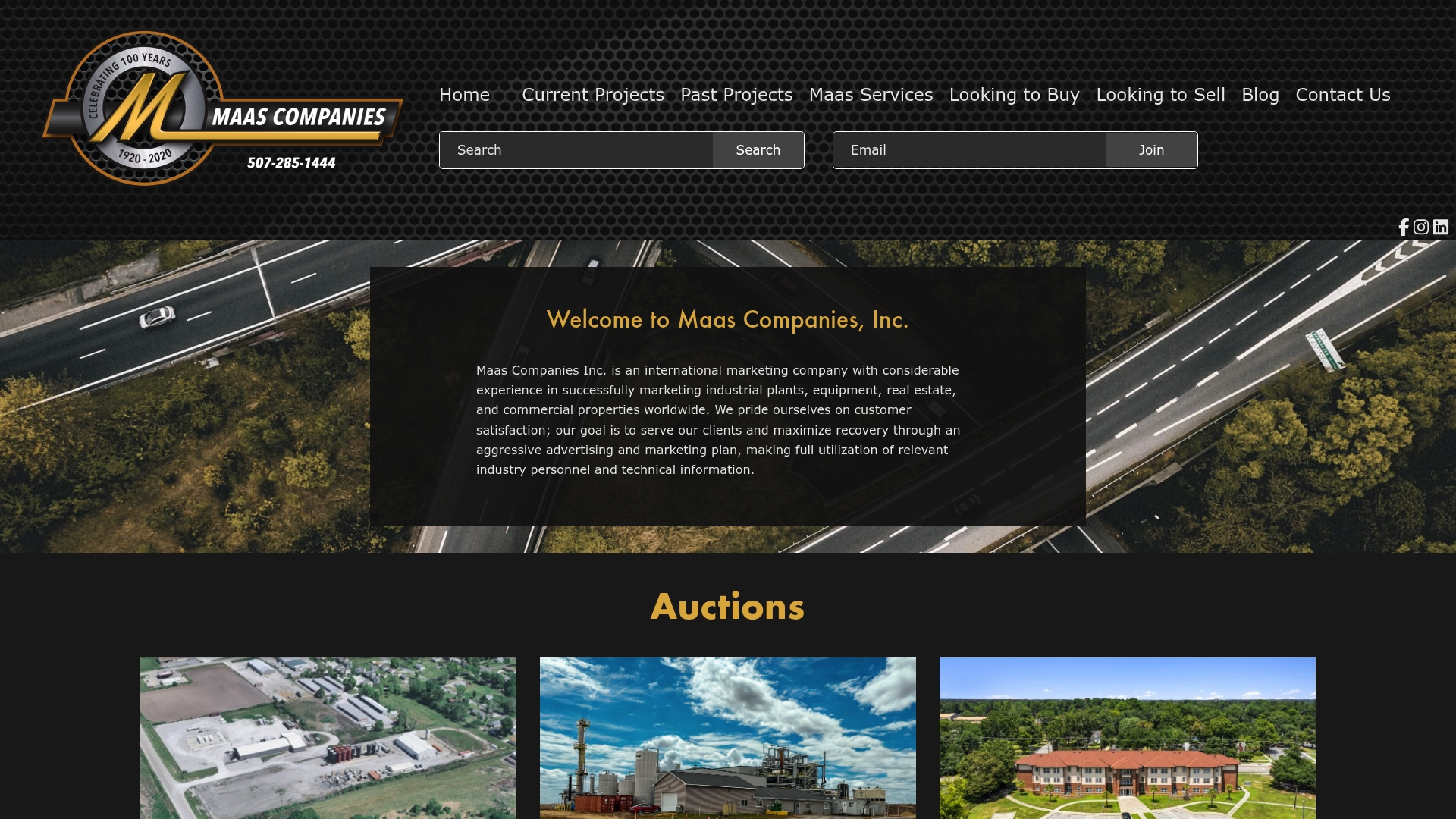
For asset managers managing plant closures, equipment surplus, or multi-site liquidations, Maascompanies provides the market reach and process discipline that internal teams rarely have the capacity to replicate. Current projects such as the biodiesel plant and oilseed processing auction illustrate the firm’s capability across large-scale, multi-asset transactions. Contact Maascompanies to discuss a tailored bidder attraction strategy for your specific assets and recovery objectives.
FAQ
What is a qualified bidder in asset liquidation?
A qualified bidder is a buyer who meets verified financial, technical, licensing, and safety criteria relevant to the assets being sold. Qualification is determined through a formal prequalification process before bid invitations are issued.
How many qualified bidders do you need for a competitive auction?
A minimum of 3 to 4 qualified bidders per asset package is required for competitive pricing, with 5 or more optimal for high-value transactions. Inviting 6 to 8 participants is often necessary to secure that number of qualified responses.
What is the best bid document format for complex industrial asset sales?
The RFP format is the most effective for complex industrial asset sales because it allows evaluation of qualitative factors such as removal methodology, team capacity, and timeline. Price-only formats like RFQs cannot capture these dimensions.
How does starting bid price affect bidder participation?
Opening bids set at 20 to 30 percent of the low estimate reduce the psychological barrier to entry and increase final lot values by up to 20%. This low-anchor strategy generates early participation that sustains competitive momentum through the bidding process.
What is the most common reason qualified bidders decline invitations?
Qualified bidders most often decline due to unclear scope, unrealistic timelines, or insufficient access to assets before bid submission. Tracking refusal reasons and addressing them systematically improves participation rates in subsequent bidding cycles.
Recommended
- How to Plan Government Asset Sales for Spring 2026 | Blog | Insights on Asset Liquidation and Auction Trends
- How Auctions Help Speed Up Industrial Asset Disposition | Blog | Insights on Asset Liquidation and Auction Trends
- How Auctions Help Speed Up Industrial Asset Disposition | Blog | Insights on Asset Liquidation and Auction Trends
- Maximize Asset Recovery: Top Real Estate Liquidation Methods | Blog | Insights on Asset Liquidation and Auction Trends