
Blog
Why buy surplus equipment? Cut costs, preserve cash, boost ESG

One automotive parts distributor saved 60% on equipment costs, recovering $1 million by switching to refurbished RF terminals and extending their asset lifecycle by four years. For CFOs and asset managers navigating restructuring or operational efficiency initiatives, that figure challenges a common assumption: that new equipment is always the safer, smarter choice. The reality is more nuanced. Surplus equipment, when sourced and evaluated correctly, can preserve capital, support ESG goals, and reduce carrying costs without sacrificing operational performance. This article presents the financial evidence, practical comparisons, and strategic guidance you need to make informed surplus procurement decisions.
Table of Contents
- The financial case: Why surplus equipment matters
- Surplus vs. new: When buying used makes (and doesn’t make) sense
- Surplus equipment for IT and manufacturing: Resale, redundancy, and supply chain mitigation
- Environmental benefits and ESG drivers: The sustainability angle
- How to source surplus equipment with confidence
- Frequently asked questions
Key Takeaways
| Point | Details |
|---|---|
| Cost savings potential | Surplus equipment purchases can reduce expenses by up to 60%, freeing cash for company priorities. |
| Strategic flexibility | Buying surplus extends equipment lifecycles, preserves cash, and funds modernization without platform changes. |
| ESG and sustainability | Surplus buying directly supports ESG targets, cuts e-waste, and improves corporate reputation. |
| When new wins | Automation-heavy and compliance-driven operations often require newer models to ensure reliability and regulatory success. |
| Resale value surges | Refurbished IT equipment now commands significantly higher resale prices, making surplus buying even more attractive. |
The financial case: Why surplus equipment matters
The cost argument for surplus equipment is not theoretical. It is documented across corporate and government programs with measurable outcomes. When organizations treat surplus as a strategic procurement channel rather than a fallback option, the financial results are significant.
A Michigan state technology program achieved $1.6M in cumulative savings through surplus reutilization, averaging $406,000 per year. That level of recovery does not happen by accident. It requires a structured approach to asset identification, valuation, and redistribution.
| Procurement approach | Typical cost vs. new | Lifecycle impact | Capital freed |
|---|---|---|---|
| New equipment | 100% of list price | Standard OEM lifecycle | Minimal |
| Refurbished/surplus | 30-60% of list price | Extended 2-5 years | Significant |
| Auction-sourced surplus | 20-50% of list price | Variable, condition-dependent | High |
The table above illustrates why surplus procurement is increasingly part of capital planning conversations. Beyond the purchase price, consider the downstream effect: delayed capital expenditures allow organizations to redirect cash toward modernization, workforce development, or debt reduction.
Key financial advantages of surplus procurement include:
- Lower acquisition cost: Surplus equipment typically costs 40-70% less than equivalent new units.
- Lifecycle extension: Refurbished assets can add two to five years of productive use before replacement is necessary.
- Reduced depreciation exposure: Buying at a lower basis reduces the financial impact of accelerated depreciation.
- Faster deployment: Surplus equipment is often available immediately, avoiding the lead times associated with new orders.
Understanding whether to auction equipment versus store it is a related decision that directly affects carrying costs and recovery value. Similarly, organizations managing plant closures should evaluate how industrial plant liquidation can maximize recovery value rather than leaving assets idle.
“Surplus reutilization is not just a cost-cutting tactic. It is a capital efficiency strategy that frees resources for higher-priority investments.”
Surplus vs. new: When buying used makes (and doesn’t make) sense
Not every operational environment is suited for surplus equipment. The decision requires an honest assessment of your processes, compliance obligations, and technology trajectory. Surplus works best in specific scenarios, and recognizing those scenarios is what separates strategic buyers from reactive ones.
New equipment is generally preferred for automation-heavy processes, compliance-sensitive environments, and operations facing workforce shortages where reliability is non-negotiable. Surplus, by contrast, performs well in stable, known processes where the technology platform is mature and replacement parts are readily available.
Scenarios where surplus is the right call:
- Restructuring or downsizing: When capital preservation is the priority and production volumes are being reduced, surplus equipment avoids unnecessary new investment.
- Platform continuity: If your operation runs on a specific equipment platform, sourcing surplus units maintains compatibility without forcing a system-wide upgrade.
- Redundancy and backup capacity: Surplus equipment is cost-effective for maintaining spare capacity without committing to full new-unit pricing.
- Bridge procurement: When new equipment has long lead times, surplus fills the gap and keeps production running.
Scenarios where new equipment is the better choice:
- Processes requiring the latest automation or robotics integration.
- Regulatory environments with strict equipment certification requirements.
- Operations undergoing rapid process transformation where legacy equipment would become obsolete quickly.
- Situations where warranty coverage and OEM support are operationally critical.
Pro Tip: Before committing to any surplus purchase, document your operational requirements in detail, including throughput targets, compliance standards, and integration needs. This assessment prevents costly mismatches and supports a defensible procurement decision.
When evaluating sourcing channels, understanding how to choose the right auction for your equipment type is essential. You should also review the pros and cons of different auction channels to align your sourcing strategy with your recovery or acquisition goals.
Surplus equipment for IT and manufacturing: Resale, redundancy, and supply chain mitigation
In IT and manufacturing environments, surplus equipment serves purposes beyond simple cost reduction. It enables operational continuity, supply chain resilience, and asset value recovery in ways that new procurement cannot always match.
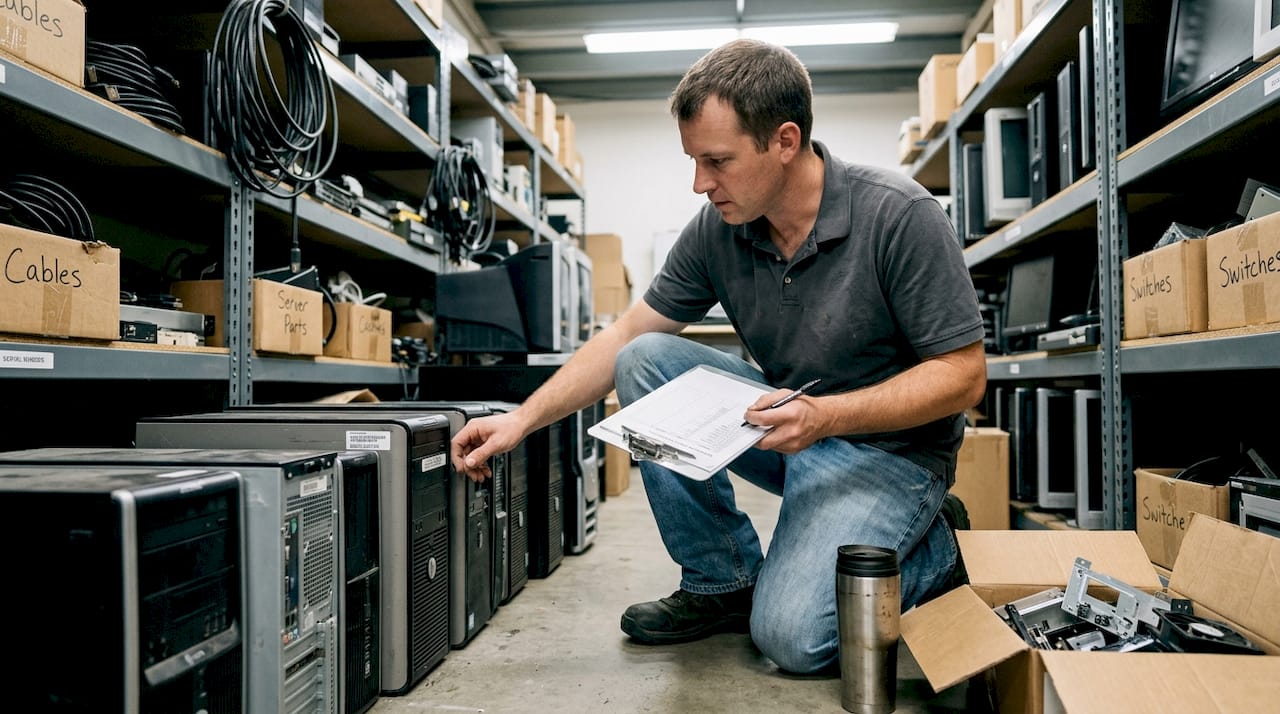
On the IT side, refurbished laptop resale values increased 37.3% year-over-year in 2024, while desktops rose 14.8%. These figures matter for asset managers because they affect both the buy-side and sell-side economics of IT asset disposition (ITAD). Acquiring refurbished assets at lower cost while retaining strong resale value creates a favorable total cost of ownership profile.
For enterprise IT teams, refurbished network equipment enables redundancy and spare parts availability without forcing a platform change. This is particularly valuable when supply chain disruptions extend lead times for new hardware by months.
Key advantages in IT and manufacturing surplus:
- Platform continuity: Surplus units match existing infrastructure, avoiding costly integration work.
- Supply chain buffer: Stockpiling critical surplus components reduces exposure to vendor delays and component shortages.
- Resale optionality: Well-maintained surplus assets retain market value, providing a recovery path if operational needs change.
- Faster deployment cycles: Surplus equipment on hand eliminates procurement lead times during urgent capacity needs.
Pro Tip: Time your surplus purchases to align with end-of-lease cycles or corporate liquidation events. These windows typically offer the best combination of asset condition, availability, and pricing.
For organizations looking to dispose of surplus assets, understanding why auctions are effective for asset disposition helps maximize recovery. Proper preparation also matters: avoiding delays in auction prep directly affects final sale outcomes.
Environmental benefits and ESG drivers: The sustainability angle
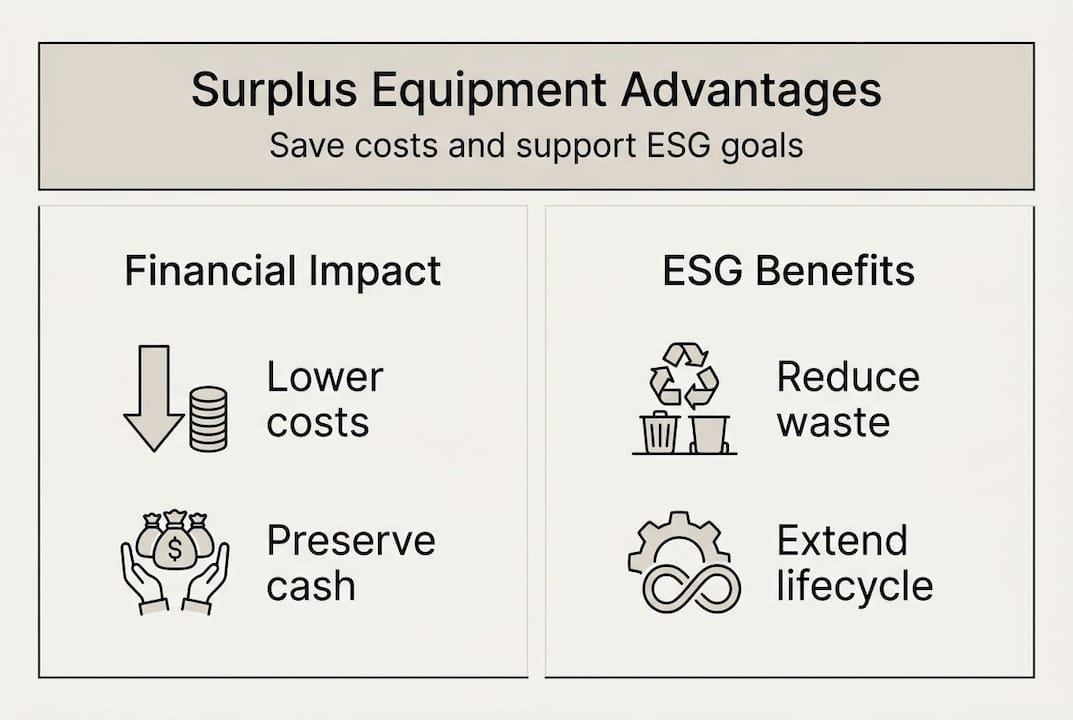
Surplus equipment procurement is increasingly recognized as a measurable ESG (environmental, social, and governance) action, not just a financial one. For organizations with sustainability commitments or stakeholder reporting obligations, this dimension adds strategic weight to the surplus decision.
Reusing equipment reduces the demand for new manufacturing, which in turn lowers energy consumption, raw material extraction, and carbon emissions associated with production. It also diverts assets from landfills, directly addressing the growing problem of electronic waste.
“34% of organizations now cite ESG and e-waste reduction as a key factor in IT asset disposition decisions, up from 19% in prior years.”
That increase reflects a genuine shift in how corporate decision-makers frame surplus and ITAD programs. What was once a purely financial exercise is now part of sustainability reporting, regulatory compliance, and corporate reputation management.
The ESG benefits of surplus procurement include:
- E-waste reduction: Extending asset lifecycles keeps equipment out of waste streams longer.
- Lower carbon footprint: Reuse avoids the emissions associated with manufacturing new equipment.
- Regulatory alignment: Many jurisdictions are tightening e-waste disposal regulations; surplus reuse supports compliance.
- Stakeholder confidence: Documented surplus and reuse programs strengthen ESG disclosures and investor relations narratives.
Organizations managing plant closures or large-scale asset disposals can align liquidation strategies with ESG goals. Reviewing how industrial plant liquidation supports recovery value while minimizing environmental impact is a practical starting point for integrating sustainability into asset management decisions.
How to source surplus equipment with confidence
The financial and strategic case for surplus equipment is clear. The next step is connecting that knowledge to real sourcing opportunities and trusted disposal channels.

Maas Companies Inc. works with CFOs, asset managers, and special asset teams to market and liquidate industrial equipment, plants, and commercial properties worldwide. Whether you are looking to acquire surplus process plant equipment or need a structured plan for selling surplus equipment from a restructuring or closure, our team brings the market reach and technical expertise to maximize your outcome. We combine aggressive marketing with industry-specific knowledge to ensure your assets reach qualified buyers and your recovery targets are met.
Frequently asked questions
What are the main financial benefits of buying surplus equipment?
Surplus equipment can deliver cost savings of up to 60% versus new, while also delaying capital expenditures and freeing cash for higher-priority operational or strategic investments.
How does surplus buying impact ESG and sustainability goals?
Surplus procurement directly supports ESG by reducing e-waste and lowering manufacturing demand; 34% of organizations now cite this as a factor in IT asset disposition decisions, up from 19% previously.
Is surplus equipment suitable for automation-heavy or compliance-driven operations?
New equipment is generally preferred for automation-intensive and compliance-sensitive environments; surplus is best suited for stable, mature operational processes where platform continuity is the priority.
How do resale values for refurbished IT equipment compare to new?
Refurbished IT resale values have strengthened considerably, with laptops up 37.3% and desktops up 14.8% year-over-year in 2024, improving the total cost of ownership case for refurbished procurement.
Recommended
- Sell or Store? How to Decide on Surplus Equipment | Blog | Insights on Asset Liquidation and Auction Trends
- How Auctions Help Speed Up Industrial Asset Disposition | Blog | Insights on Asset Liquidation and Auction Trends
- How Auctions Help Speed Up Industrial Asset Disposition | Blog | Insights on Asset Liquidation and Auction Trends
- How to Choose the Right Auction for Industrial Equipment | Blog | Insights on Asset Liquidation and Auction Trends