

Blog
Auction Versus Private Treaty Explained for Asset Sellers

TL;DR:
- Auction sales involve public bidding that becomes binding immediately upon hammer fall, with faster settlement times. Private treaty sales are negotiated privately, offering more buyer protections but taking longer to complete. The choice depends on asset type, market conditions, and urgency, with auctions favoring competitive, urgent sales and private treaties suited for complex, confidential deals.
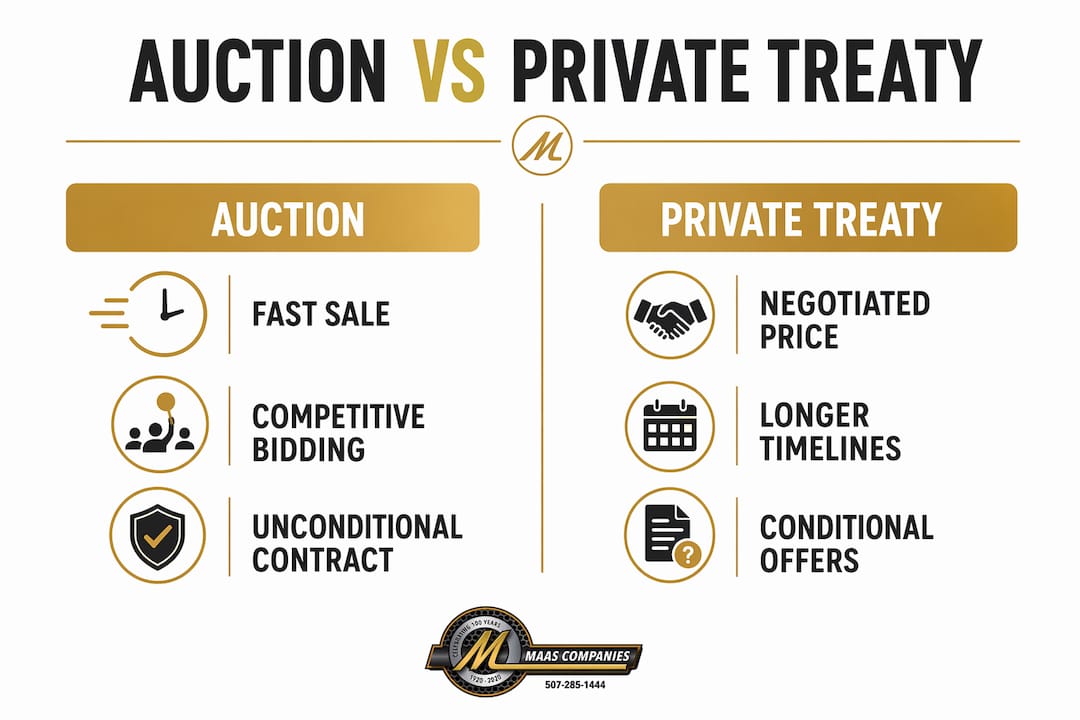
An auction is a public, competitive bidding process where a sale becomes legally binding the moment the hammer falls. A private treaty sale is a negotiated transaction where the seller sets an asking price and accepts offers privately, with terms agreed between parties before any contract is signed. Understanding auction versus private treaty explained in practical terms matters most when the stakes are high: plant closures, equipment liquidation, or the disposal of specialized industrial assets where the wrong method costs real money. Analysis of 14,651 property sales in Q2 2026 shows auctions average 4.39% above asking price while private treaty sales close 0.40% below. That gap is not trivial when the asset is a biodiesel plant or a manufacturing facility.
What is an auction sale and how does the auction process work?
An auction sale operates on a fixed date, with all qualified buyers competing openly in real time. The seller sets a reserve price. Bidding proceeds publicly until no higher offer is made, at which point the hammer falls and the contract is immediately binding on both parties.
The auction process follows a defined sequence:
- Marketing period. The seller advertises the asset, typically for two to four weeks before the auction date. Buyers conduct inspections and due diligence during this window.
- Pre-auction preparation. Buyers must complete all financing approvals and building or equipment inspections before auction day. Buyer readiness for auction requires all finance and inspections done in advance. There is no contingency period after the hammer falls.
- Auction day. Bidding opens and proceeds competitively. The highest bid above the reserve wins.
- Contract execution. The winning bidder signs an unconditional contract immediately. A deposit, typically 10% of the sale price, is due on the day.
- Settlement. Auction settlement completes in 20–28 days, compared to 8–12 weeks for private treaty.
The speed advantage is real. Auction sales average 19 days on market versus 26 days for private treaty. For sellers managing carrying costs on idle industrial equipment or vacant facilities, that difference directly affects the bottom line.
The primary risks are equally concrete. Auction fever can lead bidders to exceed their financial limits, which creates overpayment risk for buyers and price distortions for sellers. If bidding fails to reach the reserve, the property “passes in,” and the seller’s negotiating position weakens because the highest bid becomes public knowledge.
Pro Tip: Set the reserve price based on a current, independent valuation rather than the marketing guide price. Auction guides are often deliberately set below market value to stimulate bidding, which can distort your expectations on final recovery.
What is a private treaty sale and how does it differ?
A private treaty sale is defined by negotiation rather than competition. The seller lists the asset at an asking price, buyers submit offers, and both parties negotiate terms privately until they reach agreement. The industry also refers to this method as a negotiated sale or orderly negotiated sale, particularly in industrial asset contexts.
The key advantages of private treaty include:
- Contingency protection. Buyers can make offers subject to finance approval, building or equipment inspection, and other conditions. Private treaty sales favor buyers needing these protections, offering more risk mitigation than auctions.
- Cooling-off periods. Most jurisdictions allow a 2–5 day cooling-off period after signing, giving buyers a final window to withdraw without full penalty.
- Confidentiality. Negotiations happen privately. The sale price, terms, and buyer identity are not publicly disclosed unless required by law.
- Flexibility for complex assets. Private treaty allows negotiation flexibility for specialized or complex assets where strict auction timelines are impractical. This is particularly relevant for industrial equipment with unique specifications or decommissioning requirements.
- Control over timing. The seller is not locked to a fixed auction date and can accept, reject, or counter offers at any point.
The risks are different but equally significant. Private treaty sales average 26 days on market and settle in 8–12 weeks. That extended timeline increases carrying costs. There is also no competitive tension to drive the price up. Without multiple bidders, the seller relies entirely on the negotiating process to achieve fair value.
Pro Tip: In private treaty sales without a licensed agent, the seller assumes full legal responsibility for disclosures and contract validity. Seller legal duties in unrepresented transactions carry real risk of delays and disputes. Engage qualified legal counsel before listing.
How do auction and private treaty compare on price, speed, and risk?
The financial and operational differences between the two methods are measurable. The table below summarizes the key metrics.
| Metric | Auction | Private Treaty |
|---|---|---|
| Average sale price vs. asking | +4.39% above | -0.40% below |
| Average days on market | 19 days | 26 days |
| Settlement timeline | 20–28 days | 8–12 weeks |
| Contract binding moment | Hammer fall, unconditional | Upon signed agreement, with conditions |
| Buyer protections | None after hammer falls | Finance, inspection contingencies, cooling-off |
| Best market conditions | Strong demand, multiple buyers | Softer markets, complex or specialized assets |
The 4.79 percentage point gap in sale price is significant. On a $2,000,000 asset, that difference represents nearly $96,000 in gross recovery. However, the auction premium is not guaranteed. It depends on genuine buyer competition on the day.
“Each sale method fits distinct market conditions rather than one being inherently better. Auction suits competitive, urgent markets; private treaty suits controlled, flexible sales.” — Elite Agent property specialists
The hidden risks on both sides deserve equal attention. Auction fever can push a buyer past their limit, which may cause post-auction financing failures and collapsed sales. On the private treaty side, delayed vendor statements and unresolved contingencies can stall settlement for months. For organizations managing asset disposals tied to plant closures or restructuring deadlines, either failure scenario carries serious operational consequences. Understanding auction speed advantages for industrial assets helps sellers match the method to their timeline requirements.
What factors should sellers and buyers consider when choosing?
The right method depends on the specific asset, the market, and the seller’s priorities. No single method is universally superior.

Market conditions are the primary driver. A strong seller’s market with multiple motivated buyers favors auction. Competitive tension produces the price premium. A softer market with fewer qualified buyers favors private treaty, where the seller can negotiate terms and hold out for the right offer without the public failure signal of a passed-in auction.
Seller urgency aligns directly with auction timelines. If carrying costs are accumulating on idle equipment or a vacant facility, the 19-day average market time and 20–28 day settlement window of an auction reduces exposure. Private treaty is the better fit when the seller has time to negotiate and wants control over terms, buyer selection, or confidentiality.
Buyer readiness differs sharply between methods. Auction buyers must arrive fully prepared: financing confirmed, inspections complete, legal review done. Private treaty buyers have the flexibility to make conditional offers and complete due diligence after signing. For buyers of specialized industrial equipment, that post-offer inspection window is often critical to confirming asset condition and operational status.
Asset type matters significantly in industrial and commercial contexts. Standardized equipment with broad market appeal, such as forklifts, generators, or processing lines, tends to attract competitive auction bidding. Highly specialized assets, such as custom-built processing systems or integrated plant components, often benefit from private treaty because the buyer pool is small and the transaction requires detailed negotiation. Maascompanies addresses this distinction directly in its plant liquidation strategies for manufacturing asset sales.
Confidentiality requirements also influence the choice. Organizations managing sensitive restructuring or regulatory-driven disposals may prefer private treaty to avoid public disclosure of asset values, buyer identities, or sale terms. Auction results are public by nature.
How does the legal framework differ between auction and private treaty?
The legal structure of each method creates fundamentally different obligations for buyers and sellers. Understanding these differences before committing to a sale method prevents costly errors.
- Auction contract timing. The contract becomes legally binding the moment the hammer falls. There is no cooling-off period, no finance contingency, and no right of withdrawal. The buyer is committed unconditionally. Auction contracts are immediate and unconditional upon hammer fall, with the deposit due promptly.
- Private treaty contract timing. The contract is signed after negotiation and typically includes conditions. Finance approval windows of 14–21 days and cooling-off periods of 2–5 days are standard. These protections benefit buyers but extend the transaction timeline.
- Due diligence windows. Auction buyers must complete all due diligence before bidding. Private treaty buyers can conduct inspections and legal reviews after an offer is accepted, subject to the agreed conditions.
- Disclosure obligations. In private treaty sales, the seller must provide all required disclosure documents before or at contract signing. Late vendor statements are a common cause of settlement delays. In unrepresented private treaty transactions, seller legal duties include full responsibility for disclosure accuracy and contract validity.
- Agent and broker role. Licensed agents and brokers manage disclosure compliance, contract preparation, and negotiation in both methods. Their absence in private treaty transactions significantly increases legal risk for both parties.
Pro Tip: Engage a conveyancer or legal counsel before the marketing period begins in either method. Early legal preparation prevents the most common causes of delayed or failed settlements, particularly in complex industrial asset transactions.
Key Takeaways
Auction delivers faster settlement and higher average sale prices in competitive markets, while private treaty provides negotiation control, buyer protections, and flexibility for complex or specialized assets.
| Point | Details |
|---|---|
| Auction price premium | Auctions average 4.39% above asking price versus 0.40% below for private treaty. |
| Speed advantage | Auction market time averages 19 days; private treaty averages 26 days with 8–12 week settlement. |
| Legal binding moment | Auction contracts bind unconditionally at hammer fall; private treaty allows conditions and cooling-off. |
| Asset type fit | Standardized assets suit auction; specialized industrial equipment often benefits from private treaty negotiation. |
| Market condition matters | Strong buyer demand favors auction; softer markets or confidential disposals favor private treaty. |
What I’ve learned from watching sellers choose the wrong method
The most common mistake I see in industrial asset liquidation is selecting a sale method based on habit rather than analysis. Sellers default to auction because it feels decisive, or to private treaty because it feels safer. Neither instinct is reliable without examining the specific asset and market conditions first.
The auction price premium is real, but it is conditional. It requires genuine competition among qualified buyers on a single day. For a specialized piece of processing equipment with three potential buyers in the country, an auction without that competition produces a passed-in result and a weakened negotiating position. Private treaty, in that scenario, is not the cautious choice. It is the correct one.
The other misconception I encounter regularly is that private treaty is slower by nature. It is slower on average, but a well-run negotiated sale with a motivated buyer and prepared legal documentation can close faster than a poorly organized auction. The method does not determine the outcome. The preparation and execution do.
Organizations managing plant closures or restructuring-driven disposals in 2026 face a market with selective buyer pools and tighter financing conditions. That environment rewards sellers who match the method to the asset, not those who apply a blanket approach. Maascompanies’ experience in maximizing recovery value for lenders and special asset managers reflects exactly this discipline.
— Vector
How Maascompanies applies both methods to industrial asset recovery
Maascompanies structures every asset disposal around the method that maximizes recovery for the specific asset, market, and timeline. That means auction for assets with broad buyer appeal and time-sensitive liquidation requirements, and orderly negotiated sales for specialized equipment where buyer pools are narrow and transaction terms require detailed alignment.

Current projects include a biodiesel plant and oilseed processing facility auction and an orderly negotiated sale of a Clayton Industries Steam Generator, demonstrating both methods in active deployment. Sellers managing plant closures, excess inventory, or capital recovery needs can explore Maascompanies’ services to determine which method fits their asset and recovery objectives.
FAQ
What is the main difference between auction and private treaty?
An auction is a public, competitive bidding process where the contract binds unconditionally at hammer fall. A private treaty sale is a private negotiation where the buyer and seller agree on terms before signing, with contingencies and cooling-off periods available.
Which method gets a higher sale price?
Auctions average 4.39% above asking price compared to 0.40% below for private treaty, based on analysis of 14,651 sales in Q2 2026. The auction premium depends on genuine buyer competition on the day.
How long does each method take to complete?
Auction sales average 19 days on market with settlement in 20–28 days. Private treaty sales average 26 days on market with settlement typically taking 8–12 weeks.
Can buyers add conditions in an auction?
No. Auction contracts are unconditional from the moment the hammer falls. Buyers must complete all financing and inspections before bidding. Private treaty allows finance, inspection, and other contingencies after an offer is accepted.
Which method suits industrial equipment sales better?
Specialized industrial equipment with a limited buyer pool typically suits private treaty, where terms can be negotiated in detail. Standardized equipment with broad market appeal benefits from the competitive tension and speed of an auction.
Recommended
- How Auctions Help Speed Up Industrial Asset Disposition | Blog | Insights on Asset Liquidation and Auction Trends
- How Auctions Help Speed Up Industrial Asset Disposition | Blog | Insights on Asset Liquidation and Auction Trends
- Commercial Real Estate Auctions Speed Up Sales | Blog | Insights on Asset Liquidation and Auction Trends
- Auction strategies for small businesses: Maximize asset recovery | Blog | Insights on Asset Liquidation and Auction Trends