
Blog
Equipment liquidation explained: maximizing asset recovery

TL;DR:
- Proper planning, channel selection, and timing can increase equipment recovery to 40-50% of net book value.
- A structured six-phase process—identification to close-out—maximizes asset value and recovery.
- Early engagement and professional preparation significantly boost liquidation returns and speed.
Most CFOs assume that liquidating industrial equipment means accepting severe losses, but recovery of 28-35% of net book value is typical, and strategic execution can push that figure to 40-50%. The gap between those two outcomes is not luck. It is planning, channel selection, and timing. This guide is built for CFOs and asset managers who need to move surplus or distressed assets efficiently without leaving recoverable value on the table. We will walk through what equipment liquidation actually means, which methods work best in different scenarios, a six-phase process framework, and the pitfalls that consistently erode recovery rates.
Table of Contents
- What is equipment liquidation?
- Key methodologies for asset liquidation
- The equipment liquidation process: step-by-step framework
- Special cases and common pitfalls
- Why most CFOs underestimate liquidation: a fresh perspective
- Connect with professional equipment liquidation solutions
- Frequently asked questions
Key Takeaways
| Point | Details |
|---|---|
| Strategic liquidation boosts recovery | Planned, orderly asset sales can raise returns up to 40-50% of book value. |
| Choose the right channel | Auctions suit urgent sales; private sales yield higher returns for valuable assets. |
| Preparation increases value | Detailed cleaning, documentation, and professional services can raise final sale price by up to 15%. |
| Address special cases proactively | Proper handling of distressed, multi-owner, or hazardous assets prevents compliance issues and value loss. |
| Time is money | Idle assets depreciate quickly—acting strategically preserves asset value and maximizes cash recovery. |
What is equipment liquidation?
Equipment liquidation is the strategic process of converting surplus, end-of-life, or distressed industrial assets into cash. It is not simply discarding what is no longer needed. Done correctly, it is a structured financial exercise that balances speed, market reach, and asset condition to maximize cash recovery.
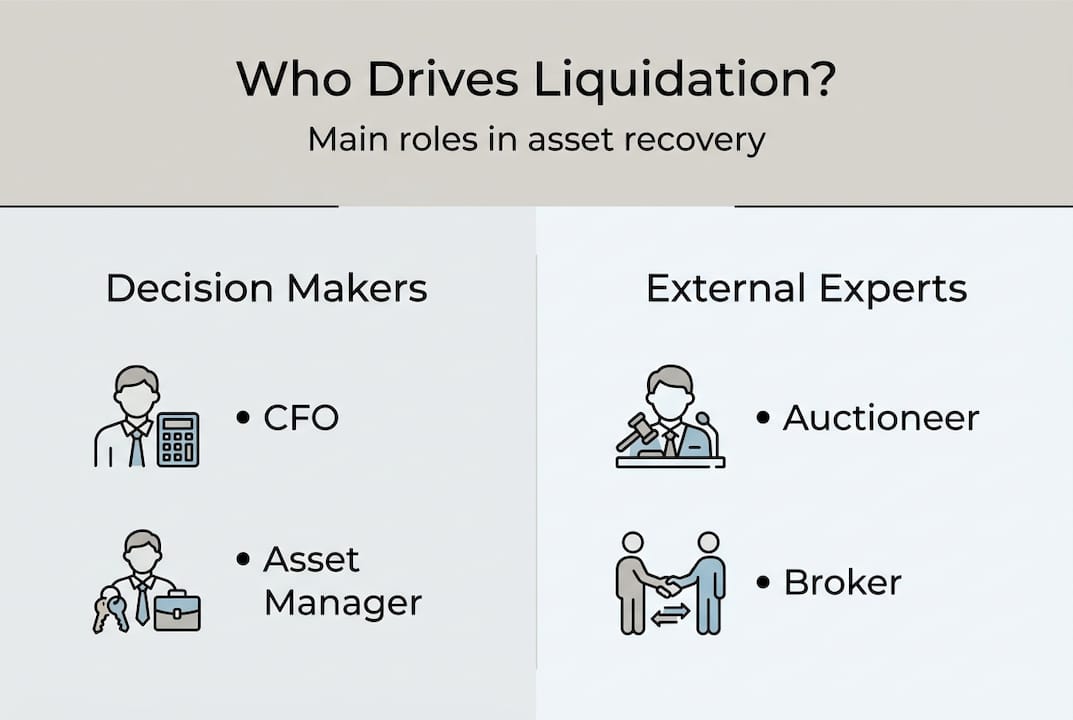
The parties most commonly driving this process include CFOs managing balance sheet cleanup, asset managers handling portfolio transitions, plant managers dealing with excess inventory after a production shift, and lenders or special asset managers working through distressed situations. Each of these stakeholders has different priorities, but they share one goal: recover as much value as possible from assets that are no longer generating revenue.
According to industry data on recovery rates, a typical industrial equipment liquidation yields between 28% and 35% of net book value. With best practices, including proper preparation, channel selection, and professional marketing, that range can climb to 40-50%. That difference, expressed in dollar terms on a $5 million asset portfolio, is $600,000 to $750,000 in additional recovered cash.
Equipment subject to liquidation generally falls into several categories:
- Surplus assets: Equipment no longer needed due to operational changes, technology upgrades, or facility consolidations
- End-of-life machinery: Assets that have reached the end of their useful life but still carry residual market value
- Distressed assets: Equipment tied to financial distress, bankruptcy proceedings, or urgent cash needs
- Excess inventory: Overstock of capital equipment resulting from overestimated production needs
For a broader view of how liquidation fits into your overall asset strategy, the liquidation sales guide on our site provides additional context on structuring the process from start to finish.
One critical point: liquidation is time-sensitive. Idle assets accumulate carrying costs, including storage, insurance, and depreciation, that erode net recovery with each passing month. Treating liquidation as a low-priority back-office task is one of the most expensive mistakes an organization can make.
Key methodologies for asset liquidation
Not all liquidation channels are equal. Choosing the wrong method for a given asset type or urgency level is a reliable way to leave money behind. The main channels available to industrial asset managers are auctions, private sales, online marketplaces, brokerage arrangements, and scrap or salvage disposal.
Here is how the primary channels compare:
| Channel | Typical timeline | Recovery rate | Best use case |
|---|---|---|---|
| Auction | 45-90 days | Moderate to high | Urgent sales, multi-buyer competition |
| Private sale | 90-180+ days | Highest | High-value assets over $100,000 |
| Online marketplace | 30-60 days | Moderate | Mid-range, widely known equipment |
| Brokerage | 60-120 days | Moderate to high | Specialized or niche machinery |
| Scrap/salvage | 7-30 days | Lowest | Obsolete or non-functional assets |
Auction and private sale timelines reflect the trade-off between speed and recovery. Auctions create competitive bidding environments that can drive prices up, but the compressed timeline means buyers have less time to arrange financing or conduct thorough inspections. Private sales take longer but allow for negotiated pricing that better reflects true market value, particularly for high-value or specialized equipment.
Key considerations when selecting a channel:
- Asset value: Equipment valued above $100,000 typically benefits from private sale or brokerage, where negotiation is possible
- Urgency: If carrying costs are high or a facility must be vacated by a fixed date, auctions offer the fastest path to close
- Asset condition: Well-maintained, documented equipment performs better in auctions; incomplete or poorly documented assets may fare better through negotiated channels
- Market depth: Highly specialized machinery may require a brokerage network to reach the right buyers
For guidance on selecting the right auction format, the auction channel selection article covers the decision factors in detail. If you are managing a broader surplus portfolio, the surplus equipment selling guide addresses multi-asset strategies.
Pro Tip: Before engaging any channel, segment your asset inventory by value tier and urgency. High-value, non-urgent assets go to private sale or brokerage. Mid-value, moderate-urgency assets go to auction. Low-value or obsolete assets go straight to scrap. This segmentation alone can meaningfully improve overall portfolio recovery.
The equipment liquidation process: step-by-step framework
A structured approach to liquidation consistently outperforms reactive, ad hoc efforts. The following six-phase framework reflects best practices in asset disposition and applies to both single-asset sales and full facility wind-downs.
- Identification: Catalog all assets subject to liquidation. This includes serial numbers, model numbers, condition ratings, and location. A complete inventory is the foundation of every subsequent decision.
- Evaluation: Assess each asset’s market value, remaining useful life, and condition. This step separates assets worth investing preparation resources into from those that should go directly to scrap.
- Segregation: Group assets by value tier, urgency, and asset type. This alignment drives channel selection and marketing strategy.
- Valuation: Engage a qualified appraiser for high-value assets. Accurate appraisals prevent underpricing and provide defensible figures for financial reporting.
- Disposition: Execute the selected channel strategy. This includes marketing, buyer outreach, and managing the sale process through to close.
- Close-out: Handle logistics, title transfer, removal coordination, and final financial reconciliation.
Here is how each phase contributes to overall recovery:
| Phase | Key action | Impact on recovery |
|---|---|---|
| Identification | Complete asset inventory | Prevents missed assets |
| Evaluation | Condition and value assessment | Informs channel fit |
| Segregation | Asset grouping by value/urgency | Optimizes channel selection |
| Valuation | Professional appraisal | Prevents underpricing |
| Disposition | Marketing and sale execution | Drives buyer competition |
| Close-out | Logistics and reconciliation | Protects net proceeds |
For a detailed selling checklist covering documentation and preparation steps, our resource library has a practical reference. The plant liquidation strategies article also covers facility-scale applications of this framework.
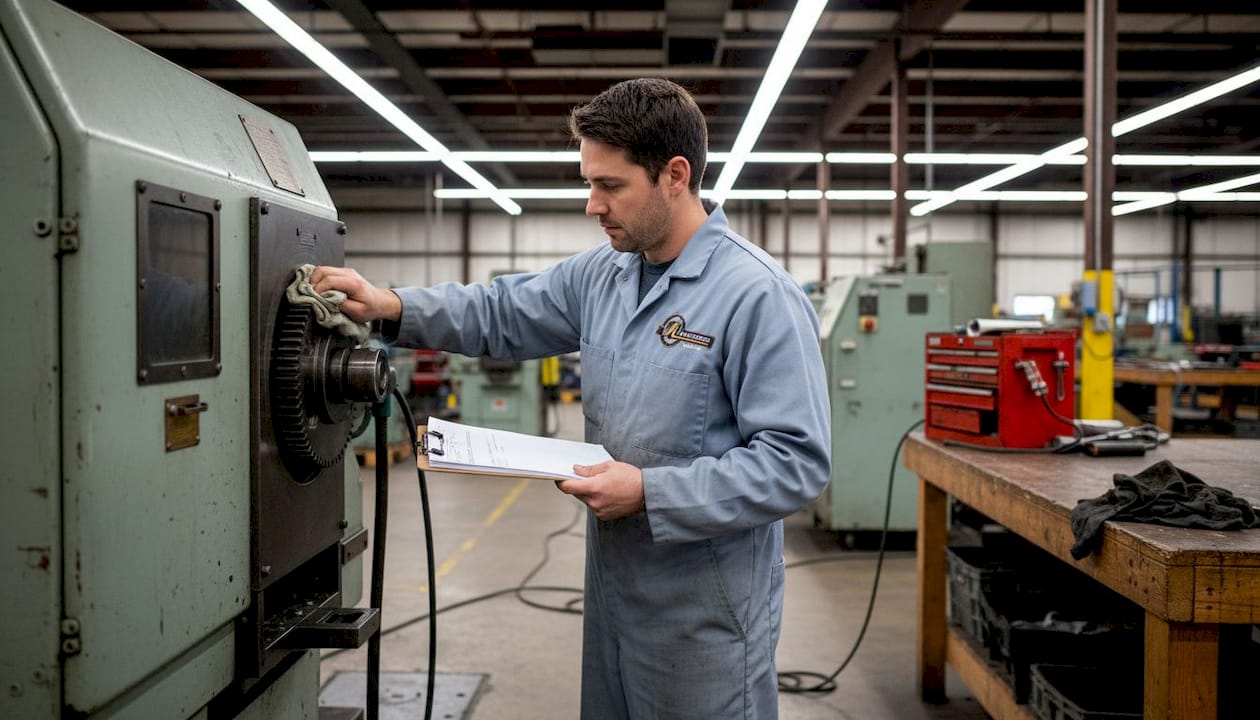
Preparation quality matters more than most asset managers expect. Cleaning equipment, gathering maintenance records, taking professional photographs, and verifying operational status can boost recovery by 10-15%. Professional liquidation services consistently yield more than $20 for every $1 invested in preparation and marketing. For additional context on step-by-step asset management, external frameworks can complement your internal process.
Pro Tip: Do not skip the valuation phase to save time. An unappraised asset sold at auction without a reserve price is a common source of significant recovery loss.
Special cases and common pitfalls
A structured process is the baseline. But certain scenarios introduce complexity that requires additional expertise and careful planning.
Forced liquidation in distressed or bankruptcy situations is the highest-risk scenario. Distressed asset valuations show that forced liquidation typically yields between 25% and 75% of asset value, a wide range driven by timeline pressure, legal constraints, and buyer awareness. Orderly liquidation, where the seller retains control of timing and channel, consistently outperforms forced sales. When bankruptcy is involved, coordinating with legal counsel early is essential to preserve as many options as possible.
For lenders and special asset managers navigating these situations, the recovery in bankruptcy article outlines specific strategies for protecting recovery value under legal constraints.
Common pitfalls that erode recovery across all scenarios include:
- Incomplete asset documentation: Missing manuals, maintenance logs, or title records reduce buyer confidence and suppress bids
- Poor asset condition at sale: Equipment that has not been cleaned or inspected signals neglect and justifies lower offers
- Compliance gaps: Hazardous materials, environmental liabilities, or data security issues on equipment with embedded storage can delay or derail sales
- Time erosion: Every month an asset sits idle, carrying costs accumulate and market value declines
- Multi-owner verification failures: Assets subject to liens, leases, or shared ownership require clear chain-of-control documentation before sale
“Professional preparation and documentation are not optional expenses in a liquidation. They are the most reliable lever for increasing net recovery, often returning multiples of their cost in higher sale prices.”
International logistics add another layer of complexity. Cross-border sales require export compliance, customs documentation, and currency considerations. For organizations managing facility transitions with international asset pools, the facility liquidation support resource addresses these scenarios. Effective inventory control practices during the pre-sale phase also reduce the risk of asset discrepancies that can complicate close-out.
Why most CFOs underestimate liquidation: a fresh perspective
The conventional view of equipment liquidation treats it as a loss-management exercise: accept what the market offers, close the books, and move on. That mindset is costly. Liquidation, approached as a structured ROI project, produces materially different outcomes than liquidation approached as a necessary inconvenience.
Most CFOs do not segment assets before choosing a channel. They do not run an ROI calculation on preparation costs versus expected recovery lift. They do not apply a decision tree that matches asset value and urgency to the optimal disposition method. These are not complex steps. They are simply not standard practice in most organizations.
The hardest lesson we have seen play out repeatedly is this: time is the single greatest enemy of liquidation value. An asset that could recover 45% of book value in month one may recover 30% in month four. Idle assets do not hold value. They lose it, steadily, through depreciation, market shifts, and buyer perception of neglect.
The plant recovery tips we recommend consistently emphasize early engagement, structured segmentation, and channel discipline. CFOs who treat liquidation as a strategic financial project, not a reactive cleanup task, recover more cash and close faster.
Connect with professional equipment liquidation solutions
Understanding the process is the first step. Executing it with precision, speed, and market reach is where professional expertise makes a measurable difference in your final recovery figures.
Maas Companies Inc. brings decades of international experience in marketing industrial plants, equipment, and commercial properties to clients who need maximum recovery from their assets. Whether you need auction services, private brokerage, or a full orderly sale strategy, our team connects you to the right buyers through an aggressive, targeted marketing plan. Explore our asset liquidation services to see the full range of options, review a completed orderly sale example, or go directly to our sell industrial equipment page to start a conversation with our team.
Frequently asked questions
How much cash can typically be recovered through equipment liquidation?
Typical recovery is 28-35% of net book value, and with best practices including proper preparation and channel selection, that figure can reach 40-50%.
Which channels work best for urgent asset sales?
Auctions are the fastest option, typically closing within 45-90 days, though they may yield less than private sales for high-value or specialized equipment.
What are the steps in the equipment liquidation process?
The six-phase process covers inventory identification, evaluation, asset segregation, professional valuation, disposition through the selected channel, and final close-out including logistics and financial reconciliation.
How does forced liquidation in bankruptcy affect recovery rates?
Forced liquidation typically yields between 25% and 75% of asset value, with outcomes heavily influenced by timeline pressure, legal constraints, and how early professional advisors are engaged.
Why is professional preparation important in equipment liquidation?
Thorough preparation, including cleaning, documentation, and photography, can boost recovery by 10-15%, and professional liquidation services consistently return more than $20 for every $1 invested.
Recommended
- Liquidation sales explained: Maximize asset recovery | Blog | Insights on Asset Liquidation and Auction Trends
- How Industrial Plant Liquidation Maximizes Recovery Value for Lenders | Blog | Insights on Asset Liquidation and Auction Trends
- Maximize Asset Recovery: Top Real Estate Liquidation Methods | Blog | Insights on Asset Liquidation and Auction Trends
- Plant liquidation strategies: maximize recovery in 2026 | Blog | Insights on Asset Liquidation and Auction Trends
- Strategie per ottimizzare la gestione degli inventari: riduzione degli sprechi e massimizzazione dell’efficienza
- Costs of Disposal Meaning I Price & Accountants