
Blog
Industrial Asset Sale Process: Maximize Recovery in 2026

TL;DR:
- The industrial asset sale process is highly complex, requiring thorough preparation and strategic execution to maximize value. Proper documentation, timing, repositioning, and buyer targeting are crucial to avoid deal failures and ensure optimal recovery. Engaging experienced advisors and starting preparation at least 12 months in advance significantly improves the likelihood of a successful, profitable sale.
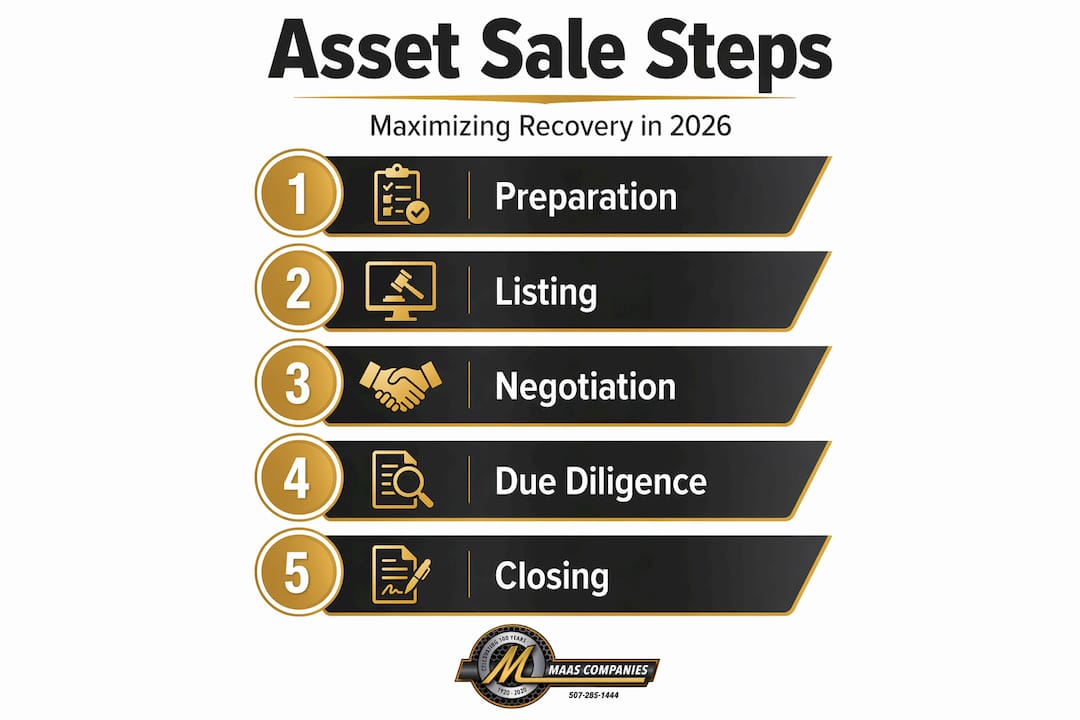
The industrial asset sale process is one of the most technically demanding transactions a corporate decision-maker will oversee. Whether the trigger is a plant closure, balance sheet restructuring, or a portfolio divestment, the stakes are high and the margin for error is low. Deals regularly stall or close below their potential value because sellers underestimate the preparation required, mismanage buyer communications, or overlook structural issues that surface during due diligence. This guide walks through the full process with the specificity that financial professionals need to protect deal value from start to finish.
Table of Contents
- Key takeaways
- Preparing for the industrial asset sale process
- Executing the sale: from listing to LOI
- Verification, closing, and transition
- Common pitfalls in the asset sale process
- What I’ve learned from complex industrial asset transactions
- How Maascompanies supports your industrial asset sale
- FAQ
Key takeaways
| Point | Details |
|---|---|
| Preparation drives price | A structured pre-sale clean-up can increase final sale price by 20% to 30% for industrial and manufacturing assets. |
| Timeline is longer than expected | Plan for 18 to 24 months from decision to close, including 12 months of preparation before listing. |
| Working capital peg is high-risk | Failure to negotiate the working capital peg at the LOI stage can cost $500K to $1.5M on a $20M deal. |
| Asset vs. stock structure matters | Sale structure affects after-tax proceeds significantly; sellers may net 10 to 20% more in a stock sale at higher transaction values. |
| Right buyer pool expands recovery | Repositioning assets for broader industrial appeal generates bidding competition and measurably higher recovery. |
Preparing for the industrial asset sale process
No phase determines final sale value more directly than preparation. Yet this is where most sellers cut corners, driven by urgency or a false assumption that the market will find the asset’s worth regardless. It will not. Buyers price risk, and anything undocumented, unresolved, or unclear becomes a discount.
The steps in selling industrial assets begin months before any buyer ever sees a listing. A 30 to 90-day clean-up can increase the final sale price of manufacturing businesses by 20% to 30%. That is not a rounding error. It is the direct result of reducing perceived risk and presenting a transaction-ready asset.
The core preparation tasks fall into several categories:
- Asset documentation and industrial asset appraisal. Every piece of equipment, real property, and intellectual property must be inventoried, described, and appraised. Industrial asset valuation requires certified appraisers who understand replacement cost, market comparables, and income-producing capacity. Gaps in documentation signal risk to buyers and suppress offers.
- Financial record cleanup. This includes preparing recasted financials that normalize for owner-specific expenses, one-time items, and non-recurring costs. Quality of earnings reports should be initiated early. Buyers and their lenders will scrutinize three to five years of financial history.
- SOP documentation and owner dependency reduction. Documenting SOPs improves valuation by 0.25x to 0.75x, while unresolved owner dependency can reduce the transaction multiple by 0.5x to 1.5x. Operational knowledge locked in a single person’s head is a liability from a buyer’s perspective.
- Legal and environmental clearance. Pending litigation, unresolved environmental assessments, lease irregularities, and title defects must be addressed before going to market. Discovering these during due diligence is a common deal-killer.
| Preparation Task | Typical Timeline | Valuation Impact |
|---|---|---|
| SOP documentation | 3 to 6 months | +0.25x to +0.75x multiple |
| Owner dependency removal | 12 to 18 months | +0.5x to +1.5x multiple |
| Financial recast and quality of earnings | 2 to 4 months | Supports full asking price |
| Environmental and legal clearance | 3 to 12 months | Prevents discount or deal failure |
Pro Tip: Start the pre-sale preparation process at least 12 months before your intended listing date. Sellers who compress this phase almost always leave money on the table or face buyer re-trades during due diligence.
For a detailed preparation checklist, the pre-sale equipment checklist from Maascompanies covers documentation and readiness steps specific to industrial operations.
Executing the sale: from listing to LOI
With preparation complete, execution begins. The full process typically spans 18 to 24 months from initial decision to close, with the listing-to-close phase running 6 to 9 months for most industrial transactions. Sellers who treat this as a short-cycle process routinely run out of negotiating leverage.
The execution phase of how to sell industrial assets involves these sequenced steps:
- Define the target buyer profile. Strategic buyers, private equity groups, and asset-focused investors each have different diligence priorities and pricing logic. Identify which buyer type produces the best outcome for your specific asset, then build a marketing list accordingly.
- Reposition the asset for broader appeal. Repositioning industrial assets — for example, framing a cold storage facility as an infrastructure-rich industrial site — can widen the buyer pool and generate genuine bidding competition rather than a single-offer scenario.
- Launch industrial asset marketing. This includes a confidential information memorandum, targeted outreach, and where appropriate, a formal auction process. Industrial asset auction formats create deadline pressure that typically improves pricing outcomes.
- Manage buyer meetings and indications of interest. Qualify buyers before sharing sensitive financial data. Require signed NDAs and track engagement levels to identify serious parties early.
- Negotiate the Letter of Intent. The LOI is not just a price indication. It is where the working capital peg, exclusivity terms, asset allocation, and seller financing provisions should be addressed. Failing to negotiate the working capital peg at this stage can result in unexpected losses of $500,000 to $1.5 million on a $20 million deal.
- Grant exclusivity. Buyers typically require 60 to 90 days of exclusivity to complete due diligence. Use this period actively. Prepare your data room, keep key staff briefed, and monitor diligence progress closely.
| Negotiation Term | Seller Priority | Buyer Priority |
|---|---|---|
| Working capital peg | Seasonal high baseline | Normalized trailing average |
| Asset vs. stock sale | Stock sale (tax efficiency) | Asset sale (liability protection) |
| Seller financing | Minimize or eliminate | Prefer seller participation |
| Exclusivity period | Shorter (30 to 45 days) | Longer (60 to 90 days) |
Pro Tip: Never treat the LOI as a formality. Every ambiguous term in the LOI becomes a negotiation point that favors the buyer during due diligence. Get specifics on the working capital target, price adjustment mechanisms, and exclusivity conditions before signing.
Strategic evaluation before listing, including identifying the right buyer profiles and submarket demand, is key to creating real competition rather than merely testing the market at the expense of deal momentum.
Verification, closing, and transition
The closing phase of the industrial asset sale process carries execution risks that are often underestimated. Most of the visible work is done, but the details that remain carry real financial and legal consequences.
Finalizing due diligence reports is the first priority. Industrial asset sales carry specific requirements in environmental and product liability assessments that go beyond standard M&A diligence. Quality of earnings reports, Phase I and Phase II environmental assessments, and product liability reviews should all be completed and reconciled before the purchase agreement is finalized.

Sale structure requires a clear decision by this stage. Asset sales typically result in double taxation for C corporations, with proceeds taxed at both the corporate and individual level. Stock sales offer sellers better after-tax outcomes and often net 10 to 20% more after taxes, though buyers accept more liability exposure in return. Work with transaction tax counsel early to model both structures.
Additional closing-phase priorities include:
- Working capital settlement. The final working capital figure at closing is compared against the negotiated peg. Shortfalls are deducted from seller proceeds; surpluses are paid to the seller. Disputes here are common and expensive.
- Escrow arrangements. Indemnification escrows typically hold 10% to 15% of deal value for 12 to 24 months post-close. Sellers should negotiate the escrow amount, duration, and release conditions in the purchase agreement.
- Employee considerations. Employees do not automatically transfer in an asset sale. Employment terminates at closing, and the buyer rehires at their discretion. Sellers are responsible for WARN Act compliance and severance obligations as applicable.
- Transition planning. A transition services agreement (TSA) is common in industrial property sales where the buyer needs seller cooperation for operational continuity during a specified handoff period.
The final 30 days before closing are where deals most often develop complications. Sellers who have prepared a clean data room, engaged proactive transaction counsel, and resolved known liabilities before the exclusivity period will close faster and with fewer re-trades.
Pro Tip: Negotiate the working capital peg using a trailing 12-month monthly average that accounts for seasonal inventory and receivable fluctuations. A single period snapshot almost always disadvantages the seller.
Common pitfalls in the asset sale process
Understanding where transactions break down is as important as knowing the correct steps. The following are the most frequently observed failure points across industrial and manufacturing asset dispositions:
- Incomplete asset and financial documentation. Buyers encountering gaps in records assume the worst. Managing the technical data dump during due diligence is one of the primary reasons deals fail in what practitioners call the “valley of death.”
- Underestimating the timeline. Sellers who plan for a 6-month process and face an 18-month reality run into cash flow pressure, management fatigue, and diluted negotiating positions.
- Working capital peg mismanagement. This is one of the most consistent sources of post-LOI value erosion. Sellers who do not understand their own working capital patterns cannot defend a favorable peg.
- Poor buyer exclusivity management. Granting exclusivity to an unqualified buyer or losing competitive tension before the LOI is signed are both recoverable. Granting exclusivity and then mismanaging buyer communications during diligence is not.
- Ignoring environmental and legal liabilities. Known liabilities that are not disclosed and remediated before listing will surface during due diligence. When they do, they become price reduction levers for the buyer.
- Failure to document tribal knowledge. Operational knowledge that exists only in employees’ heads and is never formalized into SOPs leaves buyers with perceived continuity risk, which directly reduces the multiple they are willing to pay.
- Targeting the wrong buyer pool. Selling industrial equipment or a full plant to a narrow buyer list limits competition. Broadening appeal through strategic repositioning and targeted industrial asset marketing is how sellers generate multiple offers rather than a take-it-or-leave-it scenario.
A well-executed process of asset divestment is not immune to problems. But sellers who prepare thoroughly, engage qualified advisors, and maintain discipline through the execution phase resolve most of these issues before they become deal-threatening.
What I’ve learned from complex industrial asset transactions
I’ve worked on enough industrial asset transactions to say with confidence that the difference between a clean close and a protracted negotiation almost always comes down to what happened in the six months before listing, not during it.
Sellers consistently overestimate how much the asset will “sell itself.” An operational plant, a biodiesel facility, or a grain handling complex has real value, but that value is only realized if the right buyers are reached, the financials hold up under scrutiny, and the structural terms are negotiated before the buyer has leverage. Once you’re in exclusivity, the buyer controls the pace.
The working capital peg is the detail I’ve seen cost sellers the most money. On a $20 million deal, a poorly defined peg can shift $1 million or more toward the buyer at settlement. Most sellers don’t model this until it’s too late.
My take is also that repositioning is consistently underused. Selling a specialized processing facility strictly as what it was built for limits your buyer pool to industry-specific operators. Framing it as a high-utility industrial site with infrastructure, power capacity, and zoning flexibility opens the transaction to a much wider set of acquirers. That competition is what drives price.
Preparation is not optional. It is the work that converts a distressed or routine disposition into a competitive transaction. Sellers who treat it that way recover more.
— Vector
How Maascompanies supports your industrial asset sale
Maascompanies brings international reach and deep operational knowledge to every stage of the industrial asset sale process, from initial valuation to final closing.
Whether you are managing a full plant closure, divesting surplus equipment, or executing a structured asset auction, Maascompanies develops a targeted marketing plan that reaches qualified buyers across relevant industries and geographies. The approach is not a standard listing. It includes industrial asset appraisal, buyer identification, repositioning strategy, and an aggressive outreach program designed to generate real competition. For sellers managing complex dispositions, the current biodiesel and processing facility auction illustrates the scope of transactions Maascompanies handles. If you are ready to move forward, explore selling industrial assets with a team that prioritizes maximum recovery and process discipline.
FAQ
How long does the industrial asset sale process typically take?
The full industrial asset sale process typically spans 18 to 24 months from initial decision to close, with 12 months allocated to preparation and 6 to 9 months for the active listing and closing phase.
What is the working capital peg and why does it matter?
The working capital peg is a negotiated baseline for net working capital delivered at closing. A poorly defined peg can result in a financial loss of $500,000 to $1.5 million on a $20 million transaction, making it one of the most consequential terms in the LOI.
What is the difference between an asset sale and a stock sale for industrial transactions?
In an asset sale, the buyer acquires specific assets and liabilities, gaining depreciation benefits but leaving the seller exposed to double taxation in C corporations. A stock sale typically nets sellers 10 to 20% more after taxes but transfers more liability to the buyer.
What happens to employees in an industrial asset sale?
Employees do not automatically transfer in an asset sale. Employment terminates at closing, and the buyer rehires at their discretion. Sellers remain responsible for WARN Act compliance and applicable severance obligations before the transaction closes.
How does industrial asset marketing affect final sale price?
Targeted industrial asset marketing that reaches the right buyer profiles and repositions assets for broader appeal generates competitive bidding. A competitive process with multiple qualified buyers is the most reliable mechanism for achieving maximum recovery in any industrial asset disposition.
Recommended
- How Industrial Plant Liquidation Maximizes Recovery Value for Lenders | Blog | Insights on Asset Liquidation and Auction Trends
- Plant liquidation strategies: maximize recovery in 2026 | Blog | Insights on Asset Liquidation and Auction Trends
- How Auctions Help Speed Up Industrial Asset Disposition | Blog | Insights on Asset Liquidation and Auction Trends
- How Auctions Help Speed Up Industrial Asset Disposition | Blog | Insights on Asset Liquidation and Auction Trends