
Blog
Real estate auctions: Fast liquidation for industrial assets
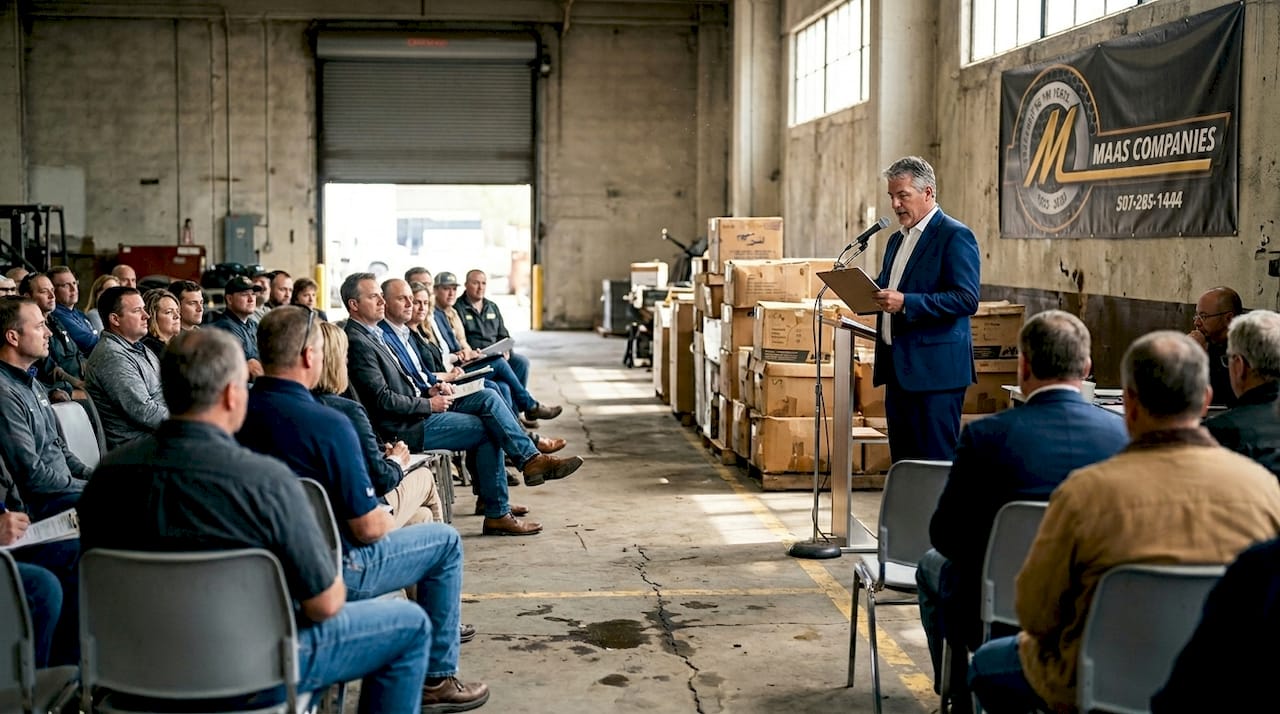
Real estate auctions are far more than a last resort for foreclosed homes. For investors and asset managers handling distressed industrial properties, auctions represent a deliberate, strategic tool for achieving fast, transparent liquidation at competitive prices. Selling distressed properties to the highest bidder through a structured public process removes the uncertainty of prolonged negotiations and open-ended listing periods. This article covers how real estate auctions work, the formats most relevant to industrial and distressed assets, the mechanics of bidding and closing, and the strategies that maximize recovery value for sellers and buyers alike.
Table of Contents
- What is a real estate auction?
- Types of real estate auctions for industrial and distressed properties
- The auction process: Mechanics, due diligence, and bidding
- Strategic considerations: Maximizing value from industrial auctions
- Fresh perspective: Going beyond traditional real estate sales
- Take the next step with expert auction support
- Frequently asked questions
Key Takeaways
| Point | Details |
|---|---|
| Auctions enable fast liquidation | Real estate auctions provide a rapid, transparent route for selling industrial assets, especially in distressed scenarios. |
| Understand auction formats | Choosing between absolute, reserve, minimum bid, or foreclosure auctions impacts sale certainty and price. |
| Due diligence is essential | Thorough research on title, environmental risks, and property value protects buyers and maximizes returns. |
| Value recovery benchmarks | Industrial properties typically sell at auction for 20-50% below market, depending on asset type and format. |
| Strategic use leads to better outcomes | Partnering with expert auctioneers and applying proven valuation formulas helps optimize results for sellers and investors. |
What is a real estate auction?
A real estate auction is a public sale to the highest bidder, commonly applied to distressed assets including foreclosures, bank-owned (REO) properties, and surplus industrial facilities. Unlike a traditional listing where price discovery happens slowly through offers and counteroffers, an auction compresses that process into a defined event with a fixed timeline and transparent rules.
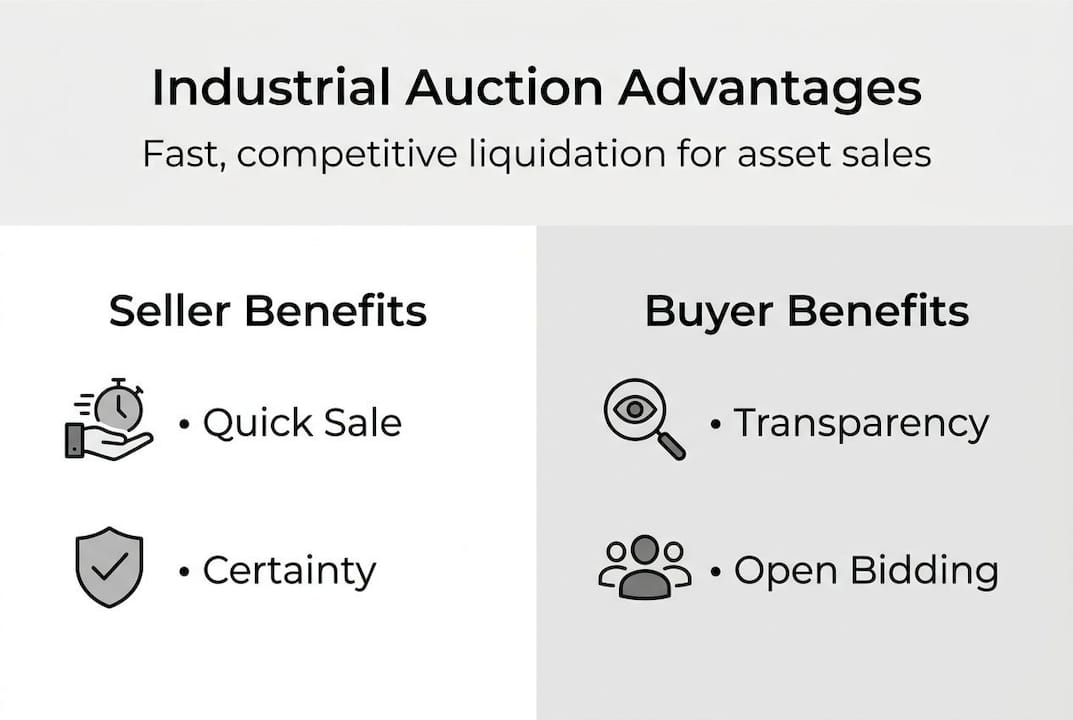
The core appeal is certainty. Sellers know the property will transact on a specific date. Buyers know the rules are equal for all participants. There are no back-channel negotiations, no preferred buyers, and no ambiguity about terms.
Auctions are used across a wide range of scenarios:
- Distressed sales: Properties with financial, legal, or physical complications that make traditional marketing difficult
- REO liquidations: Bank-owned assets that lenders need to remove from their balance sheets efficiently
- Surplus property dispositions: Industrial facilities, manufacturing plants, or commercial real estate no longer needed by a corporation or government entity
- Court-ordered sales: Properties subject to bankruptcy proceedings or estate settlements requiring a documented, arms-length transaction
The auction benefits for sellers include speed, reduced carrying costs, and a competitive bidding environment that can drive prices above initial expectations when demand is present. For buyers, auctions provide access to assets that rarely appear through conventional channels.
“Auctions create a level playing field where price is determined by real market demand, not by negotiating leverage.”
Platforms for conducting auctions range from traditional in-person courthouse steps and live auction events to fully online platforms that attract national and international bidders. This expanded reach is particularly valuable for specialized industrial asset recovery, where the buyer pool is narrower and geographic targeting matters.
The fundamental distinction from traditional brokerage is finality. When the gavel falls, the transaction is effectively complete, subject only to closing formalities. That certainty has significant value for asset managers operating under time pressure or regulatory constraints.
Types of real estate auctions for industrial and distressed properties
Not all auctions operate the same way. Understanding the format is critical before committing to a strategy, because the format directly affects the price outcome, seller protection, and buyer participation.
Key auction types include absolute, reserve, minimum bid, foreclosure, and bank-owned formats. Each carries distinct implications:
| Auction type | Seller protection | Price certainty | Best for |
|---|---|---|---|
| Absolute | None | High | Motivated sellers, surplus assets |
| Reserve | Moderate | Moderate | Distressed but valuable properties |
| Minimum bid | High | Moderate | Lender-controlled REO assets |
| Foreclosure | Court-set | Variable | Defaulted mortgages |
| REO/Bank-owned | Lender-set | Moderate | Post-foreclosure bank assets |
Absolute auctions guarantee a sale regardless of the final price. This format generates the strongest buyer interest because participants know the property will sell. For industrial asset disposition, absolute auctions are effective when the seller’s priority is speed and certainty over maximum price.
Reserve auctions allow the seller to set a confidential minimum price. If bidding does not reach that threshold, the seller can decline the highest offer. This format balances competitive bidding with seller protection.
Minimum bid auctions publish the floor price, which attracts serious buyers while protecting the seller from below-threshold outcomes.
Industrial properties have specific considerations that standard residential auction formats do not address. Environmental liabilities, zoning restrictions, equipment included in the sale, and utility infrastructure all require specialized marketing and buyer qualification. Working with auctioneers for industrial sales who understand these complexities, such as firms with experience in manufacturing plant dispositions, is not optional. It is essential.
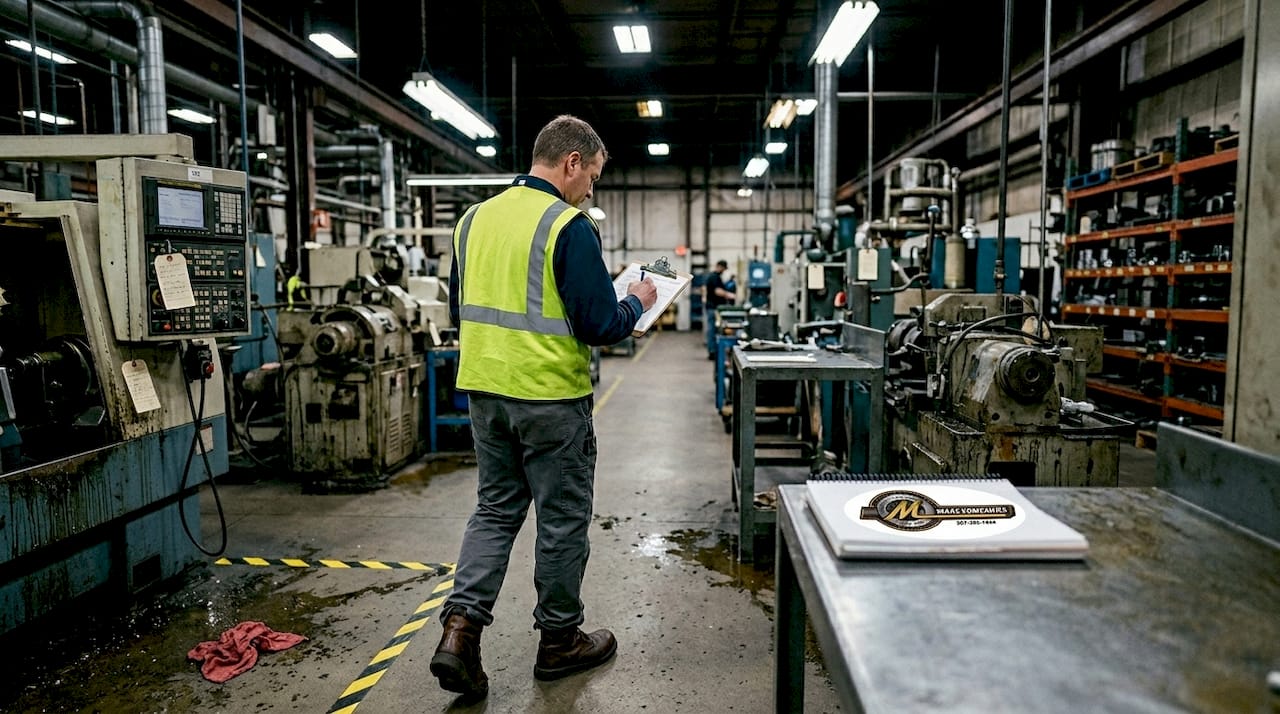
Firms like CBRE and Hilco Global have developed industrial auction practices precisely because standard residential auction approaches fail to address the technical due diligence that industrial buyers require.
Pro Tip: For surplus industrial facilities, consider pairing a reserve auction with a pre-auction marketing period of 30 to 60 days. This builds a qualified buyer list and increases competitive tension on auction day, which maximizing returns research consistently supports.
The auction process: Mechanics, due diligence, and bidding
Understanding the sequence of events in a real estate auction helps both sellers and buyers prepare effectively. The process is more structured than most people expect, and preparation directly determines outcomes.
- Pre-auction registration: Bidders register with the auction platform or auctioneer, providing proof of identity and, in most cases, proof of funds or a deposit. This filters out unqualified participants.
- Due diligence period: Before bidding, serious buyers conduct title searches, review environmental reports, examine survey documents, and analyze comparable sales. This window is typically 2 to 4 weeks.
- Property inspection: Most industrial auction sales are conducted on an as-is basis. Physical inspections may be permitted during the due diligence period, but post-sale inspections are generally not available.
- Bidding event: Whether conducted online through platforms like Auction.com or Hubzu, or in-person at a live event, bidding requires cash or pre-approved financing, with no contingencies.
- Closing: Winning bidders typically close within 24 to 48 hours for foreclosure auctions, or within 30 days for negotiated auction formats.
| Stage | Typical timeline | Key requirement |
|---|---|---|
| Registration | 1 to 2 weeks before auction | Proof of funds, deposit |
| Due diligence | 2 to 4 weeks before auction | Title, environmental review |
| Bidding | Auction day | Cash or pre-approved financing |
| Closing | 24 hours to 30 days post-auction | Full payment, documentation |
For industrial properties specifically, the industrial auction checklist should include verification of equipment included in the real property sale, utility connection status, zoning compliance, and any outstanding environmental remediation orders.
Pro Tip: Environmental Phase I assessments are worth commissioning before bidding on any industrial site. Discovering contamination after closing can eliminate any financial benefit from a discounted purchase price.
Sellers benefit from understanding that industrial closure support from a specialized marketing firm significantly improves buyer turnout and final pricing. The auction efficiency research confirms that well-marketed auctions with broad reach consistently outperform poorly promoted events, even when the underlying asset is similar.
Strategic considerations: Maximizing value from industrial auctions
For sellers, the goal is maximizing recovery value within acceptable time constraints. For buyers, the goal is acquiring assets below replacement cost while managing risk. Both objectives require a clear strategic framework.
Buyers evaluating industrial auction opportunities typically apply a version of this formula:
Maximum bid = After-repair value (ARV) minus estimated repairs minus holding costs minus required profit margin
This formula keeps bidding disciplined and prevents the competitive excitement of an auction from driving prices above rational thresholds. Carrying costs on industrial properties, including property taxes, insurance, security, and maintenance, accumulate quickly and must be factored into the calculation.
For sellers, the critical benchmarks come from the data. Distressed commercial properties typically sell at 20 to 50 percent below market value, foreclosure discounts range from 17 to 43 percent, and auction recovery rates for industrial assets generally fall between 30 and 65 percent of fair market value. These ranges reflect the trade-off between speed and price.
Key strategies for improving recovery outcomes include:
- Aggressive pre-auction marketing: Reaching qualified industrial buyers through industry-specific channels, not just general real estate platforms
- Professional asset valuation: Commissioning an independent appraisal before setting reserve prices
- Bundling or separating assets: Deciding whether to sell real property and equipment together or separately based on buyer demand analysis
- Timing the auction: Avoiding periods of market stress or seasonal slowdowns that reduce buyer participation
Pro Tip: Sellers who invest in professional photography, detailed equipment inventories, and environmental summaries before the auction consistently achieve better outcomes. Buyers pay more when uncertainty is reduced.
The industrial liquidation recovery process is not simply about accepting the highest bid. It is about structuring the entire sale process to attract the right buyers, provide adequate information, and create competitive conditions that support strong pricing within a defined timeline.
The auction speed versus price trade-off is real, but it is manageable. With the right preparation and professional support, the gap between auction recovery and traditional sale pricing narrows considerably.
Fresh perspective: Going beyond traditional real estate sales
The conventional view holds that auctions are a concession, a signal that the seller could not find a buyer through normal channels. That view is outdated and, frankly, costly for asset managers who accept it.
Auctions provide transparency and genuine price competition that traditional brokerage rarely delivers. In a negotiated sale, price is influenced by information asymmetry and negotiating skill. In an auction, price reflects actual market demand at a specific moment.
For industrial assets, this distinction matters enormously. A manufacturing facility or processing plant has a narrow buyer pool. Traditional brokers often lack the technical knowledge and industry contacts to reach those buyers efficiently. A well-structured auction with targeted industrial marketing can outperform a traditional listing on both speed and final price.
The uncomfortable truth is that many asset managers default to traditional brokerage because it feels safer, not because the data supports it. Our experience with auction expertise in industrial dispositions consistently shows that the right auction structure, combined with aggressive marketing to qualified buyers, produces recovery rates that challenge the assumption that auctions always mean discounts.
Take the next step with expert auction support
Understanding auction mechanics is the foundation. Executing a successful industrial asset disposition requires experienced partners who know how to reach qualified buyers and structure transactions that protect your recovery objectives.
Maas Companies Inc. has managed industrial real estate and equipment auctions across multiple sectors and geographies. Whether you are evaluating a specific opportunity like the industrial real estate auction or exploring options for process equipment through an online industrial auction, our team brings the marketing reach and technical knowledge your disposition requires. Review our full auction services portfolio to identify the right approach for your assets.
Frequently asked questions
How do real estate auctions help liquidate industrial assets quickly?
Auctions set a fixed sale date and attract motivated buyers in a competitive environment, enabling fast, transparent liquidation with closings achievable within days of the auction event.
What are the risks to investors in buying distressed property at auction?
Primary risks include limited inspection access, as-is sale conditions, and potential title or environmental liabilities, all of which require thorough pre-auction diligence before submitting a bid.
How do auction formats impact industrial property outcomes?
Absolute auctions guarantee a sale but may produce lower prices, while reserve and minimum bid formats give sellers a pricing floor and allow competitive bidding to determine the final outcome above that threshold.
Why should sellers of distressed industrial assets prefer auctions over traditional brokerage?
Auctions deliver speed, certainty, and transparent price discovery, whereas traditional brokerage offers higher potential prices but with longer timelines, greater uncertainty, and a higher risk of deal failure before closing.
Recommended
- How Auctions Help Speed Up Industrial Asset Disposition | Blog | Insights on Asset Liquidation and Auction Trends
- How Auctions Help Speed Up Industrial Asset Disposition | Blog | Insights on Asset Liquidation and Auction Trends
- Commercial Real Estate Auctions Speed Up Sales | Blog | Insights on Asset Liquidation and Auction Trends
- How Industrial Plant Liquidation Maximizes Recovery Value for Lenders | Blog | Insights on Asset Liquidation and Auction Trends
- Case Study — CRE Data Extraction for AI Training — DOT Data Labs - Dot Data Labs - High-Quality Data for Training AI Models