
Blog
Tips for Buying Used Machinery: A Professional’s Guide

TL;DR:
- Buying used machinery can reduce capital costs by up to 70 percent if the purchase is done correctly. A thorough inspection, verified documentation, and understanding the total ownership costs are essential to avoid hidden expenses and operational risks. Reputable auction houses and established dealers offer the most reliable sources for safe and well-documented equipment transactions.
Buying used machinery is defined as the acquisition of previously owned industrial or construction equipment with the goal of reducing capital expenditure while maintaining operational capacity. Done correctly, purchasing secondhand equipment can reduce capital expenditures by 30–70% compared to buying new. Done poorly, it exposes your operation to hidden repair costs, ownership disputes, and extended downtime. The difference between a sound acquisition and a costly mistake comes down to three disciplines: thorough physical inspection, rigorous documentation verification, and an honest accounting of total cost of ownership.
1. Tips for buying used machinery start with an independent inspection
The single most effective step in any used machinery buying guide is commissioning an independent technical inspection before committing funds. A qualified third-party technician has no stake in the sale and will assess the machine objectively. Relying on the seller’s description or a visual walkthrough is not a substitute.
During the inspection, focus on components that carry the highest wear risk:
- Pins and bushings on excavators and loaders indicate how hard a machine has worked
- Hydraulic systems should be checked for leaks, pressure consistency, and cylinder condition
- Structural frames should be examined for cracks, welds, and signs of previous collision repair
- Electrical panels and wiring should show no signs of heat damage, corrosion, or improvised repairs
- Drive systems, gearboxes, and bearings should run without unusual noise or vibration
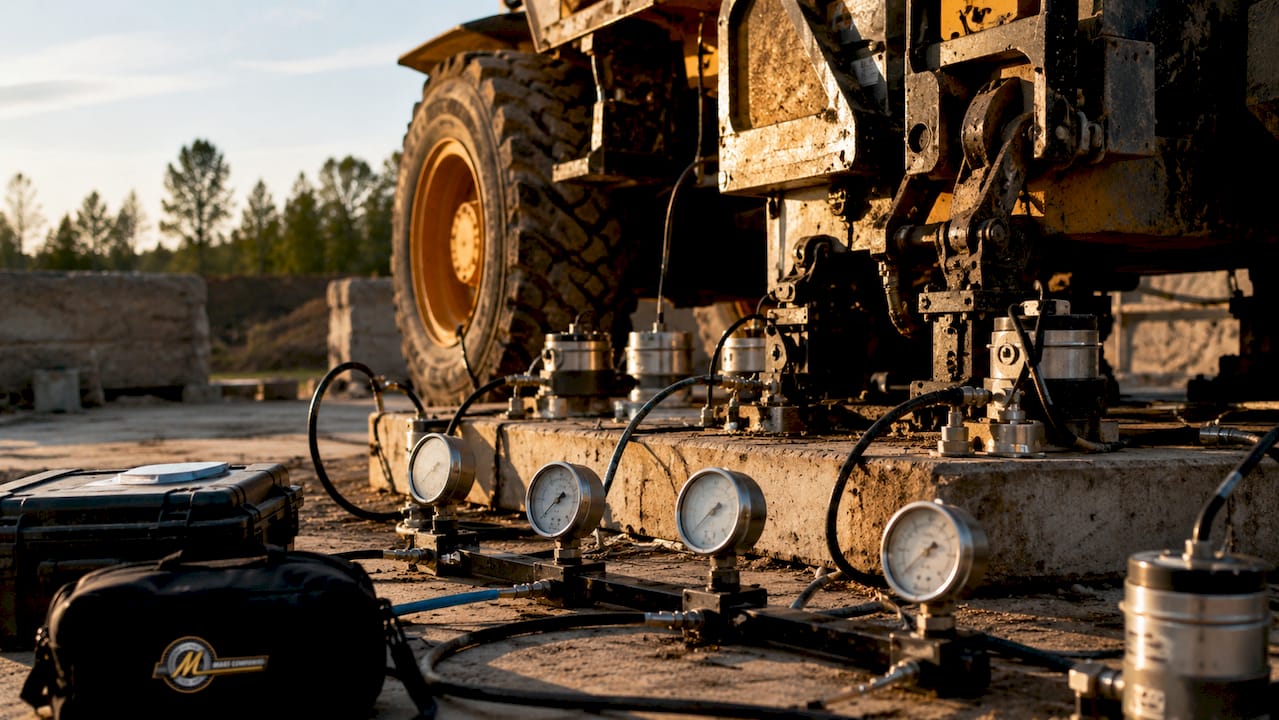
Load testing reveals faults that idle inspections routinely miss, including hydraulic pressure drops, electronic sensor failures, and vibration anomalies. A seller who refuses a load test is signaling that the machine will not perform under operational conditions.
Pro Tip: Request the inspection under full operational load, not just at idle. Faults in hydraulics, electronics, and drive systems only appear when the machine is working.
2. Do not trust hour meter readings alone
Machine condition matters more than the number on the hour meter. Hour meters can be reset, replaced, or simply fail to capture the severity of the operating environment. A bulldozer with 3,000 hours in a quarry has experienced far more stress than the same model with 5,000 hours on a flat construction site.
Evaluate actual component wear instead. Check pin and bushing clearances against manufacturer tolerances. Inspect undercarriage wear percentages on tracked equipment. Look at the condition of cutting edges, bucket teeth, and wear plates. These physical indicators tell the real story of how hard a machine has worked.
Cross-reference the stated hours against service records. If a machine claims 2,000 hours but the service log shows oil changes at intervals suggesting 4,000 hours of use, the discrepancy warrants a direct conversation with the seller.
3. Verify ownership documents and serial numbers
Proof of ownership is non-negotiable in any used machinery buying guide. Confirm that the seller holds clear title to the equipment and that no active liens exist against it. A lien search through the relevant state or federal registry takes minimal time and protects you from inheriting someone else’s debt.
Serial numbers are your primary verification tool. Check the number stamped on the machine against the number on the title, invoice, and any manufacturer records. Discrepancies between serial numbers and documentation are a serious red flag and may indicate stolen equipment or fraudulent listing.
Key documents to request before any purchase:
- Original purchase invoice or bill of sale
- Certificate of title or equivalent ownership document
- Lien release documentation if applicable
- Complete service and maintenance records
- Any refurbishment invoices if the machine is listed as restored
Fully refurbished claims frequently describe cosmetic work only. True mechanical refurbishment requires specific workshop documentation showing parts replaced, labor performed, and systems tested. A fresh coat of paint is not evidence of a rebuilt engine.
4. Vet the seller before you vet the machine
Seller verification is a core part of best practices for used machinery acquisition. Confirm the seller’s legal business name, physical address, and contact information. Cross-check these details against public business registries. A seller who cannot provide a verifiable physical location warrants immediate caution.
Unverified sellers and risky payment methods have cost buyers $10,000 or more in a single transaction. Wire transfers to unverified accounts, cryptocurrency payments, and requests for partial payment before inspection are all warning signs. Use verified escrow services or established payment terms with documented protections when transacting with unfamiliar sellers.
Buying through reputable auction platforms or established industrial dealers reduces this risk substantially. These channels typically verify seller identity, confirm ownership, and provide structured transaction processes. Maascompanies, for example, manages equipment dispositions with documented chain of custody and verified asset listings.
5. Calculate total cost of ownership before you bid
The purchase price is only one component of what a used machine will actually cost you. Total cost of ownership includes transportation, specialized lifting and rigging, installation, tooling, software licensing, and operator training. These costs can add 20–40% to the headline price on large industrial equipment.
| Cost Category | What to Estimate |
|---|---|
| Transportation and rigging | Freight rates, crane hire, permits for oversized loads |
| Installation and commissioning | Electrical hookup, foundation work, alignment services |
| Tooling and accessories | Attachments, dies, fixtures not included in the sale |
| Software and controls | License transfers, firmware updates, integration costs |
| Operator training | Certification requirements, downtime during onboarding |
| Ongoing maintenance | Parts availability, service intervals, dealer proximity |
Parts availability and dealer support can outweigh the initial savings if the machine cannot be maintained locally. A bargain price on a machine whose manufacturer has no regional parts distribution means every breakdown becomes an extended, expensive event.
Pro Tip: Before finalizing any offer, call the nearest authorized dealer for that brand and confirm parts lead times and service availability in your region. If the answer is weeks or months, factor that into your bid ceiling.
6. Confirm electrical and infrastructure compatibility
Voltage and phase compatibility must be verified before purchase, not after delivery. A machine wired for 480V three-phase power cannot be plugged into a 208V single-phase facility without significant electrical work. That work adds cost and delays commissioning.
Request the full electrical specification sheet from the seller. Compare it against your facility’s available power supply, breaker capacity, and floor space. Also confirm that your facility’s floor load rating supports the machine’s operating weight. These checks take less than an hour and prevent installation failures that can cost tens of thousands of dollars.
Infrastructure compatibility extends to compressed air supply, coolant systems, and exhaust ventilation requirements. Industrial CNC machines, for example, often require specific coolant flow rates and chip evacuation systems that must be in place before the machine can run.
7. Understand what “sold as seen” means at auction
Auction purchases are typically sold as seen and carry no warranties. The buyer accepts the machine in its current condition with no recourse against the seller for faults discovered after the sale. This is standard practice, not a red flag. It does, however, place the entire burden of due diligence on the buyer.
Before bidding at any industrial auction, complete your inspection, review all available documentation, and set a firm bid ceiling that accounts for potential repair costs. Treat the auction estimate as a floor, not a ceiling. Factor in the buyer’s premium, which typically ranges from 10–18% of the hammer price at industrial auctions.
Knowing how to choose the right auction for the type of equipment you need is itself a skill. Specialized industrial auctions attract more qualified sellers and more accurate equipment descriptions than general liquidation sales.
8. Negotiate with data, not intuition
Effective negotiation on used machinery requires market data. Research recent sale prices for the same make, model, and year through auction records and dealer listings. This gives you a defensible number to present rather than an arbitrary offer.
Use inspection findings as negotiating points. If the hydraulic system needs service, get a repair quote from a qualified technician and deduct that cost from your offer. If the machine is missing standard accessories, price those separately and reduce your bid accordingly. Sellers respond to documented evidence, not general claims about condition.
- Confirm what is included in the sale: attachments, tooling, manuals, and spare parts
- Clarify delivery responsibility: who arranges transport and who bears the risk during transit
- Establish payment terms in writing before any funds change hands
- Request a written bill of sale that includes serial numbers, condition disclosures, and any agreed representations
- Confirm the timeline for title transfer and any regulatory compliance documentation
Detailed shipping and installation plans prevent operational delays after purchase. Coordinate rigging, transport, and site preparation before the sale closes so the machine moves directly into service.
9. Where to find reliable used machinery listings
The source of a listing affects the quality of the deal. Each channel carries distinct risk and benefit profiles:
- Established industrial auction houses provide verified listings, inspection access, and structured transactions. They are the most reliable source for high-value equipment.
- Manufacturer surplus sales offer machines with known service histories, often still under partial warranty coverage.
- Reputable industrial dealers provide reconditioned equipment with some level of quality assurance and after-sale support.
- Online direct-sale platforms offer broad inventory but require the buyer to perform all verification independently. Fraud risk is higher.
- Plant closure and restructuring sales often yield well-maintained equipment at below-market prices, particularly when managed by experienced asset recovery firms.
Geographic factors matter. Importing equipment across international borders adds customs duties, compliance certification requirements, and extended lead times. Buying domestically from a verified source reduces these variables significantly.
Suspicious listings share common characteristics: prices well below market, sellers who resist in-person inspection, vague or inconsistent equipment descriptions, and requests for non-standard payment. Any one of these signals warrants walking away.
Key takeaways
Buying used machinery safely requires independent inspection, verified documentation, and a complete accounting of total cost of ownership before any funds are committed.
| Point | Details |
|---|---|
| Inspect under load | Load testing uncovers hydraulic, electronic, and mechanical faults that idle checks miss. |
| Verify ownership and serial numbers | Confirm clear title and matching serial numbers to avoid liens and fraudulent listings. |
| Calculate full ownership costs | Add transportation, installation, training, and parts availability to the purchase price. |
| Vet the seller, not just the machine | Confirm physical address, business registration, and use secure payment methods. |
| Choose the right sourcing channel | Industrial auction houses and verified dealers reduce fraud risk and improve documentation quality. |
What experience actually teaches you about buying used equipment
The most common mistake I see manufacturing and construction professionals make is treating the purchase price as the primary decision variable. They find a machine at 40% below market, move quickly to secure it, and then spend the next six months discovering why it was priced that way.
The professionals who consistently get value from used equipment purchases do something different. They build a total acquisition cost model before they make contact with the seller. They know their maximum delivered, installed, and commissioned cost before they open negotiations. That discipline prevents the incremental cost creep that turns a bargain into a budget problem.
The other pattern worth noting is the tendency to skip the load test when a seller pushes back. Sellers who resist load testing are not protecting the machine. They are protecting information about the machine. A well-maintained piece of equipment runs under load without issue. Accepting a seller’s reluctance as a reason to skip the test is accepting a known information gap in your due diligence.
The used equipment market has matured considerably. Verified auction platforms, third-party inspection services, and digital maintenance records have made it easier to buy with confidence. The tools exist. The discipline to use them consistently is what separates buyers who build operational capacity from buyers who inherit operational problems.
— Vector
Maascompanies: structured asset acquisition for industrial buyers
Maascompanies brings decades of experience managing industrial equipment auctions and complex asset dispositions across manufacturing, processing, and construction sectors. For buyers, that means access to verified equipment listings, documented chain of custody, and structured transaction processes that reduce acquisition risk.

Current Maascompanies projects include a feed pelletizer system auction and an industrial biodiesel plant sale with surplus process equipment. Each listing includes equipment details, inspection access, and clear transaction terms. For buyers seeking a reliable source of industrial machinery with professional oversight, Maascompanies provides the process infrastructure that private sales and unverified platforms cannot.
FAQ
How much can buying used machinery save compared to new?
Used machinery can reduce capital expenditures by 30–70% compared to new equipment. If the used price exceeds 70% of the new price, factory warranties on new equipment may justify the premium.
What documents should I always request before buying used machinery?
Request proof of ownership, a lien-free title, complete service records, and serial number documentation. If the machine is listed as refurbished, require workshop invoices confirming mechanical restoration.
Why is a load test so important when inspecting used machinery?
Load testing reveals hydraulic, electronic, and mechanical faults that do not appear during idle inspection. A seller who refuses a load test is a significant red flag.
What are the biggest hidden costs when buying secondhand equipment?
Transportation, rigging, installation, electrical compatibility work, software licensing, and operator training frequently add 20–40% to the headline purchase price. Parts availability and dealer support also affect long-term operating costs.
Where is the safest place to buy used industrial machines?
Established industrial auction houses and verified dealers provide the most reliable transaction structures. They confirm ownership, allow pre-sale inspections, and document equipment condition more thoroughly than private or online direct-sale channels.
Recommended
- How to Choose the Right Auction for Industrial Equipment | Blog | Insights on Asset Liquidation and Auction Trends
- Pre-Auction Selling Checklist for Industrial Equipment | Blog | Insights on Asset Liquidation and Auction Trends
- Choosing the Right Channel for Industrial Auctions | Blog | Insights on Asset Liquidation and Auction Trends
- Surplus equipment sale guide: maximize asset recovery fast | Blog | Insights on Asset Liquidation and Auction Trends