

Blog
What Makes an Antique in Industrial Asset Recovery

An industrial asset becomes an “antique” the moment functional and economic obsolescence make it unsuitable for sale as a going concern, regardless of how well it still runs. Calendar age is almost irrelevant. A 40-year-old press that still holds tolerance and has an active parts market is not an antique in any way that matters to your balance sheet. A 12-year-old control system with no firmware support and a single obsolete supplier can already be one.
That distinction changes everything about how you value and dispose of the asset. Three implications follow immediately once an asset crosses into antique territory:
- Valuation premise shifts. Going-concern value usually gives way to orderly liquidation value, and sometimes forced liquidation, depending on your timeline and lender pressure.
- Recovery expectations compress. Forced liquidation typically yields only 50 to 70 percent of fair market value, and removal costs can erase what is left for heavily installed equipment.
- Documentation becomes the priority. Condition reports, service logs, and OEM correspondence, gathered now, are what let an appraiser from the American Society of Appraisers defend a valuation later, and what let a firm like Maas Companies market the asset credibly to a niche buyer pool.
Environmental exposure, flagged early with reference to U.S. EPA waste classification rules, also determines whether an asset is a saleable unit or a liability you pay to remove.
Key Takeaways
An industrial asset qualifies as an antique when functional and economic obsolescence, not calendar age, make going-concern sale unrealistic and compress recoverable value.
| Point | Details |
|---|---|
| Definition drives strategy | Functional and economic obsolescence, not age, determine antique status and disposition path. |
| Premise of value comes first | Decide going concern, orderly, or forced liquidation in writing before commissioning an appraisal. |
| Documentation preserves value | Condition reports, service logs, and photos increase buyer confidence and price realization. |
| Disposition method must match asset | Match auction, brokered sale, relocation, salvage, or scrap to buyer pool and timeline pressure. |
| Engage specialists early | A partner like Maas Companies coordinates characterization, marketing, and sale execution to protect net recovery. |
Table of Contents
- What Are the Key Indicators of an Antique Industrial Asset?
- How Do the Three Depreciation Types Determine Antique Status?
- How Does the Premise of Value Change What an Antique Is Worth?
- Which Sale Strategy Fits an Antique Asset?
- What Drives Timeline and Cost in Antique Asset Disposition?
- What Compliance Risks Most Often Erode Antique Asset Value?
- What Should You Do Now to Preserve Antique Asset Value?
- What Questions Should Executives and Lenders Ask Before Selling?
- How Did One Production Line Get Classified and Sold as an Antique?
- How Should Antiques Fit Into Portfolio Strategy?
- How Maas Companies Supports Antique Asset Recovery
- Where to Go for Further Authority on Antique Asset Valuation
- Sources
What Are the Key Indicators of an Antique Industrial Asset?
Age alone tells you almost nothing. What actually triggers an antique classification is a cluster of measurable, observable conditions that a valuation team or lender committee can point to without argument.
- No active aftermarket. Spare parts come from a single supplier, a secondary broker, or nowhere at all.
- Production speed or safety gap. The asset can’t hit current line rates or meet updated OSHA or industry safety standards without costly retrofits.
- Energy and maintenance drag. Utility consumption and unplanned downtime run well above modern equivalents doing the same job.
- Missing digital controls. Proprietary PLCs or HMIs run on firmware nobody updates anymore, and integration with modern plant systems isn’t realistic.
- Narrow buyer pool. Export restrictions, licensing requirements, or a shrinking end market for the product it makes all narrow who would even bid on it.
Pro Tip: The fastest way to disqualify an asset from a going-concern sale is to check for single-supplier spare parts or a proprietary controller running discontinued firmware. If either shows up, stop treating it as an operating asset and start treating it as a liquidation asset.
Build your case in the service logs, bills of materials, and OEM support correspondence, not from memory. A lender or court-appointed reviewer will ask for the paper trail before accepting any obsolescence claim.
How Do the Three Depreciation Types Determine Antique Status?
Every credible valuation of aged plant equipment runs through three depreciation types, and knowing which one dominates tells you almost everything about disposition strategy.
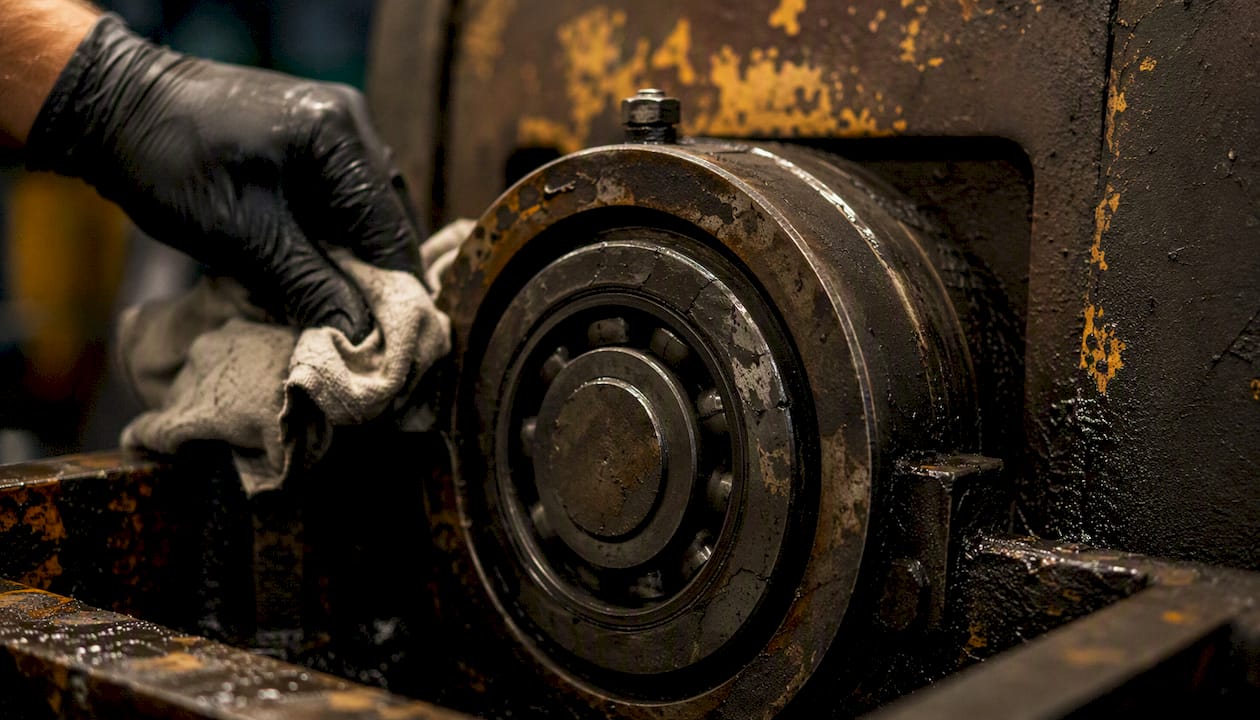
Physical deterioration is wear and tear: worn bearings, corroded housings, fatigue in structural members. It’s visible, measurable, and usually the smallest driver of “antique” classification because worn parts can often be repaired or replaced.
Functional obsolescence is a loss in utility because the asset underperforms modern alternatives on cost, throughput, or changeover time, even when it’s mechanically sound. This is where most industrial antiques actually live. Functional obsolescence can reduce residual value by roughly 20 to 40 percent compared to a current-generation machine doing the same job.
Economic obsolescence comes from outside the asset entirely, a contracting market for what it produces, new regulation, or a shift in input costs that makes the whole product line unprofitable. No amount of maintenance fixes economic obsolescence.
| Depreciation Type | What It Looks Like | Typical Impact |
|---|---|---|
| Physical deterioration | Worn bearings, corrosion, fatigue | Usually the smallest driver; repairable |
| Functional obsolescence | Slower, less efficient than modern equivalents | Can cut residual value 20 to 40% |
| Economic obsolescence | Shrinking market or new regulation for the output | Can eliminate value regardless of condition |
Industry standards frame appraisal disputes around exactly this question: which depreciation type did the valuer apply, and did they apply it consistently? Most contested valuations trace back to disagreement over functional versus economic obsolescence, not physical condition.
How Does the Premise of Value Change What an Antique Is Worth?
The same machine can carry three different price tags depending entirely on the premise of value your appraiser selects, and picking the wrong one is the single most common source of downstream disputes with lenders and courts.
Going concern assumes the asset stays in place, operating as part of a functioning business. Orderly liquidation assumes a reasonable marketing period, typically months, with a motivated but not desperate seller. Forced liquidation assumes an abbreviated sale window, often driven by a court date or lender deadline, with no time to find the best-fit buyer.
Value shifts predictably across these three premises. EVS-PME standards require that forced-sale figures net out removal costs and apply a forced-sale discount to any observable market price.
- Under going concern, installed value and integration into the production line count for something; under liquidation, they usually count for nothing.
- Orderly liquidation retains more market value than forced sale because bidders have time to inspect, finance, and plan logistics.
- Removal, rigging, and site restoration costs must be deducted from gross proceeds under both liquidation premises, but the deduction is steeper under forced sale because there’s less time to shop for competitive removal quotes.
Pro Tip: Decide the premise of value in writing before you engage an appraiser, not after you see the first number. An explicit, documented premise decision made early is what prevents a lender or opposing counsel from challenging the entire valuation months later. This is consistent with guidance that selecting the correct premise at the outset is the single most important decision in a defensible valuation.
Which Sale Strategy Fits an Antique Asset?
Once an asset is classified, the disposition decision comes down to matching the sale method to the asset’s condition, buyer pool, and your timeline pressure.
Auction works best when the asset has a defined buyer pool and reasonable liquidity, and time pressure from a lender or court makes a fixed sale date valuable. Brokered negotiated sale fits specialized, high-value equipment where a smaller number of qualified buyers justifies a longer, relationship-driven process. Relocation and resale makes sense when the equipment still has functional life left in a different market or application, even if it’s obsolete for its current use. Component salvage is the right call when the whole isn’t worth more than its parts, common with proprietary machines that have a thin parts market feeding other owners of the same model. Scrap is the fallback when hazardous materials, installation costs, or a collapsed buyer market make any other route uneconomical.
- Auction: fastest timeline, competitive price discovery, but recovery depends on how many qualified bidders show up.
- Brokered sale: slower, often higher per-unit recovery for specialized assets, more relationship management required.
- Relocation: preserves the most value but requires finding a buyer with a genuinely different use case.
- Salvage: modest recovery, but converts a liability into cash quickly with minimal marketing lead time.
- Scrap: lowest recovery, reserved for assets where removal cost otherwise exceeds any realistic sale price.
Pro Tip: Sell in place whenever a buyer will take on removal, harvest parts before scrapping if a sister unit exists elsewhere in your portfolio, and never default to scrap until you’ve confirmed there’s truly no niche buyer. A firm like Maas Companies works this decision daily, matching asset type to the disposition channel that produces the strongest net recovery rather than defaulting to whichever method is fastest to execute.
What Drives Timeline and Cost in Antique Asset Disposition?
Disposition of an antique industrial asset runs through five phases, and cost leakage tends to happen at the boundaries between them.
- Characterization. Inventory the asset, confirm serial numbers, and document condition. Weeks, not months, if records already exist.
- Decommissioning and isolation. Lock out, tag out, and disconnect utilities safely. Timeline depends heavily on hazardous material findings.
- Relocation and cleaning. Rigging, transport, and preparation for inspection by prospective buyers.
- Marketing and sale. Auction cycles typically run 30 to 60 days; brokered sales run longer.
- Removal and transfer. Final rigging, loading, and chain-of-custody documentation for the buyer.
| Cost Driver | Effect on Net Proceeds |
|---|---|
| Rigging and transport | Can consume a large share of gross sale price for heavy, installed equipment |
| Permits and inspections | Adds time and fixed cost regardless of final sale price |
| Waste disposal | Reduces proceeds further if materials require special handling |
| Hazardous material remediation | Can turn a positive-value asset into a net cost if discovered late |
Market liquidity, installation complexity, and the depth of the parts market are the factors most strongly correlated with resale value in research covering equipment across industries, alongside maintenance history and replacement policies.
What Compliance Risks Most Often Erode Antique Asset Value?
Environmental and safety failures during decommissioning are where recoverable value disappears fastest, often before marketing even begins.
| Risk Category | Consequence | Mitigation |
|---|---|---|
| Utility isolation errors | Injury, asset damage, liability exposure | Certified LOTO protocols before any dismantling begins |
| Waste misclassification | Regulatory penalties, delayed sale | Waste characterization aligned with EPA guidance before removal |
| Hazardous residues (oils, coolants, solvents) | Buyer walk-away, remediation cost | Pre-sale environmental assessment and documented cleanup |
| Permitting failures | Stalled transfer, legal exposure | Confirm permits transfer or are re-issued before closing |
- Buyers discount aggressively, or walk entirely, when environmental liability is undocumented.
- Certified utility isolation and specialist rigging protect both worker safety and asset integrity during removal, converting a cost center into a controlled, recoverable process when handled by experienced decommissioning contractors.
- Regulatory noncompliance almost always requires additional discounting or removal cost absorption by the seller, not the buyer.
What Should You Do Now to Preserve Antique Asset Value?
Before a single buyer sees the asset, a short list of low-cost actions determines how much of its value survives the sale process.
- Tag every asset with a unique identifier tied to its condition report.
- Photograph serial plates, nameplates, and any modification records.
- Collect operations and maintenance manuals, plus complete parts lists.
- Secure spare parts inventory separately so it isn’t lost or scrapped by mistake.
- Isolate utilities safely and document the isolation for buyer due diligence.
- Package sensitive components for relocation or export using anti-corrosion wrap and shock-rated crating.
Pro Tip: A timestamped photo log and a folder of OEM support correspondence cost almost nothing to assemble, and they consistently increase buyer confidence more than any single piece of physical refurbishment. Buyers pay a premium for documented provenance because it de-risks their own resale or reuse plan, a point reinforced in guidance on maximizing asset recovery through preparation.
What Questions Should Executives and Lenders Ask Before Selling?
Due diligence questions differ depending on who you’re asking, and the wrong answer to any of these should stop a transaction before money changes hands.
Questions for appraisers:
- What premise of value did you apply, and why is it appropriate for this transaction?
- What comparable sales did you use, and how recent are they?
- What obsolescence assumptions drove your functional and economic adjustments?
- Is your final figure net of removal costs, or does that need to be deducted separately?
Questions for bidders and contractors:
- Is your removal quote turnkey, including permits and disposal?
- What is your realistic timeline from award to site clearance?
- What insurance and hazardous materials certifications do you carry?
Red flags worth stopping for: single-source spare parts with no alternative supplier, undocumented repairs with no service history, installation costs that dwarf the asset’s resale value, active export controls on the equipment class, and service records that contradict each other across different systems.
How Did One Production Line Get Classified and Sold as an Antique?
A mid-size manufacturer shut down a chemical processing line after 22 years of service. The equipment still ran, but its proprietary controller had no firmware support, its throughput trailed modern equivalents by a wide margin, and the end market for its output had contracted sharply over the prior three years.
Leadership classified it as functionally and economically obsolete rather than physically worn, which shaped everything that followed. Because a lender deadline forced a compressed timeline, the company selected orderly liquidation rather than going-concern value as the valuation premise, documented that decision in writing, and moved directly into characterization and decommissioning.
- Early premise-of-value documentation prevented a dispute with the lender’s own reviewing appraiser weeks later.
- Component salvage on the proprietary controller and drive system recovered value that a straight scrap sale would have missed entirely.
- Final net recovery landed within the range typical for orderly liquidation of installed process equipment, well above what a rushed forced sale would have produced.
The lesson leadership took away: the documentation effort spent in the first two weeks after shutdown saved more value than any negotiation tactic used during the sale itself.
How Should Antiques Fit Into Portfolio Strategy?
Treat every aging asset in your portfolio as a potential liability to remove unless a specific buyer use case is already visible. That’s a harder discipline than it sounds, because operations teams tend to hold onto idle equipment on the assumption that “someone might want it,” and that assumption rarely survives contact with an actual market.
Run the scenario analysis before you decide anything: cost to remove versus expected proceeds, under both orderly and forced liquidation premises. A structured, end-state-driven closure process that defines the desired outcome, sale, remediation, or repurpose, before technical planning begins consistently preserves more value than reactive disposal.
Bring in decommissioning and remarketing specialists early, not after the equipment has already sat idle for a year accumulating carrying costs. This is portfolio governance, not an emergency response to a plant closure. The companies that handle this well treat antique classification as a recurring review item, not a one-time crisis reaction.
How Maas Companies Supports Antique Asset Recovery
Maas Companies is a strategic recovery partner for exactly the scenario this article describes, not a discount marketplace for surplus equipment.
When plant equipment crosses into antique classification, the work that actually protects recovery is asset characterization, targeted marketing to the specific niche buyer pools who still want that equipment class, and coordinated logistics for rigging, transport, and removal. Maas Companies handles all three under one engagement, drawing on decades of experience marketing industrial plants, equipment, and commercial property for corporate, lender, and government clients facing closures, restructuring, or court-ordered liquidation. Our full services portfolio covers valuation coordination through sale execution, and our seller landing page is the starting point if you’re weighing disposition options on an aging asset right now. Contact our team for a recovery consultation before you commit to a valuation premise or a disposition method.
Where to Go for Further Authority on Antique Asset Valuation
A few sources are worth keeping on hand when you need to defend a valuation position to a lender, board, or court.
- American Society of Appraisers-aligned guidance on functional obsolescence for the framework behind the three depreciation types.
- EVS-PME valuation standards for definitions of liquidation value subtypes and forced-sale discounting.
- Beck & Pollitzer’s decommissioning guidance for utility isolation and rigging practices that protect asset integrity.
- BCG’s research on industrial closures for portfolio-level, end-state-driven closure planning.
- Maas Companies for direct engagement on valuation, marketing, and sale execution for antique industrial assets.
This article is general information, not a substitute for advice from a qualified financial advisor. Consult a qualified financial professional about your own circumstances before acting on anything here.
Sources
- Determining Loss of Asset Value: Functional Obsolescence (Valuation Research)
- Plant & facility decommissioning (Beck & Pollitzer)
- Chapter 9 - Machinery & Equipment Valuation (Frazier Capital PDF)
- Factors affecting resale value of construction equipment (AEJ, 2022)
Recommended
- How Industrial Plant Liquidation Maximizes Recovery Value for Lenders | Blog | Insights on Asset Liquidation and Auction Trends
- How Auctions Help Speed Up Industrial Asset Disposition | Blog | Insights on Asset Liquidation and Auction Trends
- Types of Industrial Asset Disposition: A Strategy Guide | Blog | Insights on Asset Liquidation and Auction Trends
- Auction terminology explained for industrial asset recovery | Blog | Insights on Asset Liquidation and Auction Trends