

Blog
Streamline Commercial Property Liquidation: Steps for Manufacturing Firms

TL;DR:
- Thorough legal, inventory, and valuation assessments are essential before initiating industrial asset liquidation.
- A structured process includes court approval, marketing, auction, and careful title transfer to maximize recovery.
- Expert support and strategic marketing significantly improve recovery rates and efficient closure of distressed properties.
Liquidating a distressed commercial property in the manufacturing or industrial sector is one of the most operationally demanding challenges a private equity firm or corporate decision-maker can face. Asset inventories are complex, legal obligations are layered, and every day of delay adds carrying costs that erode recovery value. Unlike residential real estate, industrial properties carry specialized equipment, environmental considerations, and creditor hierarchies that demand precise coordination. This guide walks through the full liquidation process, from readiness assessment to final disposition verification, giving you a structured framework to protect stakeholder interests and maximize cash recovery at every stage.
Table of Contents
- Assessing liquidation readiness: prerequisites and requirements
- Step-by-step liquidation process for commercial properties
- Troubleshooting common liquidation roadblocks
- How to verify recovery and finalize asset disposition
- Why traditional asset liquidation misses recovery opportunities
- Expert support for your property liquidation needs
- Frequently asked questions
Key Takeaways
| Point | Details |
|---|---|
| Preparation is critical | Begin by evaluating assets, legal status, and assembling expert liquidation resources. |
| Follow clear processes | Liquidation steps must comply with legal requirements and maximize recovery value. |
| Troubleshoot systematically | Identify and solve roadblocks early to minimize delays and ensure compliance. |
| Verify and audit results | Confirm recovery values, document dispositions, and distribute funds per creditor priorities. |
| Expert support increases returns | Partnering with specialized liquidation firms maximizes asset recovery for manufacturing properties. |
Assessing liquidation readiness: prerequisites and requirements
Before any asset moves, a clear-eyed readiness assessment is essential. Rushing into liquidation without completing prerequisite steps is one of the most common and costly mistakes in distressed asset management. The foundation of an efficient process rests on three pillars: legal clarity, accurate asset inventory, and secured creditor status confirmation.
Start by identifying all assets subject to liquidation, including real property, fixed equipment, inventory, and intangible assets. Each asset category carries its own documentation requirements and valuation methodology. Real property typically requires a formal appraisal, while industrial equipment may need specialized machinery appraisers familiar with sector-specific market values. Accurate maximizing asset recovery begins at this stage, not at the auction block.
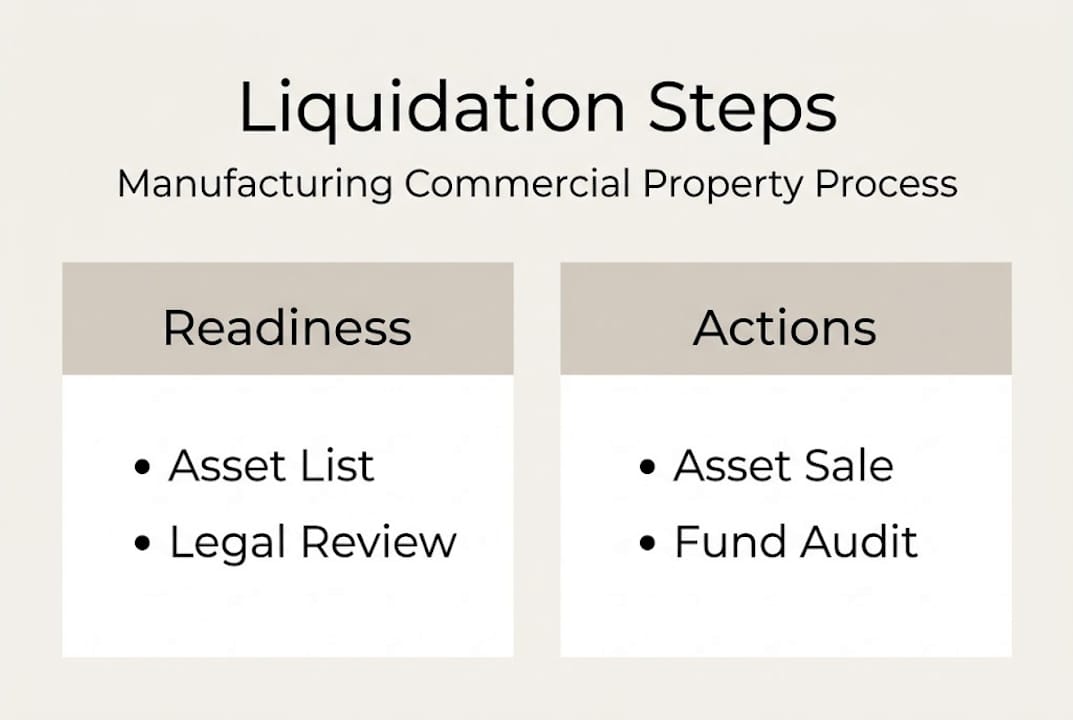
Legal prerequisites are equally critical. Confirm lien positions, outstanding secured debt, and any encumbrances on title before proceeding. Liquidation trustees oversee asset sales free of liens and prioritize secured creditors, which means unresolved title issues can halt the entire process. Engage legal counsel early to review bankruptcy filings, court orders, and any restrictions on asset disposition.
The following readiness indicators help frame where your process currently stands:
| Asset type | Legal status required | Documentation needed |
|---|---|---|
| Real property | Clear title, lien release | Appraisal report, survey, environmental review |
| Industrial equipment | UCC lien search complete | Equipment list, condition reports, valuation |
| Inventory | Ownership verified | Inventory count, purchase records |
| Intangible assets | IP ownership confirmed | Licensing agreements, transfer documentation |
Key prerequisites before initiating liquidation:
- Completed asset inventory with condition ratings
- Legal review of all secured and unsecured creditor claims
- Valuation reports from qualified appraisers
- Court authorization if operating under bankruptcy proceedings
- Assembled liquidation team including legal, appraisal, and marketing specialists
For firms managing liquidation recovery for lenders, the readiness phase directly determines how much value survives into the execution phase. A well-executed facility transition strategy also accounts for operational shutdown timelines and employee obligations.
Pro Tip: Assemble a dedicated team with liquidation and appraisal expertise before the process begins. Cross-functional coordination between legal, financial, and operational specialists reduces delays and prevents costly oversights during execution.
Step-by-step liquidation process for commercial properties
With readiness confirmed, the liquidation sequence can proceed in a structured, compliant manner. Each phase builds on the last, and skipping steps creates compounding problems downstream.
- Legal filing and court authorization. If operating under Chapter 7 or Chapter 11 bankruptcy, obtain court approval for asset sales. This establishes the legal framework for all subsequent transactions.
- Formal asset inventory and tagging. Conduct a physical inventory of all property and equipment. Tag and catalog each item with condition notes and estimated value ranges.
- Independent valuation. Engage qualified appraisers to assess fair market value and liquidation value for each asset category. Assets are sold free of liens, measured at expected cash recovery instead of depreciated value, which makes accurate appraisal essential.
- Marketing and buyer outreach. Develop a targeted marketing plan reaching qualified industrial buyers, private equity firms, and sector-specific investors. Broad exposure drives competitive bidding and higher recovery.
- Auction, brokerage, or online sale. Select the disposition method best suited to asset type, timeline, and recovery goals. Review liquidation sales explained for a detailed breakdown of each approach.
- Closing and title transfer. Execute purchase agreements, verify fund receipt, and transfer clear title to buyers. All transactions must comply with court orders and creditor agreements.
| Disposition method | Speed | Recovery potential | Risk level |
|---|---|---|---|
| Auction | Fast (days to weeks) | High with competitive bidding | Low if well-marketed |
| Negotiated sale | Moderate (weeks to months) | Moderate to high | Medium, depends on buyer pool |
| Online sale | Variable | Moderate | Low to medium |
For manufacturing properties specifically, plant liquidation strategies that combine auction and online channels consistently outperform single-channel approaches. Top real estate liquidation methods also factor in local market conditions and zoning restrictions that affect buyer demand.
Important: Verify clear legal title and complete lien releases before closing any transaction. Selling encumbered assets exposes all parties to legal liability and can unwind completed sales.
Pro Tip: Prioritize assets likely to yield the highest recovery values early in the process. Selling high-value equipment and real property first generates capital that can fund ongoing carrying costs and legal fees for the remainder of the liquidation.
Troubleshooting common liquidation roadblocks
Even well-planned liquidations encounter obstacles. Knowing what to expect and how to respond keeps the process on track and protects recovery value.
Frequent roadblocks include:
- Unclear liens or title defects. Competing creditor claims or unresolved UCC filings can delay or block asset sales. A thorough title search and lien release process must precede any disposition.
- Missing or incomplete documentation. Gaps in asset records, missing appraisal reports, or absent purchase histories slow buyer due diligence and reduce confidence in the sale.
- Undervalued appraisals. Appraisers unfamiliar with industrial or manufacturing markets may apply generic depreciation models that significantly understate actual market value.
- Creditor disputes. Disagreements among secured and unsecured creditors over distribution priority can stall court approval for sales.
- Environmental liabilities. Undisclosed or unresolved environmental issues on industrial properties create buyer hesitation and can reduce the qualified buyer pool substantially.
Trustees must measure asset value at expected cash recovery, and complications arise when assets lack clear title. This underscores why proactive legal review is not optional but essential at every stage.
Solutions for each roadblock:
- Conduct title searches before marketing begins, not after offers arrive
- Retain appraisers with direct manufacturing and industrial sector experience
- Schedule legal reviews at defined milestones, not just at the start and end of the process
- Engage a mediator early if creditor disputes appear likely
- Commission Phase I and Phase II environmental assessments upfront for industrial real property
For firms managing seasonal or time-sensitive dispositions, winter liquidation tips address timing considerations that affect buyer turnout and final sale prices. When speed is a priority, fast asset liquidation through auction formats can compress timelines without sacrificing recovery.
Critical note: All asset sales in bankruptcy proceedings must comply with Section 363 of the bankruptcy code. Non-compliant transactions can be voided by the court, creating significant financial and legal exposure for all parties involved.
Pro Tip: Schedule periodic progress reviews with your full liquidation team at defined intervals throughout the process. Regular check-ins catch documentation gaps, creditor disputes, and appraisal issues before they escalate into costly delays.
How to verify recovery and finalize asset disposition
The final phase of any liquidation is verification and closeout. This step is often underestimated, but it determines whether the process concludes cleanly or drags into extended disputes and audit findings.

Begin by reconciling all sale proceeds against projected recovery figures from the initial appraisal phase. Significant variances should be documented with explanations, whether due to market conditions, buyer competition, or asset condition discrepancies. Assets sold via bankruptcy liquidation must prioritize secured creditors and are assessed at expected cash recovery, so distribution must follow the established creditor waterfall precisely.
Verification tasks to complete before final closeout:
- Reconcile all sale receipts against the asset inventory and appraisal values
- Confirm receipt of full payment from all buyers before releasing titles
- Prepare a detailed distribution schedule showing creditor payments in priority order
- Obtain signed releases from secured creditors confirming satisfaction of claims
- File all required court documentation confirming asset disposition and fund distribution
- Archive all sale records, appraisal reports, and legal filings for future reference
Fund distribution follows the creditor priority established in the bankruptcy proceedings. Secured creditors receive payment first, followed by administrative expenses, priority unsecured creditors, and general unsecured creditors. Any remaining funds return to equity holders, though in distressed liquidations this is uncommon.
For verifying asset recovery in complex industrial cases, a post-sale audit conducted by an independent financial advisor adds credibility to the process and protects decision-makers from future liability claims.
Pro Tip: Use post-sale reviews to capture lessons learned from the liquidation process. Documenting what worked, what caused delays, and where recovery exceeded or fell short of projections creates a reference framework that improves future liquidation outcomes for your organization.
Why traditional asset liquidation misses recovery opportunities
Most conventional liquidation frameworks default to depreciated book value as the starting point for asset pricing. This approach, while administratively simple, consistently leaves recovery on the table. Industrial equipment that has been maintained to operational standards often commands significantly more than its depreciated value in a competitive auction environment, particularly when marketed to the right buyer pool.
The real gap is not in the legal process. It is in the marketing and valuation strategy. Firms that engage expert asset recovery strategies understand that targeted outreach to sector-specific buyers, combined with data-driven auction formats, consistently outperforms slow negotiated sales in distressed industrial scenarios.
Data-driven auctions create competitive pressure that negotiated sales simply cannot replicate. When qualified buyers compete in real time, recovery rates rise. When assets are quietly offered to a limited buyer list, recovery rates fall. The difference between these two outcomes is not luck. It is planning, marketing reach, and execution discipline.
“Efficient liquidation isn’t about selling fast. It’s about optimizing value with every move.”
Decision-makers who treat liquidation as a compliance exercise rather than a value recovery operation consistently underperform. The firms that generate the strongest recoveries are those that invest in appraisal expertise, broad marketing exposure, and structured auction processes from the very beginning.
Expert support for your property liquidation needs
Navigating a complex industrial or manufacturing property liquidation requires more than a checklist. It requires experienced partners who understand the full spectrum of asset disposition, from initial appraisal through final closeout.

Maas Companies brings decades of specialized experience in marketing and selling industrial plants, equipment, and commercial real estate worldwide. Whether you need support for current manufacturing property auctions, are ready to explore industrial equipment sale support, or want to review the full range of liquidation and auction services available to your organization, our team is ready to help you maximize recovery and close the process with confidence.
Frequently asked questions
What is the first step in liquidating a distressed commercial property?
The first step is conducting a thorough inventory and legal check of all assets and obligations before initiating the process. Liquidation trustees oversee asset sales free of liens and prioritize secured creditors, making early legal clarity essential.
How are assets valued during bankruptcy liquidation?
Assets are measured at expected cash recovery, not depreciated value, and must prioritize secured creditors in distribution. This makes engaging qualified, sector-specific appraisers a critical early step.
What is Section 363 in the liquidation process?
Section 363 allows trustees to sell assets free of liens, facilitating efficient liquidation while complying with bankruptcy code. Court approval is required before any asset sale proceeds under this provision.
How can manufacturing property owners maximize asset recovery?
Integrating appraisal expertise, targeted marketing, and advanced auction methods can significantly maximize recovery beyond traditional approaches. Advanced marketing aids higher returns when assets are positioned to reach the right qualified buyers.
What happens after the liquidation sale concludes?
Sale proceeds are audited, funds distributed according to creditor priority, and documentation finalized to officially close out the process. Secured creditors receive priority in all distributions under bankruptcy liquidation rules.
Recommended
- Facility Liquidation Strategies That Keep Transitions on Track | Blog | Insights on Asset Liquidation and Auction Trends
- Plant liquidation strategies: maximize recovery in 2026 | Blog | Insights on Asset Liquidation and Auction Trends
- Planning Spring Liquidations With Better Timing | Blog | Insights on Asset Liquidation and Auction Trends
- Equipment liquidation explained: maximizing asset recovery | Blog | Insights on Asset Liquidation and Auction Trends