
Blog
Types of buyers for used equipment: a strategic guide

TL;DR:
- Managing documentation gaps, condition uncertainty, and integration costs is critical when sourcing used industrial equipment. Selecting the right buyer channel—based on risk tolerance, technical capacity, and timeline—reduces costly mistakes and enhances asset recovery. Internal expertise and swift decision-making are the most significant advantages for optimizing acquisition outcomes.
Sourcing used industrial equipment demands far more than finding the lowest price. For industrial executives and financial professionals, the decision involves managing documentation gaps, condition uncertainty, integration costs, and production downtime risk simultaneously. The types of buyers for used equipment span a wide spectrum, from auction houses moving assets in bulk to OEM trade-in programs offering refurbished units with formal warranty support. Each channel carries a distinct risk profile, evaluation burden, and total cost of ownership. Understanding these categories before committing capital is what separates disciplined asset recovery from expensive mistakes.
Table of Contents
- Key criteria for evaluating used equipment buyers
- Six main types of buyers for used industrial equipment
- Comparison of buyer types: risk profiles, warranties, and acquisition costs
- Strategic recommendations for selecting a buyer type
- Best practices for operationalizing used equipment acquisition
- Rethinking buyer types: the critical role of internal expertise and speed in acquisition success
- Partner with Maas Companies for strategic acquisition and asset recovery
- Frequently asked questions
Key Takeaways
| Point | Details |
|---|---|
| Buyer type impacts risk and cost | Different used equipment buyers offer varying warranties, inspection levels, and price-risk trade-offs that affect total acquisition cost. |
| Internal expertise is crucial | Organizations with strong technical evaluation capabilities can more confidently pursue high-value, lower-price channels like auctions. |
| Speed influences channel choice | Faster underwriting favors structured dealer or OEM channels despite higher prices by minimizing downtime and integration uncertainty. |
| Thorough due diligence required | Inspections, documentation reviews, and planning for retrofits and missing parts are essential to avoid cost overruns. |
| Partner with experts for recovery | Engaging specialized firms like Maas Companies enhances asset recovery through professional auction and brokerage support. |
Key criteria for evaluating used equipment buyers
Before mapping specific buyer types, executives need a clear evaluation framework. The channel you select should match your organization’s risk tolerance, technical capacity, and timeline constraints. Applying a generic procurement template to used industrial equipment acquisition leads to cost overruns and operational delays.
Five criteria that determine channel fit:
- Risk tolerance: How much condition uncertainty can your team absorb without warranty coverage or verified maintenance history?
- Technical capacity: Do you have qualified engineers who can perform pre-purchase inspections, estimate refurbishment costs, and manage integration?
- Condition labeling: “As-is,” “refurbished,” and “remanufactured” carry materially different risk scopes. As the total delivered cost framework notes, the spend should be underwritten based on condition labels, which shift value from purchase price to total delivered cost.
- Speed-to-decision: Compressed timelines favor channels with pre-existing inspections, documentation, and warranty assurance. Slow underwriting cycles that stretch into weeks make lower-price channels less economically attractive due to production downtime accumulation.
- Financial modeling depth: Acquisition price is only one line item. Rigging, freight, electrical work, safety retrofits, and missing parts replacement can add 20 to 40 percent to the final delivered cost.
Pro Tip: Build a total cost of ownership model before entering any channel negotiation. Include estimated integration costs as a range, not a single figure, to account for documentation gaps that only surface after the unit arrives.
When choosing industrial equipment auctions, these five criteria should be your filter. Misaligning your organization’s capabilities with the wrong channel is the most common and most costly mistake in used equipment procurement.
Six main types of buyers for used industrial equipment
The major buyer types include auctions, used equipment dealers, manufacturer trade-ins, direct operator purchases, regional brokers, and online marketplaces, each with distinct warranty and inspection profiles. Understanding what each type delivers, and what it demands from you in return, is essential to making a defensible acquisition decision.
1. Auction channels
Auctions typically offer the lowest acquisition prices in the market. However, they operate almost exclusively on an as-is, where-is basis. There are no warranties, maintenance records are rarely complete, and inspection windows are limited to scheduled preview periods. Buyers absorb all condition risk after the hammer falls. Organizations with in-house technical teams and established integration workflows can extract genuine value here. Those without them frequently encounter cost surprises. Reviewing industrial equipment auction channels in detail before committing is strongly advisable.
2. Used equipment dealers
Dealers occupy the middle ground. They typically perform basic inspections, clean equipment, and offer limited warranties ranging from 30 to 90 days. The acquisition price reflects this added assurance. Dealers are the right choice when your team lacks the technical bandwidth to perform full pre-purchase evaluations but still needs a reasonable confidence level on equipment condition.
3. Manufacturer trade-in programs
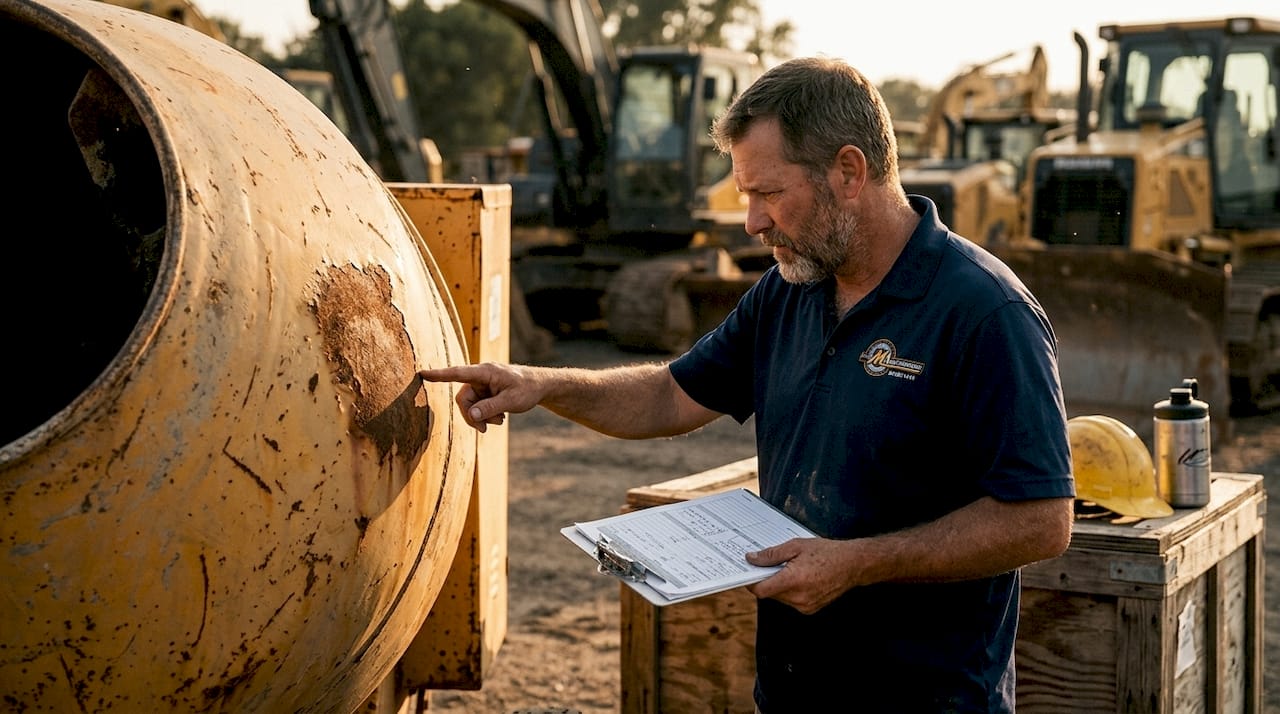
OEM trade-in units are refurbished to manufacturer specifications, often tested against original performance benchmarks, and sold with limited warranties. They represent the highest confidence level short of new equipment. Pricing is higher, but documentation is typically complete and integration costs are predictable. For mission-critical applications with limited tolerance for unplanned downtime, OEM trade-ins are worth the premium.
4. Direct purchases from plant closures or operators
Buying directly from an operator shutting down a facility or selling surplus assets can produce the best acquisition pricing in any channel. The seller typically has full maintenance histories, knows the equipment’s operational quirks, and has an incentive to move assets quickly. The buyer’s obligation is to perform rigorous self-evaluation, often requiring third-party inspection services. Understanding brokerage and auction processes helps clarify when direct purchases are preferable to facilitated channels.
5. Regional industrial brokers
Brokers specialize in specific equipment categories or geographic markets. They add value by bridging language barriers, navigating cross-border customs requirements, and sourcing equipment that never enters public auction or dealer inventory. For specialized machinery with limited domestic supply, a regional broker may be the only viable path to acquisition within a reasonable timeline.
6. Online marketplaces
Online listing platforms offer the broadest inventory visibility but demand the most diligence. Equipment listings vary widely in accuracy, photos often omit critical details, and sellers range from sophisticated operators to individuals with no maintenance history available. Without physical inspection, online marketplace acquisitions carry elevated condition risk. The industrial equipment selling checklist provides useful benchmarks for evaluating what a legitimate listing should include.
| Buyer type | Warranty | Inspection level | Price range | Risk level |
|---|---|---|---|---|
| Auctions | None | Limited preview | Lowest | High |
| Used equipment dealers | 30 to 90 days | Basic inspection | Moderate | Medium |
| OEM trade-ins | Limited warranty | Full refurbishment | Higher | Low to medium |
| Direct from operator | None | Self-directed | Low to moderate | Medium to high |
| Regional brokers | Varies | Broker-facilitated | Moderate | Medium |
| Online marketplaces | None | Self-directed | Variable | High |
Pro Tip: Review how OEM and dealer buyer roles function within structured procurement programs to understand warranty terms and refurbishment standards before negotiating with those channels.
Comparison of buyer types: risk profiles, warranties, and acquisition costs
Warranty coverage is the clearest differentiator between buyer types, and it directly shapes total cost of ownership. A 30-day dealer warranty provides limited but meaningful protection against hidden defects discovered during commissioning. An OEM limited warranty extends further, reducing retrofit and replacement risk during early operation. Auctions and online marketplaces offer none of this. As purchase price vs. integration costs analysis consistently shows, auctions compress purchase price but inflate integration and compliance retrofit costs due to documentation gaps and missing parts.
Key cost differentials by channel:
- Auctions: Low acquisition price, high integration cost potential, zero warranty coverage, documentation gaps common.
- Dealers: Moderate acquisition price, moderate integration costs, short warranty window, partial documentation.
- OEM trade-ins: Higher acquisition price, lowest integration costs, longest warranty, complete documentation.
- Direct from operator: Low to moderate acquisition price, integration cost varies by seller, documentation often available but not guaranteed.
- Brokers: Moderate price plus broker fee, integration costs depend on equipment sourced, documentation varies.
- Online marketplaces: Variable acquisition price, high integration cost risk, no warranty, documentation rarely available.
The channel comparison also reveals a counterintuitive pattern: buyers with strong technical teams and established integration workflows may achieve a lower total delivered cost through auctions than through dealer channels, even after accounting for all additional costs. However, buyers who underestimate integration cost complexity frequently find the opposite. Reviewing auction channel pros and cons in specific equipment categories helps quantify this risk before making channel selection decisions.
Pro Tip: When modeling total cost of ownership across channels, assign a dollar value to your team’s evaluation time. If a 60-day underwriting process is required for an auction purchase, the lost opportunity cost of delayed production is a real cost that belongs in the comparison model.
Strategic recommendations for selecting a buyer type
Matching buyer type to organizational capability is the discipline most procurement teams skip. The result is channel selection driven by habit or anecdotal preference rather than structured analysis. Industrial executives who purchase used processing equipment effectively understand that larger organizations with organized procurement benefit from dealer and OEM partnerships for testing and inspection, while budget-sensitive buyers with technical staff prefer auction or direct purchases.
Recommended selection process:
- Assess internal technical capacity. Identify whether your team can independently evaluate equipment condition, estimate refurbishment costs, and manage integration logistics. If not, structured channels with inspection and warranty are mandatory.
- Define timeline constraints. If production startup has a firm date, the cost of delays compounds quickly. Channels with pre-inspected, documented inventory reduce commissioning timeline risk significantly.
- Model full integration costs. Establish a realistic estimate for rigging, freight, missing parts, electrical recertification, and safety retrofits before determining which acquisition price range is acceptable.
- Qualify third-party inspection services. For broker and dealer purchases, engage independent inspectors to validate condition claims. This is especially important when acquiring across geographic regions where direct inspection is logistically difficult.
- Build cross-functional evaluation teams. Decisions made by procurement alone often miss engineering and operations constraints. Cross-functional teams reduce the risk of post-acquisition cost surprises.
Choosing auctions wisely requires this kind of structured pre-assessment. Organizations that have developed the capacity to maximize asset recovery through auctions consistently demonstrate stronger returns than those defaulting to more expensive structured channels by habit.
Pro Tip: If your organization is evaluating a new equipment category for the first time, start with a dealer or OEM trade-in purchase even if you would ordinarily use auctions. The documentation and inspection data gathered during that first acquisition can calibrate future auction evaluations for similar equipment.
Best practices for operationalizing used equipment acquisition
Acquisition execution steps for industrial teams:
- Perform in-person inspections whenever possible, particularly at auctions. Remote evaluation introduces condition uncertainty that documentation cannot fully resolve.
- Capture detailed photographs of all control panels, nameplates, electrical enclosures, and mechanical interfaces. As auction acquisition practices confirm, photographic documentation of control panels and budgeting for electrical and safety retrofits are foundational to successful auction acquisitions.
- Budget for integration costs as a separate line item from acquisition price. Rigging, freight, electrical recertification, missing safety components, and refurbishment labor should each carry individual estimates.
- Engage third-party inspection services for high-value acquisitions or when internal expertise is limited. A qualified third-party inspector typically costs a fraction of one avoidable integration problem.
- Assign clear internal ownership for documentation collection. Missing manuals, operating procedures, and maintenance records create engineering delays that consume budget and schedule.
Operational requirements to establish before purchase:
- Confirm site readiness, including utility connections, floor load capacity, and environmental compliance status.
- Verify that spare parts and consumables for the acquired equipment are commercially available.
- Review the industrial equipment inspection checklist against your specific asset category.
- Establish an integration timeline with clear milestones tied to production startup requirements.
Efficient used equipment acquisition is a process discipline, not a one-time negotiation. Teams that accelerate asset disposition effectively understand that preparation before the acquisition event is where value is created or lost.
Pro Tip: Create a post-acquisition review process. Tracking actual integration costs against pre-purchase estimates builds institutional knowledge that directly improves future acquisition accuracy and channel selection discipline.
Rethinking buyer types: the critical role of internal expertise and speed in acquisition success
The conventional framework for evaluating used equipment channels defaults to two variables: price and warranty. Executives compare acquisition price across channels, weigh warranty terms, and select the option that appears to offer the best balance. This approach is incomplete and frequently leads to suboptimal outcomes.
The real competitive advantage in used equipment acquisition belongs to organizations that have invested in internal technical evaluation capacity and rapid decision-making processes. As in-house technical evaluation frameworks demonstrate, buyers equipped with in-house technical evaluation teams can leverage inexpensive auction channels effectively by managing information gaps and integration complexity. The channel that appears risky to an underprepared buyer becomes a capital-efficient option for a technically capable one.
Speed matters equally. Evaluation cycles that extend into weeks create compounding costs: production downtime, missed acquisition windows when inventory is limited, and carrying costs on idle capital. Organizations that have built cross-functional evaluation teams and clear approval workflows can compress acquisition decisions from weeks to days. That speed creates access to acquisition opportunities that slower buyers cannot capture. Examining brokerage and auction insights from a seller’s perspective also helps buyers understand how to position offers competitively when inventory is contested.
The implication is direct: defaulting to dealer or OEM channels because they are familiar or feel safer is a policy choice that deserves scrutiny. When the premium paid for structured channels consistently exceeds the integration savings they deliver, the policy is costing capital. Measuring your organization’s actual technical underwriting capacity is the starting point for determining whether that premium is justified, or whether it represents an efficiency gap that can be closed.
Partner with Maas Companies for strategic acquisition and asset recovery
Understanding the full spectrum of buyer types and acquisition channels is one dimension of asset recovery excellence. Executing those strategies with the right partner is another.
Maas Companies brings decades of international experience in industrial equipment auction, brokerage, and plant liquidation to each client engagement. Whether you are acquiring surplus equipment or managing a complete facility disposition, Maas provides expert marketing, inspection facilitation, and buyer network access that maximizes recovery outcomes. Our equipment auction and brokerage services are tailored to industrial executives who need results, not uncertainty. Explore the full Maas services portfolio to identify the right engagement model for your asset recovery objectives. You can also review an active example of our capabilities through a current industrial equipment auction featuring a biodiesel plant and oilseed processing facility.
Frequently asked questions
What are the main types of buyers for used industrial equipment?
The main buyer types include auctions, used equipment dealers, manufacturer trade-ins, direct purchases from operators, regional brokers, and online marketplaces, each varying in warranty coverage, inspection depth, and price range.
How does warranty availability affect used equipment acquisition?
Warranties reduce buyer risk by assuring equipment condition at transfer, while as-is purchases without warranty typically carry higher integration and retrofit expenses that must be factored into total cost of ownership. Warranty coverage is one of the strongest predictors of downstream cost variance.
What role does internal technical expertise play in choosing a buying channel?
Technical expertise allows buyers to evaluate equipment condition independently and estimate refurbishment costs accurately, which means organizations with strong engineering teams can pursue lower-priced, higher-risk channels like auctions without absorbing disproportionate condition risk. In-house technical evaluation is a direct competitive advantage in auction-based acquisition.
Why should industrial executives consider speed-to-decision when buying used equipment?
Slow evaluation cycles create production downtime costs that can exceed the price savings available in lower-cost channels, making faster structured channels like dealers or OEM trade-ins more cost-effective despite higher acquisition prices. Speed-to-decision changes the effective economics of channel choice in ways that simple price comparisons do not capture.
What are best practices for buying used equipment at auctions?
Best practices include in-person inspections during preview windows, detailed photographic documentation of control panels and nameplates, and separate budget allocations for electrical recertification and safety retrofits. Successful auction acquisitions depend on pre-purchase preparation rather than post-acquisition problem-solving.
Recommended
- How to Choose the Right Auction for Industrial Equipment | Blog | Insights on Asset Liquidation and Auction Trends
- Why buy surplus equipment? Cut costs, preserve cash, boost ESG | Blog | Insights on Asset Liquidation and Auction Trends
- Surplus equipment sale guide: maximize asset recovery fast | Blog | Insights on Asset Liquidation and Auction Trends
- Why companies auction machinery: maximize asset recovery | Blog | Insights on Asset Liquidation and Auction Trends