
Blog
How to conduct equipment auctions for maximum asset recovery

TL;DR:
- Auctions provide speed, transparency, and access to a global buyer network for equipment liquidation.
- Proper preparation, accurate valuation, and strategic lotting are crucial for maximizing recovery.
- Hybrid approaches combining auction and private sales often yield the best overall results.
When a manufacturing facility faces restructuring or downsizing, idle equipment stops generating revenue and starts accumulating carrying costs. Every week assets sit unused, their market value erodes. Corporate decision-makers need a clear, structured approach to convert surplus machinery into capital quickly and transparently. This guide walks you through the complete equipment auction process, from understanding core concepts to post-sale documentation, with practical tables and comparison points to support fast, profitable decisions. Whether you are managing a single-plant closure or a multi-site disposition, the strategies here are designed to help you maximize recovery.
Table of Contents
- Understanding equipment auction fundamentals
- Preparing for a successful equipment auction
- Valuation strategies and sale planning
- Marketing, execution, and post-sale process
- Our perspective: Hybrid auction strategies and real-world lessons
- Work with the leaders in equipment auctions and asset recovery
- Frequently asked questions
Key Takeaways
| Point | Details |
|---|---|
| Choose the right auction partner | Industry expertise and transparency are vital for a successful sale process. |
| Prepare and present assets professionally | Detailed documentation and high-quality photos maximize bidder interest and recovery. |
| Understand valuation methods | Selecting the right valuation approach guides realistic expectations and reserve settings. |
| Embrace hybrid strategies | Combining auction and private sales can boost both speed and total asset recovery. |
Understanding equipment auction fundamentals
Before committing to any disposition strategy, it pays to understand the terminology and mechanics that govern industrial equipment auctions. Three valuation types form the foundation of every auction plan.
Orderly Liquidation Value (OLV) assumes a reasonable marketing period with motivated but not distressed sellers. Forced Liquidation Value (FLV) reflects what equipment brings under time pressure, typically at a public auction with limited exposure. Fair Market Value (FMV) represents the price a willing buyer and seller agree upon with no urgency on either side. Understanding valuation types: OLV, FLV, FMV is critical because each drives a different reserve-setting strategy and shapes realistic seller expectations.
A reserve is the minimum acceptable bid. Lotting refers to how assets are grouped for sale, either individually or bundled, to attract the broadest buyer pool. Both decisions directly affect final recovery.
The table below compares the three primary disposition methods:
| Method | Typical timeline | Recovery potential | Transparency | Best for |
|---|---|---|---|---|
| Auction | 45 to 90 days | Moderate to high | High | Bulk, time-sensitive |
| Private sale | 90 to 180 days | High (selective) | Moderate | Unique, high-value assets |
| Wholesale | 7 to 30 days | Low | Low | Rapid clearance |
Auctions are preferred for speed and transparency in restructuring scenarios because they create competitive bidding environments that drive prices upward while delivering a clear, documented chain of sale.
Key benefits of auctions for industrial equipment liquidation include:
- Competitive bidding that can exceed estimated OLV
- Defined sale dates that align with plant closure schedules
- Access to a global buyer network, including end-users, dealers, and investors
- Full transparency in pricing, which satisfies board and lender reporting requirements
- Reduced carrying costs by compressing the disposition timeline
For a deeper look at why companies auction machinery, the strategic and financial rationale becomes even clearer when you factor in depreciation curves and facility lease obligations.
Preparing for a successful equipment auction
With fundamental auction knowledge in place, it is time to set the stage for your own equipment auction. Preparation is where recovery rates are won or lost, and the difference between a well-prepared lot and a neglected one can be significant in final bid prices.
The step-by-step process for a successful industrial auction follows a clear sequence: select a reputable partner, conduct valuation, prepare assets, execute marketing, conduct the auction, and manage post-sale activities. Skipping or rushing any stage introduces risk.
The table below outlines asset readiness requirements:
| Preparation task | Standard requirement | Impact on recovery |
|---|---|---|
| Documentation | Title, service records, manuals | High |
| Cleaning | Operational condition, no debris | Moderate to high |
| Photography | Professional, multi-angle shots | High |
| Lotting | Strategic grouping by type or value | High |
| Condition report | Third-party or internal assessment | Moderate |
When selecting an auction partner, look for proven experience in your specific equipment category, a documented global buyer database, and a transparent fee structure. Red flags include vague marketing commitments, no verifiable past results, and pressure to accept low reserves without justification. Review the equipment auction preparation checklist to ensure nothing is overlooked before listing.
Pro Tip: Detailed asset records paired with professional photography consistently attract more registered bidders. More bidders mean more competition, and more competition means higher final bids.
Here is the sequential preparation process in order:
- Select an experienced auction partner with industrial sector credentials
- Commission a professional valuation (OLV, FLV, or FMV as appropriate)
- Clean, repair, and document all assets to be included
- Work with your partner on lotting strategies for auctions that group assets for maximum buyer appeal
- Approve the asset listing, descriptions, and photography before publication
- Confirm all legal, title, and compliance documentation is complete
Valuation strategies and sale planning
Now that your assets are prepped and your team is ready, focus turns to getting the numbers right for maximum return. Valuation is not a formality. It is the analytical backbone of your entire auction strategy.
Each valuation type serves a different purpose. OLV is appropriate when you have 60 or more days and want to set reserves that reflect realistic market conditions. FLV applies when timelines are compressed and you need to move assets quickly regardless of ideal pricing. FMV is useful as a benchmark when negotiating with private buyers alongside the auction process. Selecting the right valuation type for your situation prevents both under-pricing and the costly outcome of unsold lots.
Common valuation mistakes that reduce recovery include:
- Ignoring current secondary market trends for specific equipment categories
- Over-valuing specialty or highly customized machinery with a limited buyer pool
- Applying a single valuation type across an entire mixed-asset portfolio
- Setting reserves too high based on original purchase price rather than current market data
- Failing to account for removal, rigging, and transport costs that affect buyer net cost
Pro Tip: When your portfolio includes assets of varying age, condition, and type, a blended valuation approach works best. Apply OLV to newer, well-maintained equipment and FLV to older or highly specialized items. This keeps reserves realistic across the board and reduces the risk of unsold lots.
Sale planning should also address auction format. Online-only auctions reach a broader geographic audience but may limit competitive energy on large, complex equipment. Live auctions with online bidding integration combine local presence with global reach. Your asset lotting for auctions strategy should align with your chosen format, grouping complementary items to attract buyers who want complete production lines rather than individual pieces.
Marketing, execution, and post-sale process
With your strategy and valuation dialed in, it is time to launch and see results through a well-executed auction process. Marketing determines how many qualified buyers register, and buyer volume is the single greatest driver of competitive bidding.
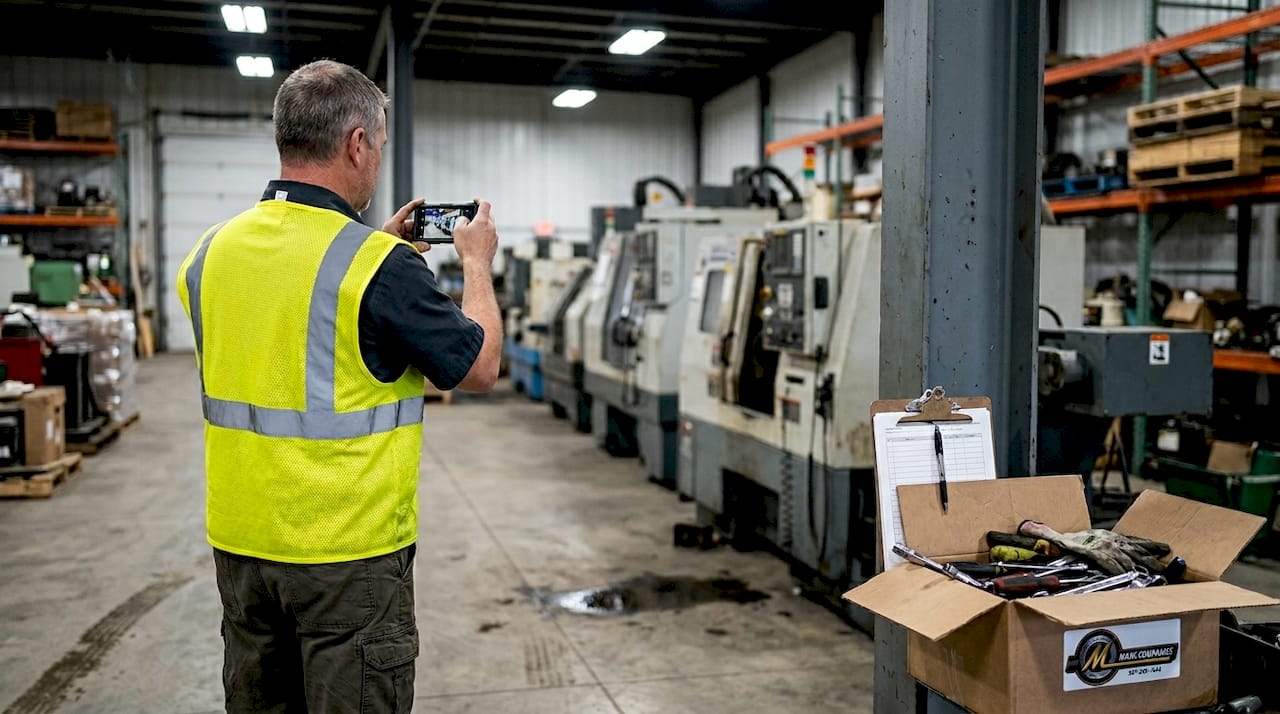
A professional marketing approach targets global buyers through multiple channels simultaneously, including industry-specific email databases, trade publications, online auction platforms, and direct outreach to known end-users and dealers.
The execution sequence runs as follows:
- Launch multi-channel marketing campaign at least 3 to 4 weeks before auction date
- Open bidder registration and verify buyer qualifications
- Publish detailed asset listings with photos, condition reports, and lot descriptions
- Conduct live or online auction with real-time bidding support
- Confirm winning bids and issue buyer invoices immediately post-sale
- Collect payment within the agreed settlement window, typically 24 to 72 hours
- Coordinate asset removal, rigging, and shipping logistics
- Issue final sale report with per-lot results and total recovery figures
To create a competitive bidding environment, consider these tactics:
- Set reserves at or slightly below OLV to encourage early bidding momentum
- Use countdown timers and auto-extend features in online auctions to prevent last-second sniping
- Provide detailed rigging and removal information upfront to reduce buyer hesitation
- Offer preview days so buyers can inspect equipment before bidding
- Promote speed in asset disposition as a selling point to attract buyers who need quick delivery
“The right exposure and timely buyer outreach turn assets into results.”
Post-sale, the process is just as critical as the auction itself. Secure payment collection protects your recovery. Legal documentation, including bills of sale and title transfers, protects your organization from future liability. Asset removal deadlines keep your facility on schedule. A final reporting package, covering per-lot results, buyer information, and total proceeds, satisfies board, lender, and compliance reporting requirements. Review available auction marketing strategies to refine your approach for future dispositions.
Our perspective: Hybrid auction strategies and real-world lessons
You have seen how the process works from start to finish. Here is where companies often gain or lose the most in actual practice.
The most consistent finding across complex industrial dispositions is that a single-channel approach leaves money on the table. Hybrid strategies that blend auction and private sale processes routinely deliver both higher recovery rates and faster overall turnarounds than either method used alone. The logic is straightforward: commodity equipment moves quickly at auction, while unique or high-specification assets attract premium pricing through targeted private negotiations.
The real-world pitfalls we see most often are waiting too long to engage professional guidance, underinvesting in marketing, and treating all assets as equivalent when they clearly are not. A CNC machining center and a standard conveyor belt do not belong in the same disposition strategy.
Pro Tip: Segment your portfolio early. Route unique, high-value assets toward private sale channels and group commodity items for auction. This approach maximizes both speed and ROI without sacrificing one for the other.
Engaging a partner with brokerage and auction combined capabilities gives your team the flexibility to execute this hybrid approach without managing multiple vendors.
Work with the leaders in equipment auctions and asset recovery
If you are ready to maximize your equipment recovery, let experienced professionals support your company’s goals. Maas Companies brings decades of proven results in marketing industrial plants, equipment, and commercial properties to qualified buyers worldwide.
Our team builds aggressive, multi-channel marketing plans tailored to your specific assets and timeline. We have the industry relationships, technical knowledge, and global buyer network to drive competitive bidding and deliver the recovery your organization requires. Whether you need to sell industrial equipment quickly or want a full review of your options, we are ready to help. Explore our full range of Maas Companies services or review an active example like our Zein extraction process plant auction to see our approach in action.
Frequently asked questions
What types of equipment are best suited for auction sales?
Surplus, idle, or mass-produced manufacturing and processing equipment typically performs well in auction settings because it attracts a broad buyer pool. Auctions are preferred for these categories due to their speed and pricing transparency.
How long does it take to liquidate equipment through an auction?
Most industrial equipment auctions conclude within 45 to 90 days from preparation to final sale, making them significantly faster than private sale alternatives.
What documents are needed to prepare equipment for auction?
Essential documents include clear titles, service records, warranty information, operator manuals, and detailed condition reports. Proper asset documentation directly increases buyer confidence and final bid values.
How does valuation impact equipment auction outcomes?
Professional valuations help set realistic reserves, ensure pricing transparency, and reduce the risk of unsold assets. Selecting the correct valuation type for your timeline and asset mix is the single most important pre-auction decision.
Is it possible to combine auctions with private sales for best results?
Yes, many companies use hybrid disposition strategies to achieve rapid sales on commodity items while securing premium recoveries on unique or high-specification assets through private channels.
Recommended
- Auction strategies for small businesses: Maximize asset recovery | Blog | Insights on Asset Liquidation and Auction Trends
- How Auctions Help Speed Up Industrial Asset Disposition | Blog | Insights on Asset Liquidation and Auction Trends
- How Auctions Help Speed Up Industrial Asset Disposition | Blog | Insights on Asset Liquidation and Auction Trends
- Surplus equipment sale guide: maximize asset recovery fast | Blog | Insights on Asset Liquidation and Auction Trends