
Blog
Types of Surplus Inventory Buyers: Maximize Recovery

TL;DR:
- Different buyer channels require strategic matching based on asset value, condition, and urgency.
- Multi-channel approaches maximize recovery by segmenting inventory and utilizing various buyer types.
- Fast cash often comes from liquidators, while high-value assets benefit from brokers or private sales.
Choosing the wrong buyer for your surplus industrial assets can cost your organization tens of thousands of dollars in lost recovery value. For financial professionals and corporate leaders in manufacturing, the decision is rarely straightforward: do you prioritize speed, maximize return, or balance both? The landscape of surplus inventory buyers is broad, ranging from direct liquidators to online auction platforms, scrap recyclers, and specialized brokers. Each buyer type carries distinct recovery benchmarks, timelines, and risk profiles. Understanding how these categories work, and when to use each, is the foundation of a sound asset recovery strategy.
Table of Contents
- Understanding surplus inventory buyer categories
- Liquidators and asset recovery firms
- Scrap buyers and recyclers
- Online marketplaces and auction platforms
- Brokers, wholesalers, and specialized buyers
- A smarter liquidation strategy: Beyond buyer types
- Ready to connect with expert surplus buyers?
- Frequently asked questions
Key Takeaways
| Point | Details |
|---|---|
| Tailor buyers to inventory | The most profitable and efficient surplus sales result from matching each asset type with its ideal buyer—from scrap to specialist brokers. |
| Balance speed and ROI | Direct liquidation provides quick cash but lower returns, while consignment and online auctions can boost recovery rates if time allows. |
| Multi-channel strategies win | Segmenting inventory and using blended sales channels maximizes overall asset recovery for complex or varied surplus portfolios. |
| Preparation boosts value | Investment in asset preparation and documentation increases recovery percentages, especially for online auctions and asset recovery firms. |
Understanding surplus inventory buyer categories
The first step in any effective surplus asset disposition plan is recognizing that not all buyers are equal, and not all assets should go to the same channel. The main buyer categories you will encounter in industrial surplus include:
- Liquidators and asset recovery firms: Professional buyers who purchase or consign large volumes of industrial surplus, often providing the fastest cash offers.
- End-user buyers: Companies or individuals who purchase equipment for continued operational use, typically offering higher recovery but requiring more time and marketing effort.
- Scrap buyers and recyclers: Focused on material value rather than resale, these buyers handle obsolete or end-of-life equipment.
- Online marketplace and auction platforms: Digital channels that reach broad audiences and work well for a wide range of asset types.
- Brokers and wholesalers: Intermediaries who connect sellers with niche buyers, particularly useful for unique or high-value items.
Selecting the right buyer type depends on four primary criteria: speed of sale, expected recovery percentage, asset condition and category, and urgency of the disposition. A facility closure with a hard deadline calls for a different strategy than a routine inventory reduction program.
Leading manufacturers use a tiered decision framework to sort assets before going to market. Maximizing asset recovery starts with segmenting inventory by value, condition, and urgency, then matching each segment to the most appropriate buyer channel. As a practical guide on asset liquidation decision factors notes, segmenting by value, condition, and urgency using a decision framework is the most reliable method for improving overall recovery.
Pro Tip: For mixed-value inventories, consider a split-buyer strategy. Route high-value, functional equipment to auction or end-user channels, while sending low-value or obsolete items directly to scrap buyers. This approach avoids the common mistake of applying a single channel to an entire asset pool.
Liquidators and asset recovery firms
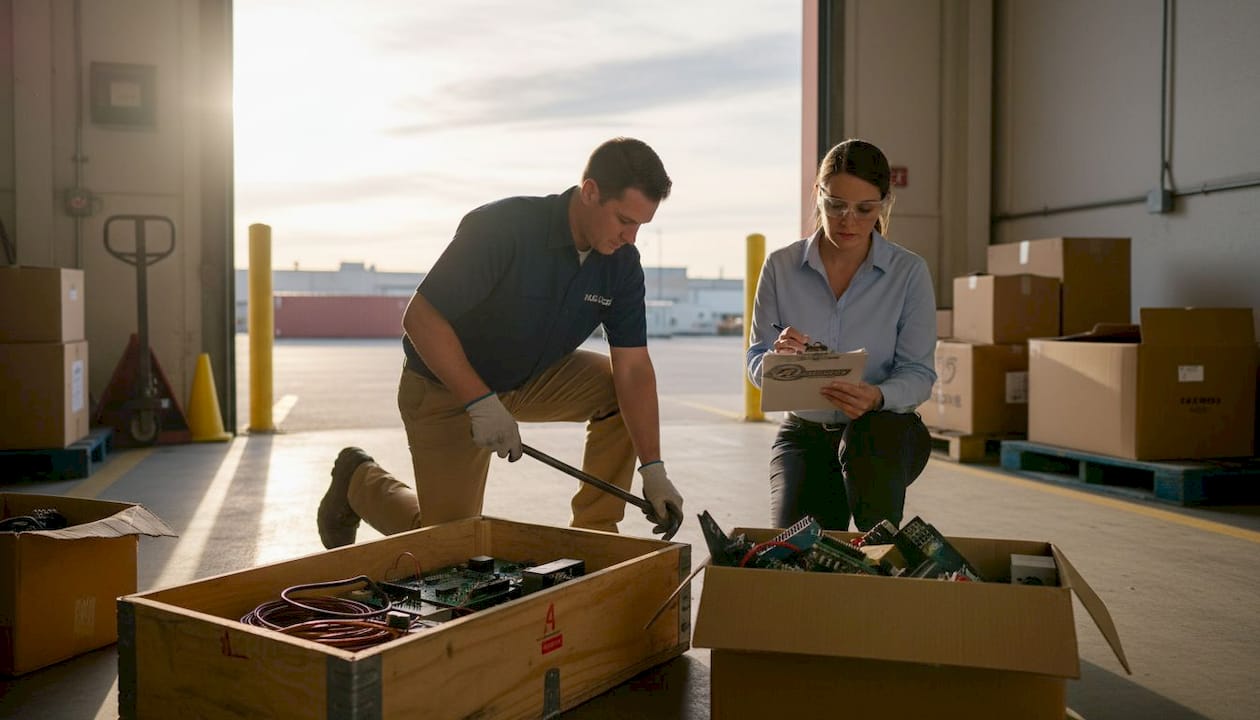
Liquidators and professional asset recovery firms are the most recognized buyers in the industrial world. They operate through three primary models: direct purchase, consignment, and auction facilitation. Each model carries a different financial profile.
| Model | Typical recovery | Timeline |
|---|---|---|
| Direct purchase | 40-60% of market value | Days to 2 weeks |
| Consignment | Up to 65% of market value | 30-90 days |
| Auction facilitation | 50-65% depending on demand | 30-60 days |
Direct purchase provides immediate cash but at a discount. Consignment takes longer but can recover more, since the liquidator markets the assets to their buyer network before settling accounts. Asset recovery services typically include inventory assessment, logistics coordination, and buyer outreach, reducing the administrative burden on your team.
Liquidators are best suited for:
- Industrial MRO (maintenance, repair, and operations) surplus that is functional but no longer needed.
- Facility closure scenarios where speed and logistics support are priorities.
- Large equipment lots where a single buyer can absorb the full inventory.
As noted in guidance on we buy surplus programs, liquidators and asset recovery firms offer consignment or auction options for higher potential recovery, especially for industrial equipment. The tradeoff is timing: direct sales close fast but leave money on the table compared to a well-managed consignment.
For organizations managing plant liquidation for recovery, liquidators often serve as the primary channel because they can handle volume, coordinate removal, and provide documentation for financial reporting. Understanding auctions for asset disposition alongside direct purchase options gives financial leaders the full picture before committing to a channel.
Scrap buyers and recyclers
Not all surplus holds resale value. Obsolete machinery, corroded piping, worn tooling, and end-of-life electrical components often have no functional market. For these assets, scrap buyers and recyclers are the appropriate channel, and understanding how they operate helps you extract maximum value from what might otherwise be a cost center.
Assets that typically qualify for the scrap route include:
- Ferrous and non-ferrous metals such as steel frames, copper wiring, and aluminum castings.
- Obsolete machinery that cannot be economically repaired or repurposed.
- Piping, valves, and fittings that are corroded or no longer meet current specifications.
- Electrical components that are out of compliance with current safety standards.
The process is straightforward. Scrap buyers grade and weigh materials on-site or at their facility, then offer payment based on current commodity prices. Turnaround is fast, often within days of assessment. As detailed in resources on industrial asset scrapping, scrap buyers and recyclers handle low-value or end-of-life industrial surplus like metals, valves, and piping, making them a practical solution when resale is not viable.
Recovery rates through scrap channels are modest, typically ranging from 5-15% of original asset cost, but the strategic value extends beyond the check. Clearing floor space, meeting environmental compliance requirements, and avoiding ongoing carrying costs all contribute to the net benefit.
Pro Tip: Segregating materials by type before the scrap buyer arrives can increase your return by 10-20%. Mixed loads are graded at the lowest value in the pile. Separating copper from steel, or clean aluminum from contaminated material, takes minimal effort but pays measurable dividends. Documentation of material weights and grades also supports internal financial reporting.
For a broader view of how scrapping fits into a full recovery plan, guidance on selling surplus for scrap provides practical steps for integrating this channel into your overall strategy.
Online marketplaces and auction platforms
The digital marketplace has fundamentally changed how industrial surplus is sold. Online auction platforms and fixed-price marketplaces now reach global buyer pools, and the growth trajectory is steep. 2026 asset management trends confirm that online marketplaces and auction platforms enable broad buyer access for surplus assets and are experiencing rapid growth, driven by improved logistics integration and buyer confidence in remote purchasing.
| Platform type | Best for | Typical recovery | Timeline |
|---|---|---|---|
| Online auction | Equipment lots, machinery | 28-50% of cost | 2-6 weeks |
| Fixed-price marketplace | Smaller items, parts | 20-40% of cost | Variable |
| Hybrid platforms | Mixed inventories | 30-45% of cost | 3-8 weeks |
Auctions generate competitive bidding, which is most effective when assets are in demand and the buyer pool is large. Fixed-price platforms work better for lower-value items or parts where buyers want certainty rather than competition. Recovery benchmarks for industrial equipment typically land at 28-35% of original cost, but with proper preparation, including cleaning, photography, and accurate descriptions, returns can reach 40-50%.
Strategic grouping matters. Auction specialists consistently report that bundling complementary assets, such as a complete production line rather than individual machines, increases realized prices by attracting buyers who need a turnkey solution rather than piecemeal components.
For organizations looking to auction surplus machinery, the preparation phase is as important as the platform selection. Timing also matters: listing assets when market demand is active, rather than at fiscal year-end when competitors flood the market, improves outcomes. Resources on auctions for speedy disposition outline how to align timing, platform, and asset presentation for stronger results.
Brokers, wholesalers, and specialized buyers
For certain assets, neither scrap channels nor mainstream auction platforms are the right fit. Unique equipment, highly specialized machinery, or assets valued above $100,000 often require a different approach. Brokers, wholesalers, and specialized buyers fill this gap by connecting sellers with niche markets that general platforms cannot reach.
Here is how the process typically works:
- Asset assessment: The broker evaluates the equipment’s specifications, condition, and market demand within their network.
- Buyer identification: Using industry contacts and databases, the broker identifies potential buyers who have a specific need for the asset.
- Negotiation and terms: The broker manages pricing discussions, often working on a commission basis ranging from 10-20% of the sale price.
- Compliance and documentation: For high-value transactions, brokers coordinate title transfers, export documentation, and chain of custody records.
- Settlement: Funds are transferred once the buyer takes possession, which can take 90-180 days for complex or high-value transactions.
As guidance on brokers for surplus liquidation notes, highly specialized or low-demand assets often go to brokers or specialists, with high-value items sometimes requiring private sale channels over 90-180 days. The longer timeline is a real consideration, but the recovery potential is significantly higher than auction or direct sale for the right asset categories.
Vetting brokers carefully is essential. Request references from prior industrial clients, confirm their network reach in your specific equipment category, and clarify commission structures before signing any representation agreement. For guidance on choosing auction channels versus broker representation, a side-by-side comparison of timelines and recovery expectations helps clarify the decision.
A smarter liquidation strategy: Beyond buyer types
After reviewing the full spectrum of buyer categories, it is worth challenging a common assumption: that selecting one buyer type and applying it across an entire surplus inventory is an efficient strategy. In practice, this approach consistently leaves value on the table.
The most effective industrial liquidation programs we have observed blend multiple channels simultaneously. High-value, functional equipment goes to auction or broker channels for maximum recovery. Mid-tier items move through liquidators or online platforms for balanced speed and return. End-of-life materials route directly to scrap buyers for fast clearance and compliance.
As asset recovery services research confirms, quick liquidation prioritizes speed and space recovery, but strategic recovery maximizes ROI via timing and diversified channels. The distinction is not just academic. On a $2 million surplus inventory, the difference between a single-channel and a multi-channel strategy can represent $200,000 to $400,000 in additional recovery.
Market conditions also shift. Commodity prices affect scrap returns. Buyer demand cycles affect auction outcomes. A strategy built on a single channel becomes vulnerable to these fluctuations. Revisiting your buyer mix as conditions change, not just at the start of a project, is a discipline that separates high-performing recovery programs from average ones. For a practical framework, the hybrid surplus recovery guides at Maas Companies provide actionable steps for building a segmented, adaptive approach.
Ready to connect with expert surplus buyers?
Putting a multi-channel surplus strategy into action requires more than a framework. It requires experienced partners who have established buyer networks, auction capabilities, and direct sale channels across industrial asset categories.
Maas Companies works with financial professionals and corporate leaders to match surplus inventory to the right buyer channels, from industrial auction and brokerage services to direct marketing campaigns that reach qualified end-users globally. Whether your priority is speed, maximum recovery, or regulatory compliance, our specialized asset services are structured to align with your goals. Connect with the equipment auction experts at Maas Companies to assess your inventory and identify the optimal disposition path.
Frequently asked questions
What type of surplus inventory buyer delivers the fastest payment?
Liquidators and asset recovery firms typically provide the quickest cash offers, though the tradeoff is a lower recovery percentage compared to consignment or auction. As direct buy programs confirm, fast cash offers range from 40-60% of market value but close in days rather than weeks.
What is the typical financial recovery when using an online auction platform for surplus assets?
Online auction platforms often recover 28-35% of original cost, but returns can reach up to 50% with asset preparation and effective marketing. Recovery benchmarks for industrial equipment confirm this range, with preparation being the primary driver of above-average results.
When should surplus inventory be scrapped instead of resold?
Scrapping is recommended for obsolete, damaged, or extremely low-value items where resale would not offset costs or effort. Scrap buyers handle end-of-life industrial surplus like metals, valves, and piping when functional resale is not viable.
Do brokers or specialized buyers handle unique or high-value surplus?
Brokers and specialized buyers are ideal for unique, rare, or high-value assets, often through private channels that take longer but maximize recovery. High-value private sales typically require 90-180 days but deliver significantly stronger returns than general auction channels.
How can I choose the best buyer type for my surplus inventory?
Evaluate each asset’s value, urgency, and condition, then align with a buyer type: liquidator for speed, auction for broad reach, broker for unique items, and scrap buyer for end-of-life goods. Segmenting by value and urgency using a decision framework is the most reliable starting point.
Recommended
- Surplus equipment sale guide: maximize asset recovery fast | Blog | Insights on Asset Liquidation and Auction Trends
- Liquidation sales explained: Maximize asset recovery | Blog | Insights on Asset Liquidation and Auction Trends
- Auction strategies for small businesses: Maximize asset recovery | Blog | Insights on Asset Liquidation and Auction Trends
- Maximize Asset Recovery: Top Real Estate Liquidation Methods | Blog | Insights on Asset Liquidation and Auction Trends