

Blog
Asset Marketing Plan: A Practitioner’s Guide for Lenders

An asset marketing plan for liquidation is a structured, approvals-driven commercial playbook that defines how physical industrial or commercial assets will be valued, offered to buyers, and sold, to maximize recovery while controlling carrying costs. For lenders, receivers, and restructuring counsel, it is the governing document that determines sale method, pricing gates, and buyer outreach from the moment an asset enters disposition through final site clearance. Firms like Maas Companies Inc. treat this plan as an operational instrument, not a marketing brief, because courts and investors expect documented valuation gates and signed approvals at every decision point, as the Akin Gump UCC Foreclosure primer confirms.
Every usable plan contains these core sections:
- Valuation evidence: Broker Price Opinions (BPOs) and formal appraisals with pricing gate rules
- Sale method decision: Auction vs. negotiated sale with documented rationale
- Buyer targeting: Identified buyer segments and outreach channels
- Timeline and approvals: Milestone dates, internal lender sign-offs, and judicial approvals where required
- Legal and compliance checkpoints: Title, environmental, and contractual requirements
Key Takeaways
An asset marketing plan for industrial or commercial liquidation is an approvals-driven workflow, not a marketing brief, and its effectiveness depends on documented valuation gates, a defined sale method, and a named authority matrix.
| Point | Details |
|---|---|
| Define valuation gates first | Require at minimum two BPOs and one appraisal before setting any reserve or strike price. |
| Choose sale method by objective | Use auction for speed and broad pools; use negotiated sale for specialized buyers or brownfield sites. |
| Lock the approval matrix | Name who authorizes each pricing change and offer acceptance before marketing begins. |
| Track KPIs from day one | Monitor time to first qualified offer, bid count, and carrying-cost run-rate weekly. |
| Maascompanies for execution | Maascompanies delivers inventory, valuation, and buyer outreach plans as initial engagement deliverables for lenders and counsel. |
Table of Contents
- What must every asset marketing plan include?
- How do you choose between auction and negotiated sale?
- Step-by-step workflow for lender-ordered and court-ordered dispositions
- Which marketing channels reach qualified buyers for industrial assets?
- How do pricing strategy and timeline choices affect your net proceeds?
- Legal and compliance checkpoints you cannot skip
- How do you select the right broker or auctioneer?
- What KPIs should the plan track and report?
- One-page asset marketing plan template
- An editorial perspective on what most disposition plans get wrong
- Maascompanies: execution support for lenders and counsel
- Sources
What must every asset marketing plan include?
The components of an asset marketing plan for REO, lender-ordered, and court-ordered sales fall into five decision-producing sections. Each must generate a specific output, not just a description.
- Valuation inputs: At minimum two BPOs and one formal appraisal, per standard REO disposition practice. The output is a documented reserve price and a pricing gate that specifies when and by whom a price reduction can be authorized.
- Sale method: A written decision between auction and negotiated sale, with the criteria that drove the choice and the stakeholder who approved it.
- Buyer targeting and marketing mix: Named buyer segments (industry operators, equipment dealers, developers), selected channels, and a cadence for outreach.
- Operational items: Stabilization steps, a separable-assets strategy distinguishing equipment from real estate, site access protocols, and safety requirements.
- Approvals and documentation: Internal lender approval matrix, judicial approvals for court-ordered sales, and required transactional documents.
Pro Tip: Request a written approval matrix from your broker before marketing begins. It should name who authorizes each pricing change, offer acceptance, and closing step. Without it, a single missing signature can delay a closing under court timelines.
How do you choose between auction and negotiated sale?
The sale method decision is the single highest-leverage choice in the entire disposition strategy. Getting it wrong costs weeks and recovery dollars.
Triggers favoring auction:
- Fixed deadline for site clearance or lease termination
- Broad buyer pool with no dominant specialized buyer
- Speed is the primary recovery objective
- Assets are fungible or have established secondary-market pricing
Triggers favoring negotiated sale:
- Specialized buyer pool requiring pre-qualification and NDA-gated offering memoranda
- Environmental complexity or brownfield conditions that require buyer due diligence before bidding
- Regulatory or court constraints that limit public marketing
- Equipment or systems that retain significantly more value when sold intact to an industry operator
Carrying costs, including taxes, insurance, and security, should be modeled into the reserve decision before the method is chosen. A negotiated sale that takes 90 days longer than an auction may erode net proceeds even if the gross price is higher.
Timeline expectations: REO sales can close quickly when buyers are all-cash and prepared. Court-ordered sales commonly take 60–120 or more days because of judicial approvals and overbid procedures.
For brownfield or highly specialized sites, pre-qualifying buyers and sharing detailed offering memoranda under NDA materially reduces transactional risk, as documented in Colliers’ industrial surplus disposition analysis.
Step-by-step workflow for lender-ordered and court-ordered dispositions
Large industrial liquidations require a structured timeline starting as early as nine months before handover, with a central coordinator enforcing milestone dates across operations, finance, legal, and HSE. The workflow below applies to REO, lender-ordered, and court-ordered sales.
- Scope and stakeholder alignment (T-9 to T-6 months): Identify owner, asset manager, legal counsel, environmental consultant, operations lead, and the marketing firm (e.g., Maas Companies Inc.). Confirm authority matrix and communication protocols.
- Inventory and condition assessment (T-6 to T-4 months): Tag all assets with serial numbers and photos. Segregate equipment from real estate. Flag assets requiring environmental remediation or title clearance.
- Valuation gates (T-4 to T-3 months): Commission BPOs and appraisal. Set reserve/strike price. Document who approves any deviation from the reserve.
- Lotting strategy and sale packaging (T-3 to T-2 months): Decide which systems sell intact and which go to lot auction. Prepare NDA-gated offering memoranda for prequalified buyers. Confirm buyer prequalification criteria.
- Marketing and buyer outreach (T-2 to T-1 months): Execute outreach cadence across channels. Open bidding or sealed-offer process begins. Track qualified interest against KPI targets.
- Offer submission and approval (T-1 month): Collect offers. Run through approval matrix. For court-ordered sales, file for judicial approval and manage overbid process.
- Closing and site clearance (T-0): Confirm payment terms and collection windows. Coordinate dismantling logistics. Transfer title. Enforce last-use dates and clearance deadlines.
Pro Tip: Assign one named coordinator to enforce collection windows. Operational conflict between continuing plant activity and the liquidation schedule is the most common cause of timeline overruns in multi-asset dispositions.
For a detailed look at the industrial property disposition process, Maascompanies provides practitioner-level workflow documentation.
Which marketing channels reach qualified buyers for industrial assets?
Reaching the right buyer for a manufacturing plant or surplus equipment portfolio requires a channel mix built around the asset type, not a generic digital campaign. The SIOR guidance on marketing foreclosed properties confirms that targeted, relationship-led outreach consistently outperforms mass email blasts for complex or foreclosed assets.
- Direct industry outreach: Phone and email campaigns to operators, OEM dealer networks, and equipment traders with documented interest in the asset class.
- Trade media and specialized platforms: Listings in sector-specific publications and equipment marketplaces that reach active buyers, not passive browsers.
- Local broker co-listing: Engages regional market knowledge and expands reach to developers and investors who may not monitor national platforms.
- International buyer outreach: For large plant equipment with cross-border demand, multilingual listings and direct contact with international dealers and brokers expand the qualified buyer pool.
- Broad auction platforms: Appropriate when the buyer pool is wide and speed is the priority; less effective for specialized or brownfield sites where buyer qualification matters more than reach.
For targeted B2B buyer outreach that supports industrial asset sales, relationship-based engagement consistently produces higher-quality offers than volume-driven digital tactics alone.
Pro Tip: For equipment with active secondary markets, contact OEM dealer networks before the public listing goes live. A pre-marketed sale to a qualified industry buyer often closes faster and at a better price than a broad auction.
How do pricing strategy and timeline choices affect your net proceeds?
Tiered pricing gives lenders and asset managers a structured decision framework rather than a reactive one. Three price tiers apply to most dispositions:
- Quick-exit price: Set at or below appraised value to achieve a fast close. Appropriate when carrying costs are high or the court timeline is fixed.
- Market price: Aligned with BPO and appraisal consensus. Used when the asset has a defined buyer pool and a reasonable marketing window.
- Hold/rehabilitate price: Applied only when the asset can be stabilized or improved to attract a premium buyer. Requires a carrying-cost model that confirms the improvement exceeds the cost of delay.
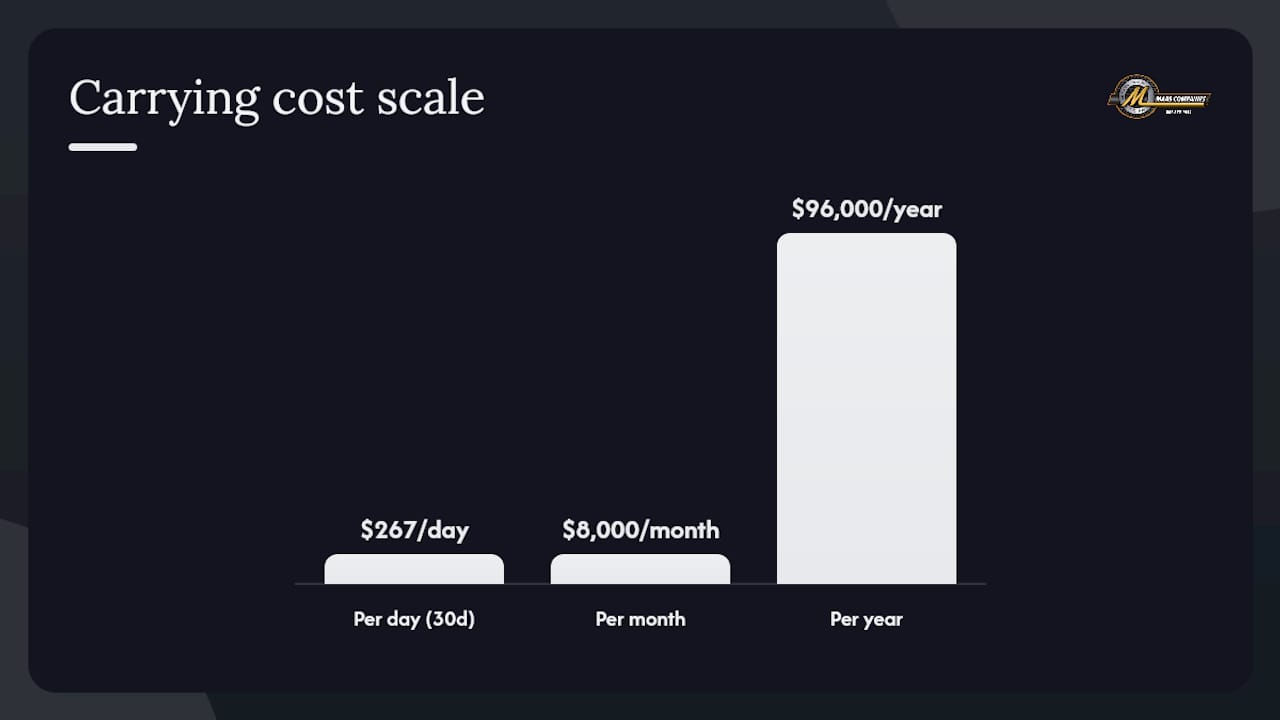
Carrying costs, typically taxes, insurance, and security, accumulate daily. A property carrying $8,000 per month in costs loses $96,000 in net proceeds over a year of inactivity. That figure should be modeled into the reserve price from day one, not treated as a sunk cost after the fact.
Pricing reviews should be scheduled at fixed intervals, typically every 30 days of no qualified activity, and the approval for any reduction must be documented in the authority matrix.
Pro Tip: Build the carrying-cost run-rate into your KPI dashboard from the first week. When stakeholders see the daily cost of delay alongside the current offer pipeline, pricing decisions accelerate.
Legal and compliance checkpoints you cannot skip
Court-ordered and lender-ordered sales carry non-negotiable legal requirements. Missing one delays closing or voids a transaction.
- Court-ordered sales: Require judicial approval of the listing, the marketing plan, and the accepted offer. Overbid procedures must be followed precisely. Buyer approval is a court function, not a lender decision.
- Lender-controlled REO: Bank addenda are non-negotiable. Asset manager approval is required at each pricing gate and offer acceptance. All deviations from the approved plan require documented sign-off.
- Title and environmental due diligence: Title searches must clear before marketing. Environmental liens or Phase I/II findings must be disclosed and addressed in the offering documents.
- Tenant and lease issues: Active leases or occupancy agreements require legal review before listing. Failure to address them creates buyer uncertainty and can kill a transaction.
- Risk transfer mechanics: AS-IS sale language, buyer indemnities, and condition disclosure requirements must be drafted by counsel before the offering memorandum is distributed.
Risk callout: Title defects and undisclosed environmental liens are the two most common dealbreakers in industrial asset sales. Both are discoverable before marketing begins. Discovering them after an offer is accepted costs more in time and legal fees than the due diligence would have.
For court-ordered sale procedures, the bankruptcy asset sale procedures guide from Maascompanies covers judicial approval workflows in detail.
How do you select the right broker or auctioneer?
Broker and auctioneer selection is a due-diligence process, not a referral decision. Use these criteria and questions to evaluate candidates.
Operational capability:
- What is your active buyer database size for this asset class?
- Do you have international marketing capability and multilingual listing support?
- How do you handle lotting decisions for mixed-asset portfolios?
Performance evidence:
- Provide three recent closings on REO or court-ordered industrial assets of comparable size.
- What was the sale price relative to the appraised value in each case?
- Can you provide references from lenders or receivers you have worked with?
Commercial terms:
- What is your fee structure, and are there minimum guarantees or reserve commitments?
- Do you have any conflicts of interest with potential buyers in this asset class?
Red flags to disqualify a candidate:
- No documented buyer pipeline for the asset class
- No process for pre-qualifying bidders before the marketing period
- No clearance or collection plan for equipment removal
- Unwillingness to coordinate directly with legal counsel or the court
What KPIs should the plan track and report?
A disposition marketing plan without defined KPIs gives stakeholders no basis for pricing decisions or timeline adjustments. The minimum KPI set covers speed, quality, and financial recovery.
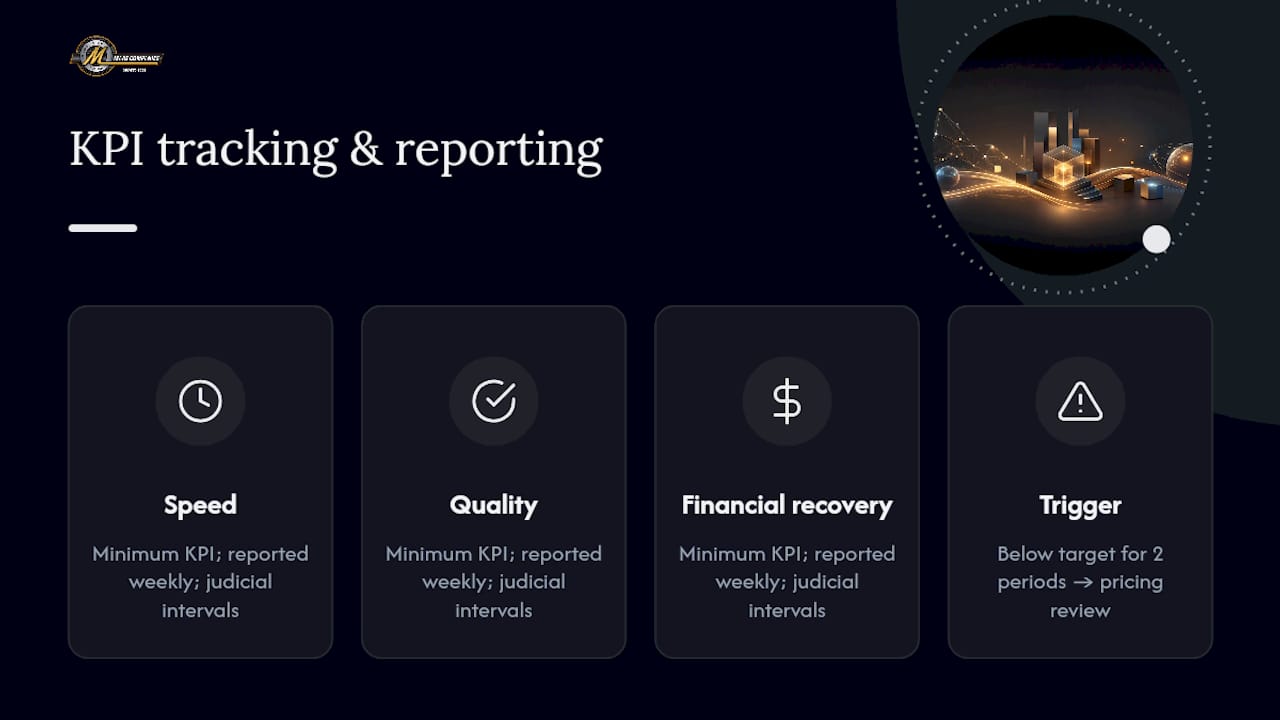
KPIs should be reported weekly to the asset manager and lender during the active marketing period, and at each judicial reporting interval for court-ordered sales. Any metric that falls below target for two consecutive reporting periods triggers a pricing review under the authority matrix.
One-page asset marketing plan template
Copy this checklist into a brief to counsel or a broker to confirm all required elements are present before marketing begins.
- Scope: Asset description, location, legal status (REO, court-ordered, lender-ordered), and responsible parties.
- Valuation evidence: BPOs (minimum two), formal appraisal, and documented reserve/strike price with approval signature.
- Sale method decision: Auction or negotiated sale, with written rationale and stakeholder approval.
- Buyer-target list: Named segments (operators, dealers, developers), prequalification criteria, and NDA requirement.
- Marketing channels: Direct outreach list, trade media placements, platform listings, and co-listing brokers.
- Timeline with milestone dates: T-9 through T-0 milestones, collection windows, and last-use dates.
- Approval matrix: Named approvers for pricing changes, offer acceptance, and closing steps.
- KPI targets: Minimum metrics for time to offer, bid count, price-to-reserve ratio, and carrying-cost run-rate.
To use this template in a docket or internal approval memo, attach it as Exhibit A to the broker engagement letter and reference each line item in the approval resolution. Maas Companies Inc. can provide a completed version of this template as part of its initial engagement deliverables.
Pro Tip: Send the draft template to legal counsel before the broker engagement letter is signed. Counsel will identify approval-matrix gaps and disclosure requirements specific to the jurisdiction and sale type before they become closing obstacles.
An editorial perspective on what most disposition plans get wrong
Most asset marketing plans fail not because the marketing is weak but because the approval workflow is undefined. Lenders hand a broker a listing authority and assume the plan is in motion. It is not. Without a documented authority matrix, a reserve price with a named approver, and a pricing-review schedule, the broker is operating without a mandate. When an offer comes in below reserve, no one knows who can approve a reduction, and the buyer walks.
The second failure is treating equipment and real estate as a single asset. They rarely sell to the same buyer on the same timeline. Separating them early, with distinct lotting strategies and buyer outreach plans, consistently produces better aggregate recovery than a bundled offering that satisfies no buyer fully.
The importance of asset marketing in liquidation contexts is not the volume of outreach. It is the precision of the process: the right buyer, the right price gate, the right approval, at the right time.
Maascompanies: execution support for lenders and counsel
Maascompanies delivers auction and negotiated sale execution for industrial plants, surplus equipment portfolios, and commercial REO across the United States, with direct experience in court-ordered, lender-ordered, and government foreclosure dispositions. The firm’s initial engagement produces three deliverables: a complete asset inventory with condition assessment, a valuation summary with documented reserve recommendations, and a buyer outreach plan with named target segments and channel selection.
For lenders and special servicers managing a plant closure or foreclosure, Maascompanies provides the structured process that courts and investors expect, without the overhead of a generalist brokerage. To discuss a specific disposition, visit the Maascompanies services page or review the equipment and real estate sale options for sellers ready to move assets to market.
Sources
These sources informed the process guidance in this article and are worth consulting directly for legal process detail, valuation standards, and multi-asset coordination.
Recommended
- Marketing Distressed Commercial Properties: A Lender’s Playbook | Blog | Insights on Asset Liquidation and Auction Trends
- The Commercial Asset Marketing Process: A Corporate Seller’s Guide | Blog | Insights on Asset Liquidation and Auction Trends
- Turnkey Asset Disposition: A Guide for Lenders and Asset Managers | Blog | Insights on Asset Liquidation and Auction Trends
- How Industrial Plant Liquidation Maximizes Recovery Value for Lenders | Blog | Insights on Asset Liquidation and Auction Trends