
Blog
Process Equipment: A Practical Guide for Operations and Asset Recovery
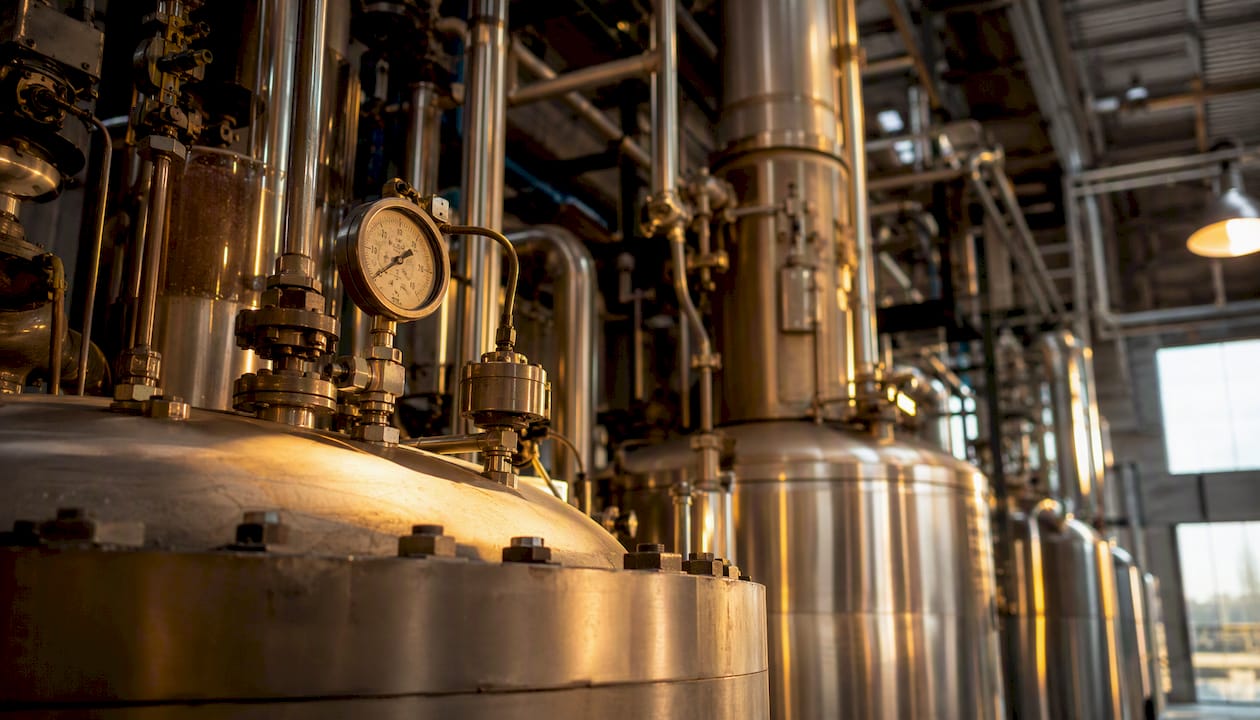
Process equipment is the collection of machines, vessels, and engineered systems used to physically or chemically transform raw materials into a finished product. According to ScienceDirect Topics, the category spans reactors, heat exchangers, separators, compressors, and pressure vessels — the core hardware that defines what a plant can produce, at what rate, and under what conditions. Every piece in that inventory serves one of four functions: transforming material, moving it, storing it, or controlling the conditions under which transformation occurs. For operations leaders and asset-recovery professionals, understanding these distinctions determines how equipment is valued, maintained, and ultimately disposed of.
The most recognizable examples across U.S. industrial facilities include:
- Reactors and heat exchangers — the primary transformation units in chemical, pharmaceutical, and refining plants
- Pumps, compressors, and pressure vessels — the fluid-handling and storage backbone of any process train
- Piping, valves, and instrumentation — the connective and control infrastructure that makes the rest operable
Table of Contents
- What is process equipment, and what does each major type do?
- How do pumps, compressors, vessels, and piping move and store materials?
- Why do valves, instrumentation, and emissions controls determine plant operability?
- Unit operations vs. unit processes: how engineers map equipment into a process train
- Which U.S. standards and regulations govern process equipment safety and compliance?
- How do you maintain process equipment and manage its lifecycle?
- Where is process equipment used across major U.S. industries?
- How does process equipment factor into plant closures and asset recovery?
- Key Takeaways
- What actually drives recovery when you must act on process equipment
- Useful sources and standards for further reference
What is process equipment, and what does each major type do?
The core processing units are the assets that perform the actual material transformations. They tend to carry the highest capital value, the most complex regulatory history, and the greatest specificity to a given process — which makes them both the most productive assets in operation and the most challenging to remarket at closure.
Reactors provide the controlled environment for chemical reactions. A batch reactor processes one charge at a time — commonly used in pharmaceutical API synthesis — while a continuous stirred-tank reactor (CSTR) handles steady-state production in petrochemical and polymer plants. Reactor vessels are typically pressure-rated, often ASME-stamped, and may carry FDA or cGMP documentation in pharma settings.
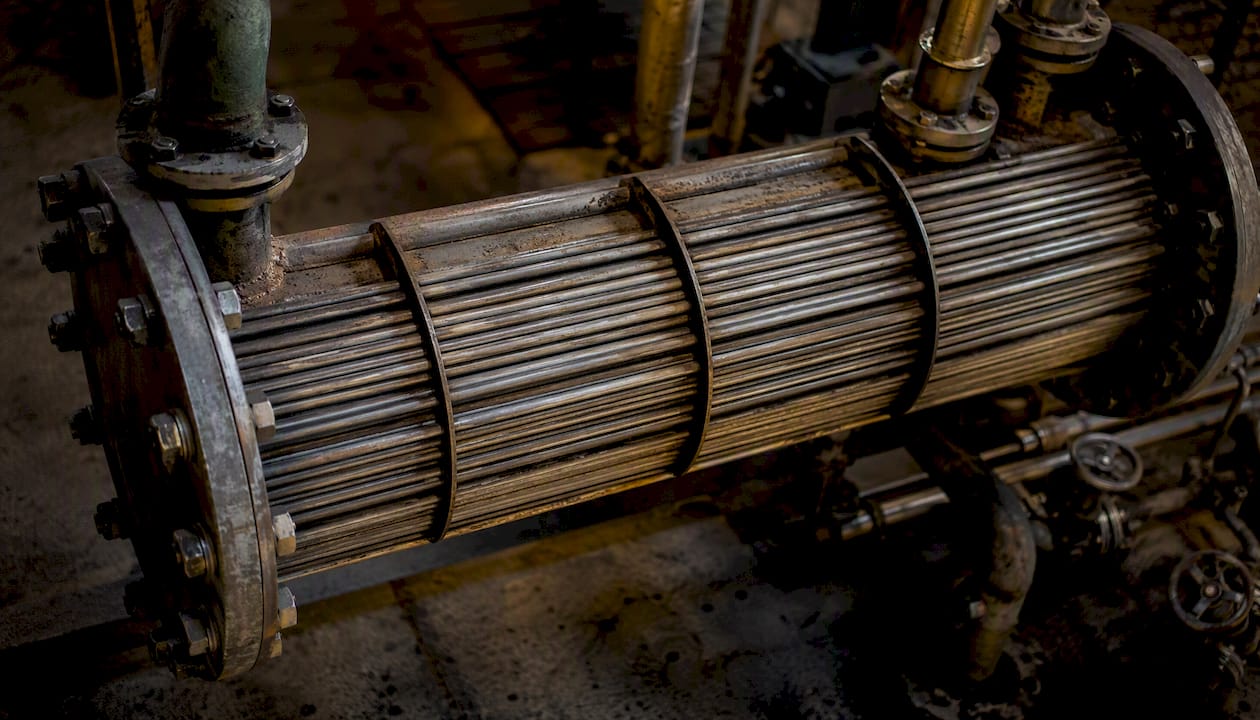
Heat exchangers transfer thermal energy between two fluid streams without mixing them. Shell-and-tube designs dominate refining and heavy chemical applications because of their pressure tolerance and ease of mechanical cleaning. Plate heat exchangers are preferred in food and beverage processing, where sanitary construction and compact footprint matter more than extreme pressure ratings. Fouling — the gradual buildup of deposits on heat-transfer surfaces — is the primary operational concern and the first thing a buyer’s inspector will assess.
Distillation columns separate mixtures by exploiting differences in component volatility. They are the defining asset class in petroleum refining, where crude fractionation columns can stand 150 feet tall and represent tens of millions of dollars in fabricated steel. Smaller packed or tray columns appear in specialty chemical and solvent-recovery applications.
Centrifuges and filters separate solids from liquids or classify particle sizes. Pharmaceutical and fine-chemical plants rely on pressure-leaf filters and basket centrifuges; municipal and industrial water treatment facilities use belt-press and rotary-drum configurations.
Key asset-recovery considerations for core processing units:
- ASME stamps and original fabrication records are required for reinstallation in most U.S. jurisdictions
- Custom internals (catalyst beds, specialty trays, sanitary liners) add replacement cost but may not transfer value if the buyer’s process differs
- Distillation columns and large reactors are often site-specific; demolition-grade pricing is a real outcome when no compatible buyer exists
How do pumps, compressors, vessels, and piping move and store materials?
Fluid-handling and pressure-containment equipment forms the circulatory system of any process plant. Its condition directly affects operational continuity, and its compliance status — particularly ASME stamping — governs whether it can legally be reinstalled elsewhere.
Pumps fall into two broad families. Centrifugal pumps use a rotating impeller to impart velocity to fluid; they are the workhorse of water treatment, chemical transfer, and cooling circuits. Positive-displacement pumps — gear, diaphragm, and peristaltic types — deliver precise volumetric flow regardless of discharge pressure, making them standard in metering, high-viscosity, and sanitary applications. When reading a nameplate, the critical parameters are rated flow (GPM or m³/hr), total dynamic head (TDH in feet or meters), and motor horsepower.
Compressors do the same job for gases. Centrifugal and axial compressors handle large-volume, lower-pressure applications in air separation and gas transmission. Reciprocating and screw compressors are used where high discharge pressures or precise flow control are needed — natural gas processing and refrigeration being the most common U.S. examples.
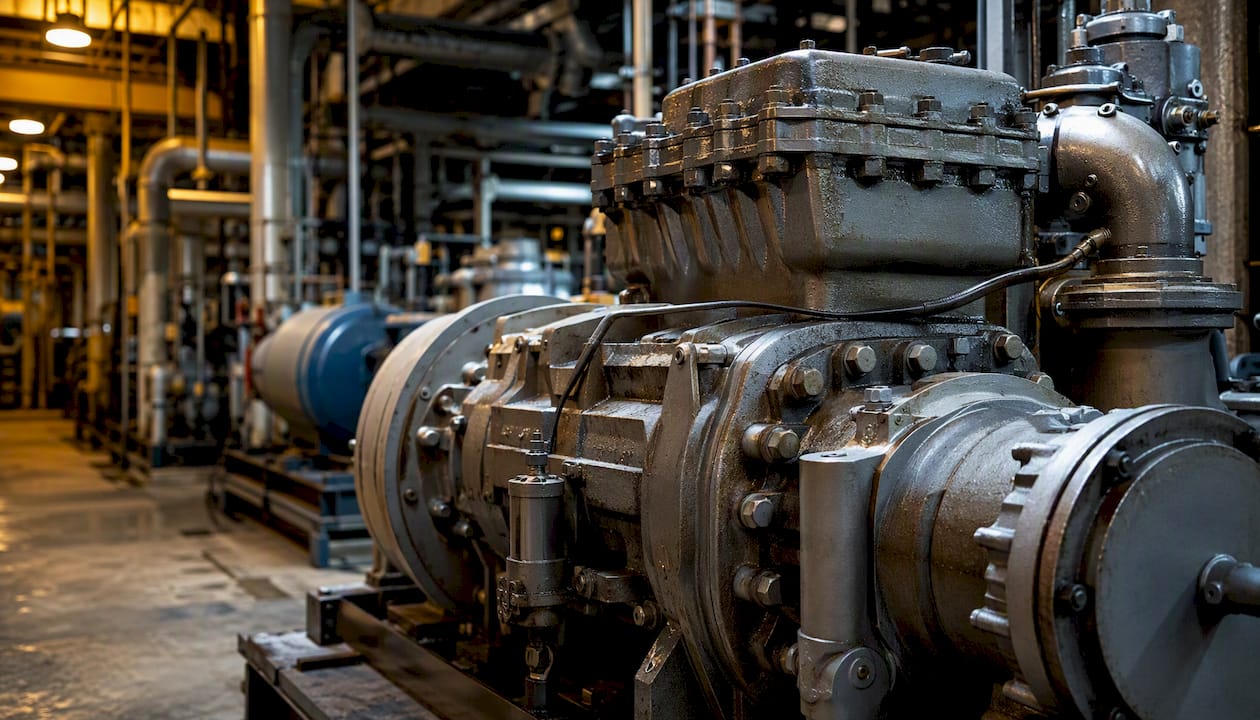
Tanks vs. pressure vessels is a distinction with real regulatory and commercial consequences. Atmospheric storage tanks (API 650 standard) hold liquids at or near ambient pressure. Pressure vessels, governed by the ASME Boiler and Pressure Vessel Code (BPVC), operate above 15 psig and require a Code stamp, a Manufacturer’s Data Report (Form U-1), and a National Board registration number. Removing or obscuring that stamp voids the vessel’s legal operating status. At auction, an unstamped or re-rated vessel typically sells at scrap-metal value rather than process-equipment value.
Piping systems are process equipment, not infrastructure. Schedule, material of construction (carbon steel, 316L stainless, Hastelloy, HDPE), and flange rating (ANSI 150#, 300#, 600#) all affect compatibility with a buyer’s existing process. Specialty alloy piping — duplex stainless in offshore applications, for example — carries significant scrap and reuse value independent of the process it served.
Pro Tip: Before any plant walkdown, pull the National Board registration numbers for all pressure vessels. Cross-reference them against the ASME U-1 forms in the equipment files. Missing or mismatched records are among the most common causes of value erosion at disposition — and they take weeks to resolve if discovered late.
Why do valves, instrumentation, and emissions controls determine plant operability?
Auxiliary and control equipment rarely appears on a plant’s headline asset list, yet it often determines whether the rest of the equipment can legally operate or be sold as a functioning system. ASME guidance explicitly includes piping spools, pulsation dampeners, valves, and air-pollution controls within the process equipment boundary — a classification that carries direct compliance implications.
Valves and actuators regulate flow, isolate equipment for maintenance, and provide emergency shutoff. Gate, globe, ball, and butterfly valves each suit different pressure, temperature, and throttling requirements. Automated actuators (pneumatic, electric, or hydraulic) tied to a control system enable remote or programmatic operation — a feature that adds value when the buyer intends to integrate the equipment into an existing distributed control system (DCS).
Instrumentation covers sensors (pressure transmitters, thermocouples, flow meters, level gauges) and the control logic that acts on their signals. A programmable logic controller (PLC) or DCS manages setpoints, interlocks, and alarms. The condition and documentation of these systems — calibration records, loop diagrams, PLC ladder logic — materially affect reinstallation cost and timeline for a buyer.
Emissions control equipment — baghouse filters, wet scrubbers, thermal oxidizers, and cyclone separators — is often tied to a facility’s air permit. Transferring or removing this equipment without addressing the permit creates EPA compliance exposure for both seller and buyer. Cyclones and baghouses also have independent reuse value in industries ranging from cement to food processing.
- Ball and butterfly valves: fast actuation, tight shutoff, common in pipelines and utilities
- Control valves with positioners: throttling service, process-critical, high replacement cost
- PLCs and DCS panels: document software versions, I/O maps, and vendor support status before sale
- Baghouse filters and scrubbers: verify permit transferability before listing
Pro Tip: Buyers and inspectors at plant auctions typically check valve packing and actuator condition first — seized actuators and leaking packing glands signal deferred maintenance across the whole facility. Address these before the walkdown, or price accordingly.
Unit operations vs. unit processes: how engineers map equipment into a process train
The engineering distinction between unit operations and unit processes is the conceptual framework that underlies every process-plant design decision — and it directly affects how equipment is classified, valued, and sequenced for reuse.
A unit operation involves a physical change: heat transfer, distillation, filtration, absorption, drying, mixing. No new chemical species are created. A distillation column is a unit operation; so is a centrifuge. A unit process involves a chemical change: reaction, polymerization, fermentation, combustion, oxidation. A reactor is the canonical unit process equipment.
| Dimension | Unit operation | Unit process |
|---|---|---|
| Nature of change | Physical (separation, transfer, mixing) | Chemical (reaction, synthesis, conversion) |
| Primary examples | Distillation, filtration, heat exchange, drying | Reactors, fermenters, polymerization vessels |
| Energy intensity | Moderate; driven by phase change or mechanical work | Often high; driven by reaction enthalpy |
| Regulatory focus | Mechanical integrity, pressure ratings | Chemistry, emissions, waste streams |
| Asset-recovery note | Broader reuse potential across industries | Highly process-specific; narrower buyer pool |
A process train sequences these units from raw material intake to finished product. A simplified refinery train, for example, runs: crude feed → desalter (pretreatment) → atmospheric distillation column (separation) → hydrotreater (reaction) → product blending (finishing). Each step maps to specific equipment, and the EPA notes that process-train sequencing and equipment compatibility directly affect environmental compliance and asset reuse potential during plant transitions.
Why this distinction matters for asset recovery:
- Unit operations equipment (heat exchangers, filters, dryers) often transfers to a different industry with minimal modification
- Unit process equipment (reactors, fermenters) is more likely to be process-specific and may require requalification
- Buyers evaluating a process train assess compatibility with their own upstream and downstream equipment, not just the individual asset
Which U.S. standards and regulations govern process equipment safety and compliance?
U.S. process equipment operates within a layered regulatory framework. Understanding which standards apply — and what they require at the point of sale or transfer — is as important as the engineering specifications themselves.
ASME Boiler and Pressure Vessel Code (BPVC): The foundational standard for pressure-containing equipment in the United States. Section VIII governs unfired pressure vessels; Section I covers boilers. An ASME Code stamp on a vessel certifies that it was designed, fabricated, and inspected to Code requirements. That stamp — and the accompanying U-1 form — is legally required for reinstallation in most U.S. states and is a primary value driver at auction.
API Standards: The American Petroleum Institute publishes standards widely adopted in oil and gas, refining, and petrochemical facilities. API 650 governs atmospheric storage tanks; API 610 covers centrifugal pumps for petroleum service; API 670 addresses machinery protection instrumentation.
OSHA Process Safety Management (PSM) — 29 CFR 1910.119: PSM applies to facilities handling threshold quantities of highly hazardous chemicals. It requires written process safety information, process hazard analyses (PHAs), mechanical integrity programs, and management of change (MOC) procedures. At plant closure, PSM documentation — P&IDs, equipment files, PHA reports — must be retained and, where applicable, transferred with the assets.
EPA regulations: Air permits, RCRA hazardous waste requirements, and Clean Air Act obligations attach to specific equipment and processes. Removing emissions-control equipment without addressing the underlying permit creates ongoing liability. The EPA provides guidance on how process-train changes and equipment transfers affect compliance status.
FDA cGMP — 21 CFR Parts 210/211: Where process equipment is used in drug or biologic manufacturing, FDA cGMP regulations impose additional requirements on equipment design (cleanability, material compatibility), documentation (cleaning validation records, equipment qualification protocols), and change control. Transferring pharmaceutical-grade equipment without its qualification documentation substantially reduces its value to a regulated buyer.
Key regulatory touchpoints at disposition:
- Verify ASME stamps and U-1 forms for all pressure vessels before listing
- Preserve FDA equipment qualification records for any pharma-grade assets
Regulatory note: OSHA’s PSM standard covers facilities with threshold quantities of listed chemicals — not all process plants. Confirm applicability with your environmental health and safety counsel before assuming PSM obligations apply or do not apply to a specific site.
How do you maintain process equipment and manage its lifecycle?
Reliability is not a passive outcome. It results from structured inspection programs, documented maintenance histories, and disciplined decisions about when repair, refurbishment, or replacement makes economic sense. For decision-makers evaluating surplus or used equipment, maintenance records are a proxy for remaining useful life — and their absence is a red flag that buyers price accordingly.
Common failure modes by equipment class:
- Pumps: Mechanical seal failure and bearing wear are the leading causes of unplanned downtime. Cavitation — caused by operating below the required net positive suction head (NPSH) — accelerates impeller erosion.
- Heat exchangers: Fouling on tube surfaces reduces heat-transfer efficiency and increases pressure drop. Tube-to-tubesheet joint failures cause cross-contamination between process streams.
- Reactors: Catalyst deactivation reduces conversion efficiency over time. Vessel wall corrosion and nozzle cracking are structural concerns in high-temperature, high-pressure service.
- Compressors: Valve wear in reciprocating compressors and seal degradation in centrifugal machines are the primary maintenance drivers.
Recommended inspection and PM tasks:
- Visual inspection and leak checks — monthly or per operating procedures
- Vibration analysis on rotating equipment (pumps, compressors, fans) — quarterly
- Ultrasonic thickness testing on pressure vessels and piping — annually or per inspection plan
- Radiographic or phased-array ultrasonic testing (PAUT) for weld integrity — per risk-based inspection (RBI) program
- Calibration of instrumentation and safety relief valves — per manufacturer intervals and regulatory requirements
Documentation that directly improves resale value includes: maintenance logs with dates and work performed, calibration records for instrumentation, spare-parts inventory lists, inspection reports (UT readings, vibration baselines), and original equipment manuals. The SafetyCulture process equipment guide identifies corrosion, leaks, and documentation gaps as the top risks that degrade both equipment reliability and market value.
For a structured buyer’s-side view of condition assessment, the Maascompanies industrial equipment buying checklist covers the inspection priorities and documentation review that experienced buyers apply during plant walkdowns.
Lifecycle decisions follow a straightforward total-cost logic: repair when the cost is less than 30–40% of replacement and remaining life justifies the investment; refurbish when the vessel or frame has value but internals or wear components are exhausted; replace when repair costs approach replacement cost or when the equipment no longer meets current code requirements.
Where is process equipment used across major U.S. industries?
Process equipment appears across virtually every sector of U.S. manufacturing and resource processing. The dominant equipment types, operational priorities, and regulatory environments vary significantly by industry — a distinction that directly affects valuation and buyer identification at disposition.
- Pharmaceuticals: — Sanitary reactors, agitated vessels, lyophilizers (freeze dryers), and clean-in-place (CIP) systems operate under FDA cGMP requirements. Sterility, documentation, and equipment qualification records are as important as mechanical condition. A reactor without its IQ/OQ/PQ validation package is worth a fraction of its qualified counterpart to a regulated buyer.
- Water and wastewater treatment: — Clarifiers, membrane filtration systems, UV disinfection units, and chemical dosing pumps handle large volumetric flows at relatively low pressures. EPA discharge permit compliance drives equipment selection; energy efficiency in aeration and pumping systems is a growing procurement priority.
How does process equipment factor into plant closures and asset recovery?
Plant closures, restructurings, and surplus dispositions are the moments when the engineering details covered throughout this article translate directly into dollars recovered or lost. The difference between a well-managed disposition and a distressed one is almost always preparation — specifically, how thoroughly equipment has been documented, tagged, and assessed before the first buyer walks the floor.
Stepwise disposition workflow:
- Inventory and tagging: Walk every process area with a systematic tagging protocol. Assign asset numbers, photograph nameplates, and record model, serial, ASME/API stamp status, and physical condition for each item.
- Documentation assembly: Pull U-1 forms, maintenance logs, calibration records, inspection reports, and original manuals. Missing records should be flagged immediately — some can be reconstructed from the National Board registry or manufacturer archives; others cannot.
- Condition assessment: Engage a qualified inspector for pressure vessels, rotating equipment, and emissions-control systems. Condition grades (operational, repairable, parts-only, scrap) drive pricing strategy.
- Regulatory clearance: Confirm that hazardous materials have been removed or neutralized, air permits have been addressed, and PSM documentation obligations are met before public marketing begins.
- Triage for remarket vs. demolition: Apply the three-way triage described in the selection section. Standard equipment with broad applicability goes to active marketing; highly bespoke assets with no buyer pool go to scrap pricing early to avoid carrying costs.
Seller checklist — items that materially affect recovery:
- ASME U-1 forms and National Board numbers for all pressure vessels
- API inspection records for storage tanks
- PLC/DCS documentation: software backups, I/O lists, loop diagrams
- Calibration records for instrumentation
- Spare-parts inventory with part numbers
- Original equipment manuals and vendor contact information
A common recovery challenge is discovering mid-sale that auxiliary components — control panels, specialty valves, instrumentation — have been removed or cannibalized for other facility needs. Buyers price incomplete systems at a steep discount. Preserving system completeness from the moment a closure decision is made protects recovery value more than almost any other single action.
When control-system data and PLC programs need to be extracted and secured during decommissioning, coordinating with qualified IT support — such as the manufacturing data protection resources available from Symmetry Network Management — reduces the risk of losing critical operational data before it can be transferred to a buyer.
Maascompanies operates as a strategic asset-recovery partner in these situations — managing valuation, targeted marketing to qualified industrial buyers, buyer qualification, and sale execution. The focus is on maximizing net recovery for the seller, not on volume throughput. For owners and lenders preparing for a disposition, the Maascompanies guide on how to sell industrial equipment outlines the preparation steps that consistently produce better outcomes.
Pro Tip: The single highest-leverage action in any plant closure is capturing documentation before decommissioning begins. Once equipment is moved, cleaned, or disassembled, the records that justify its value — inspection history, calibration certificates, qualification protocols — become nearly impossible to reconstruct.
Key Takeaways
Process equipment value is determined by mechanical condition, regulatory documentation, and compatibility with a buyer’s existing process train — not by original purchase price alone.
| Point | Details |
|---|---|
| Definition and scope | Process equipment covers reactors, heat exchangers, pumps, vessels, piping, valves, and instrumentation used to transform, move, store, or control materials. |
| ASME stamping is non-negotiable | Pressure vessels without intact ASME stamps and U-1 forms typically sell at scrap value; verify records before any disposition. |
| Unit operations vs. unit processes | Unit operations (physical changes) transfer across industries more readily; unit process equipment (reactors, fermenters) has a narrower buyer pool. |
| Documentation drives recovery | Maintenance logs, calibration records, PLC documentation, and qualification protocols directly increase resale value and buyer confidence. |
| Maascompanies as recovery partner | Maascompanies provides valuation, targeted marketing, and sale execution for surplus process equipment, helping owners and lenders maximize net recovery. |
What actually drives recovery when you must act on process equipment
The conventional advice on plant closures focuses on speed — get the equipment listed, get buyers in, close the sale. Speed matters, but it is rarely the binding constraint on recovery. The binding constraint is almost always documentation and regulatory clearance.
A well-maintained reactor with complete ASME records, a current inspection report, and intact PLC documentation will attract qualified buyers willing to pay for the certainty those records provide. The same reactor without that package sells at a discount that can exceed 50% of its documented value — not because the equipment is worse, but because the buyer is pricing the risk of discovering a problem after purchase.
The second underappreciated factor is system completeness. Process equipment is most valuable as a system: feed pump, reactor, heat exchanger, separator, and associated instrumentation. Buyers who can acquire a complete process train avoid months of engineering work to integrate components from multiple sources. Sellers who allow systems to be cannibalized before sale — removing valves for other facility needs, stripping instrumentation for spare parts — destroy that premium before the first offer arrives.
The practical sequence for any shutdown or surplus disposition is: secure the documentation first, preserve system integrity second, then begin marketing. Regulatory clearance runs in parallel from day one. Compressing that sequence to accelerate a sale almost always costs more in recovery than it saves in carrying costs.
Useful sources and standards for further reference
The following resources support technical verification, regulatory compliance, and deeper reading on process equipment topics covered in this article.
- ASME
- Process Equipment - an overview | ScienceDirect Topics
- Process Equipment: A Comprehensive Guide | SafetyCulture
- Understanding Process Equipment | Types of Process Equipment
- FDA — cGMP regulations
- 29 CFR 1910.119 (OSHA PSM)
- EPA
Recommended
- Industrial equipment buying checklist: maximize asset recovery | Blog | Insights on Asset Liquidation and Auction Trends
- Equipment liquidation explained: maximizing asset recovery | Blog | Insights on Asset Liquidation and Auction Trends
- Why Monetize Idle Equipment: A Recovery Guide for Decision-Makers | Blog | Insights on Asset Liquidation and Auction Trends
- Surplus equipment sale guide: maximize asset recovery fast | Blog | Insights on Asset Liquidation and Auction Trends