

Blog
Asset Valuation Methods Explained for Industrial Recovery

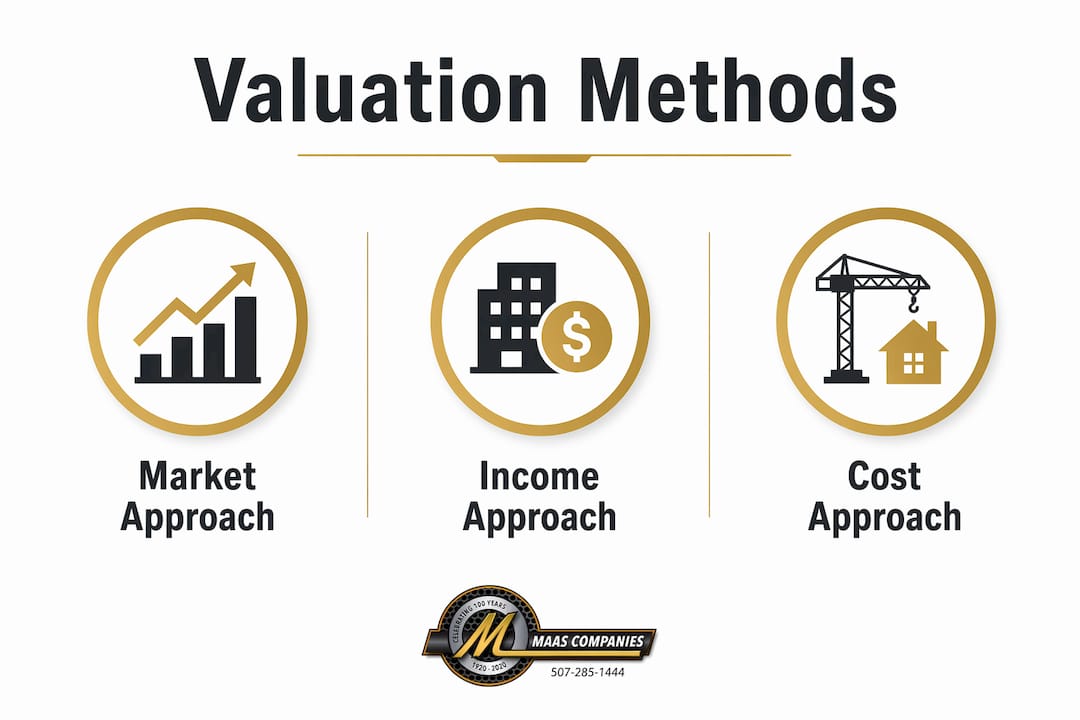
For industrial asset liquidation in the United States, the market approach, income approach (DCF), and cost approach are the three accepted standards under ASC 820 (FASB) and the International Valuation Standards (IVS). Most defensible recovery valuations rely on a weighted synthesis of all three, with the cost approach serving as a floor when comparables are scarce or cash flows are unreliable.
- Market approach: Primary when recent, comparable auction or brokered transaction data exist for the same or similar equipment.
- Income approach (DCF): Appropriate for income-generating assets or going-concern segments with predictable cash flows; rarely the sole method in forced-liquidation scenarios.
- Cost/replacement approach: Sets the floor by estimating current replacement cost less obsolescence; most reliable for specialized or custom-built plant components.
Request a valuation report that explicitly documents method selection, inputs, sensitivity ranges, and the basis and premise of value per ASC 820 and IVS before approving any sale strategy.
Table of Contents
- What are the core valuation frameworks for U.S. industrial asset sales?
- How does the income approach (DCF) apply to industrial asset valuation?
- How do you use market comparables to value industrial equipment?
- How does the cost approach set a floor for liquidation value?
- How should practitioners choose and combine valuation approaches?
- What operational steps prepare assets for a faster, higher-recovery sale?
- What should sellers require from a valuation report?
- How Maascompanies applies these methods to maximize recovery
- Key Takeaways
- What industrial liquidations actually teach you about valuation
- Maascompanies: strategic asset recovery from valuation through final sale
- Useful sources and further reading
What are the core valuation frameworks for U.S. industrial asset sales?
ASC 820-10-35-24A (FASB) identifies three approaches to measuring fair value: market, income, and cost. It instructs practitioners to maximize observable inputs and minimize unobservable ones, and it permits multiple approaches when no single method is conclusive. For U.S. liquidation assignments, ASC 820 is the governing standard for fair-value measurement; any valuation used in financial reporting, lending, or court proceedings must conform to it.
The International Valuation Standards (IVS) complement ASC 820 by defining bases of value more granularly: market value, investment value, synergistic value, and liquidation value. The IVS distinction between orderly and forced liquidation premises is particularly consequential. An orderly liquidation assumes a reasonable marketing period; a forced liquidation assumes a compressed timeline, which materially lowers estimated recoverable values.
Valuation assignments should disclose the basis of value, premise of value, and primary inputs in the report. That disclosure is not optional under ASC 820 or IVS — it is what makes a conclusion defensible to lenders, courts, and buyers.
How does the income approach (DCF) apply to industrial asset valuation?
Use DCF when the asset or business unit generates predictable, attributable cash flows — a leased manufacturing facility, a contracted processing line, or a going-concern segment being carved out. In a forced-liquidation scenario, DCF is rarely the primary method, but it remains a useful cross-check and a ceiling on value. Damodaran’s model-selection guidance is direct: match the model to the asset’s financial reality, and shift away from going-concern DCF when the sale premise is distressed.
A defensible DCF for industrial assets follows four steps:
- Define the projection period and cash flows. Identify operating cash flows directly attributable to the asset, including utilization rates, contract terms, and maintenance capital expenditure. Exclude corporate overhead allocations that would not transfer with the asset.
- Select and justify a terminal value method. For assets with finite useful lives, a terminal value based on salvage or residual value is more appropriate than a perpetuity growth model.
- Choose and document the discount rate. The rate must reflect the risk profile of the specific asset and the market in which it operates. Document each component of the rate and any liquidity or marketability adjustments.
- Run sensitivity scenarios. Present high, base, and low cases. For liquidation contexts, include a scenario that reflects a compressed marketing period and its effect on recoverable value.
Pro Tip: When presenting DCF in a liquidation context, include a liquidation-premise adjustment that explicitly quantifies the discount from going-concern value. Reconcile that figure with your market and cost conclusions before settling on a point estimate.
How do you use market comparables to value industrial equipment?
The market approach is primary when recent, comparable transaction data exist — same-model equipment sold at auction, brokered plant-component sales, or industry database records. Investopedia’s asset valuation guidance describes the income approach’s DCF mechanics, but for physical industrial assets, market evidence often carries more weight because it reflects what buyers actually paid under real conditions.

Reliable data sources for U.S. industrial equipment include specialized auction platforms, industry broker sale records, internal historical sale records, and trade-specific transaction databases. For spare parts and high-value materials, high-value materials management practices from industrial asset management contexts can inform salvage and inventory disposition values.
When adjusting comparables, account for:
- Condition: Physical deterioration relative to the comparable transaction.
- Geographic and logistical costs: Removal, transportation, and reinstallation expenses that affect net proceeds.
- Transferability: Warranties, software licenses, and OEM support agreements that may not transfer.
- Bundled sale effects: Equipment sold as part of a complete plant line often commands a premium over isolated lot sales; conversely, forced-sale buyer pools are narrower, which compresses prices.
The primary limitation of the market approach is comparability. Custom-built or highly specialized equipment may have no true comparable. In those cases, the cost approach becomes the anchor, and market evidence serves only as a directional check.
How does the cost approach set a floor for liquidation value?
The cost approach estimates what a market participant would pay to replace the asset’s service capacity today, then deducts for obsolescence. Per ASC 820, the cost approach “reflects the amount that would be required currently to replace the service capacity of an asset (often referred to as current replacement cost)” and requires consideration of physical deterioration, functional obsolescence, and economic obsolescence. For liquidation purposes, this figure represents a floor: a rational buyer will not pay more than replacement cost, net of depreciation.
The calculation sequence:
- Determine current replacement cost (materials, labor, delivery, and installation for a substitute asset of comparable utility).
- Apply physical deterioration based on age, condition inspection, and maintenance history.
- Apply functional obsolescence for technological improvements that reduce the value of older equipment.
- Apply economic obsolescence for market or regulatory factors external to the asset (e.g., declining demand for the product the asset produces).
- Add cost-to-ready-for-sale: decommissioning, environmental remediation, and site restoration, which reduce net proceeds in a liquidation.
Pro Tip: Obtain vendor quotes or rebuild estimates before finalizing replacement cost inputs. Written quotes from equipment manufacturers or contractors are the most defensible support against buyer scrutiny or senior creditor challenge.
The cost approach mechanics are particularly well-suited to property, plant, and equipment where comparables are thin and cash flow attribution is difficult.
How should practitioners choose and combine valuation approaches?
PwC’s guidance on valuation synthesis is clear: multiple approaches act as a check on assumptions and inputs, and the final conclusion should reflect the most representative point within the range of indicated values. Damodaran reinforces this — model selection should follow data availability and asset characteristics, not habit.
The decision rules are straightforward. Use the market approach as primary when comparable transaction data are available and reliable. Shift to the income approach as primary when the asset generates observable, attributable cash flows under a going-concern premise. Default to the cost approach as primary for custom-built or specialized equipment where comparables are scarce and cash flow attribution is unreliable.
| Approach | Primary inputs | Typical use in liquidation | Key strength | Common error |
|---|---|---|---|---|
| Market | Comparable transaction prices, condition adjustments | Common equipment with active resale markets | Reflects actual buyer behavior | Poor comparability for specialized assets |
| Income (DCF) | Projected cash flows, discount rate, terminal value | Going-concern segments, income-producing assets | Captures future earning potential | Overstated cash flows under liquidation premise |
| Cost (Replacement) | Replacement cost, obsolescence adjustments, disposal costs | Specialized plant, custom equipment, floor value | Defensible floor; works without comparables | Underestimates synergistic or bundled value |
For an orderly liquidation of common equipment, a typical weighting gives the greatest emphasis to the market approach, with meaningful contributions from the cost approach and a smaller role for income. For a forced liquidation of specialized plant, the cost approach carries the most weight, followed by market and income approaches. These weightings must be documented and justified in the report, not applied mechanically.
What operational steps prepare assets for a faster, higher-recovery sale?
Preparing clear documentation and condition reporting materially increases valuation accuracy and buyer confidence. Buyers discount heavily for uncertainty; every gap in documentation becomes a negotiating point that reduces net proceeds.
- Complete a physical inventory and tag all assets with unique identifiers.
- Photograph and video each asset, capturing nameplate data, visible condition, and any damage.
- Compile maintenance and service history, including recent repairs and outstanding work orders.
- Assemble spare parts lists, manuals, and original specification sheets.
- Conduct title and lien searches to confirm clean transferability.
- Gather environmental records and any site remediation obligations.
- Develop a site access and removal plan, including utility disconnection requirements and floor-load limits.
- Obtain dismantling, transportation, and rebuild/replacement quotes to feed cost and income models.
On the refurbishment question: minor cleaning, lubrication, and operational testing typically return more than their cost in buyer confidence. Major refurbishment rarely recovers its investment in a liquidation timeline. The industrial asset sale process for maximizing recovery depends heavily on how well this preparation phase is executed before marketing begins.
What should sellers require from a valuation report?
Insist on a written report that states the basis and premise of value, the methods used, all primary inputs, and sensitivity ranges. A verbal opinion or a one-page summary is not sufficient for lender approval, legal proceedings, or board-level sale authorization.
- Scope of engagement: Asset descriptions, inspection dates, and the purpose of the valuation.
- Method selection rationale: Why each approach was used or excluded.
- Comparable evidence: Transaction-level data with photos, lot descriptions, and terms of sale.
- DCF assumptions: Projection period, cash flow build-up, discount rate derivation, and terminal value justification.
- Replacement cost support: Vendor quotes or published cost indices.
- Disposal cost estimates: Decommissioning, environmental, and removal costs netted from gross value.
- Sensitivity ranges: High and low scenarios with the key variable driving each.
Red flags include undisclosed key inputs, single-method reliance without cross-checks, missing sensitivity analysis, and comparable transactions that cannot be independently verified. The IVS requirement that liquidation value disclose marketing period assumptions and disposal costs is a minimum standard, not a ceiling. For a practical framework on what appraisals should deliver at the executive level, the equipment appraisal rationale guide covers the financial and governance case clearly.
How Maascompanies applies these methods to maximize recovery
Maascompanies applies a synthesis of market, income, and cost approaches informed by ASC 820 and IVS to every industrial liquidation engagement. The process begins with a technical triage and physical inventory, followed by market evidence collection from auction records and broker databases, DCF analysis where attributable cash flows exist, and a replacement-cost floor analysis with documented obsolescence adjustments. The combined conclusion includes sensitivity ranges and a clear point estimate with method-weighting rationale.
Maascompanies’ methodology is built on one principle: a defensible valuation is the foundation of maximum recovery. Without documented method selection, observable inputs, and sensitivity analysis, sellers leave money on the table — not because the assets are worth less, but because buyers and lenders have no basis to pay more.
Service scope includes valuation coordination, evidence collection, auction and negotiated sale execution, marketing across relevant industry channels, removal and logistics coordination, and post-sale reconciliation. Representative projects include the Remy International tank manufacturing auction and the Zein Extraction Process Plant sale, both of which required multi-approach valuations before marketing commenced.
Key Takeaways
A defensible industrial asset valuation requires a documented synthesis of the market, income, and cost approaches under ASC 820 and IVS, with the cost approach as the floor and sensitivity analysis quantifying the liquidation-premise discount.
| Point | Details |
|---|---|
| Use all three approaches | Market, income (DCF), and cost approaches should be synthesized; single-method reliance is a red flag. |
| Cost approach sets the floor | Replacement cost less obsolescence is the minimum defensible value in any liquidation scenario. |
| Premise of value drives the number | Orderly vs. forced liquidation assumptions materially change recoverable value; disclose both per IVS. |
| Documentation protects recovery | Transaction-level comparable evidence, vendor quotes, and sensitivity ranges reduce buyer discounting. |
| Maascompanies coordinates the process | Maascompanies manages valuation coordination, evidence collection, and auction or negotiated sale execution to maximize recovery. |
What industrial liquidations actually teach you about valuation
The most consistent lesson from industrial liquidations is that valuation defensibility and buyer behavior are inseparable. Buyers discount aggressively when they cannot verify inputs — not because they doubt the asset’s physical condition, but because an undocumented valuation signals that the seller has not done the work to support a higher price. The second lesson is that the liquidation premise must be set before the valuation begins, not after. Sellers who commission a going-concern DCF and then pivot to a forced-sale timeline find that their valuation provides no cover for the price they actually receive. Maascompanies’ focus on rigorous, multi-approach valuation and evidence-first marketing exists precisely to close that gap between what assets are worth and what sellers actually recover.
Maascompanies: strategic asset recovery from valuation through final sale
When a plant closure, restructuring, or lender-ordered disposition requires more than a listing, Maascompanies delivers a structured recovery program built on documented valuation and targeted marketing reach.
The process covers every stage that affects net proceeds: valuation coordination using market, income, and cost approaches; evidence collection and comparable documentation; auction or negotiated sale execution; marketing to qualified industrial buyers across relevant sectors; and removal and logistics coordination to reduce carrying costs. For sellers managing specialized equipment or multi-asset plant dispositions, that full-service approach consistently produces better outcomes than piecemeal alternatives.
To start a scoped valuation and sale plan for your assets, contact Maascompanies through the sell industrial equipment page, or review the full Maas services portfolio to match your disposition needs to the right program.
Useful sources and further reading
- ASC 820 (FASB) — PwC guidance on fair value measurement: The U.S. GAAP standard governing fair-value measurement; cite this in any valuation report used for financial reporting, lending, or legal proceedings.
- IVS (International Valuation Standards) — IVSC/RICS publication: Defines bases of value, premises of value, and liquidation value (orderly vs. forced); essential for cross-border or institutional-grade assignments.
- Aswath Damodaran — Choices in valuation models: Practitioner-level guidance on matching valuation models to asset characteristics; particularly useful for distressed and liquidation scenarios.
- Corporate Finance Institute — Asset valuation methods: A clear primer on replacement cost mechanics and obsolescence adjustments.
- Investopedia — Asset valuation explained: Accessible reference for DCF steps, net asset value floors, and synergistic value considerations.
- Maascompanies — How industrial plant liquidation maximizes recovery value: Applied guidance on liquidation tactics and recovery outcomes for lenders and asset managers.
- Maascompanies — How to appraise industrial assets: Decision-maker-focused appraisal guide with practical steps for industrial equipment.
- Maascompanies — Orderly liquidation: maximize asset recovery and stability: Explains the orderly liquidation premise and when to apply it versus a forced-sale timeline.
Reference these standards in valuation reports and internal approval memos. Citing ASC 820 and IVS by name signals to lenders, courts, and counterparties that the valuation was conducted to a recognized professional standard.
Recommended
- Industrial Equipment Value Explained for Decision-Makers | Blog | Insights on Asset Liquidation and Auction Trends
- How to Appraise Industrial Assets: A Decision-Maker’s Guide | Blog | Insights on Asset Liquidation and Auction Trends
- Equipment Valuation Methods List for Asset Managers | Blog | Insights on Asset Liquidation and Auction Trends
- How Industrial Plant Liquidation Maximizes Recovery Value for Lenders | Blog | Insights on Asset Liquidation and Auction Trends