
Blog
Machinery auctions explained: strategies for maximizing asset recovery
TL;DR:
- Machinery auctions create competitive bidding pressure, often exceeding private negotiations in value recovery.
- Typical recovery rates are 28-35% of net book value, influenced by asset demand and condition.
- Auctions enable faster asset liquidation, completing most processes within 30-60 days, reducing carrying costs.
Many investment professionals and corporate leaders default to private sales when facing industrial asset liquidation, assuming they’ll recover more value through negotiated deals. That assumption often costs them time and money. Machinery auctions, whether conducted online, in-person, or in hybrid formats, generate competitive bidding pressure that private negotiations rarely replicate. In a distressed sale scenario, speed also matters: carrying costs accumulate daily, and capital tied up in idle equipment is capital that isn’t working. This guide covers how machinery auctions work, what recovery rates to realistically expect, how to navigate risks, and which strategies experienced sellers use to close above average returns.
Table of Contents
- What is a machinery auction?
- How machinery auctions work in practice
- Typical recovery rates and value benchmarks
- Risks, edge cases, and optimization strategies
- Who should use machinery auctions and when?
- Our perspective: What experienced sellers get right (and others miss)
- Get expert help with your next machinery auction
- Frequently asked questions
Key Takeaways
| Point | Details |
|---|---|
| Auctions enable fast liquidation | Machinery auctions quickly convert industrial equipment to cash with market-driven prices. |
| Recovery rates benchmarked | Expect returns of 28-35% of net book value, with used equipment typically selling for 50% or less of new price. |
| Costs and risks to consider | Sellers must account for rigging, reserves, and specialized asset demand when estimating net return. |
| Strategic preparation matters | Professional cataloging, smart lotting, and timing are critical to maximizing auction outcomes. |
What is a machinery auction?
A machinery auction is a structured, competitive sales event where industrial equipment is transferred to the highest qualifying bidder. As defined in auction mechanics, “machinery auctions are competitive sales events where industrial equipment is sold to the highest bidder, often online or in-person.” This format applies across a wide range of asset categories, from heavy construction and processing equipment to plant vehicles, manufacturing tools, and complete facility inventories.
The core participants in any auction are the seller (often a corporation, lender, or government agency), registered bidders, and the auctioneer or auction management firm. The auctioneer coordinates marketing, catalog production, bidder registration, and settlement. Understanding brokerage vs auction models helps clarify why each channel suits different asset types and timelines.
Auction formats vary by circumstance:
- Timed online auctions: Bidding opens and closes on a set schedule, with no live interaction. Accessible to global buyers.
- Live on-site auctions: Traditional format where bidders gather at the equipment location or a central facility. Generates energy and spontaneous competition.
- Hybrid auctions: Combine live and online bidding simultaneously, expanding the buyer pool while preserving floor dynamics.
- Sealed bid auctions: Bidders submit confidential offers; common for high-value or sensitive dispositions.
Auctions provide transparent price discovery that private sales cannot replicate. When multiple qualified buyers compete simultaneously, the market sets the price, not a single negotiating party.
For sellers managing distressed industrial portfolios, the auction format removes the friction of extended buyer negotiations while creating urgency through defined bid deadlines.
How machinery auctions work in practice
Understanding the mechanics of an auction timeline helps sellers plan effectively and avoid costly surprises. A standard machinery auction follows a clear sequence:
- Consignment and appraisal: The seller formally engages the auction firm, which assesses asset condition, establishes lot structure, and sets estimated values.
- Catalog production: Each lot receives a detailed description, photographs, and condition notes. Accurate, transparent catalogs attract qualified bidders and reduce post-sale disputes.
- Marketing and promotion: The auction firm distributes the catalog through industry channels, email databases, trade publications, and online platforms. A broader reach means more competition.
- Bidding period: Whether live or timed, this is when price discovery occurs. Competitive lots may see significant last-minute activity.
- Closing and settlement: The hammer price is recorded, buyer premiums are applied, and payment terms are enforced. Sellers receive proceeds minus agreed-upon fees.
- Post-sale logistics: Buyers coordinate rigging, disassembly, and transport. Disassembly and rigging costs post-sale may add 10-25% to the buyer’s total cost, which sellers should factor into reserve-setting decisions.
Soft closing mechanisms are worth noting. In timed online auctions, a bid placed in the final minutes may trigger an automatic extension, preventing last-second sniping and encouraging more competitive final prices.
Pro Tip: When reviewing choosing the right auction format for your assets, factor in buyer geography. Online and hybrid auctions consistently outperform live-only events for specialized equipment with limited local demand.
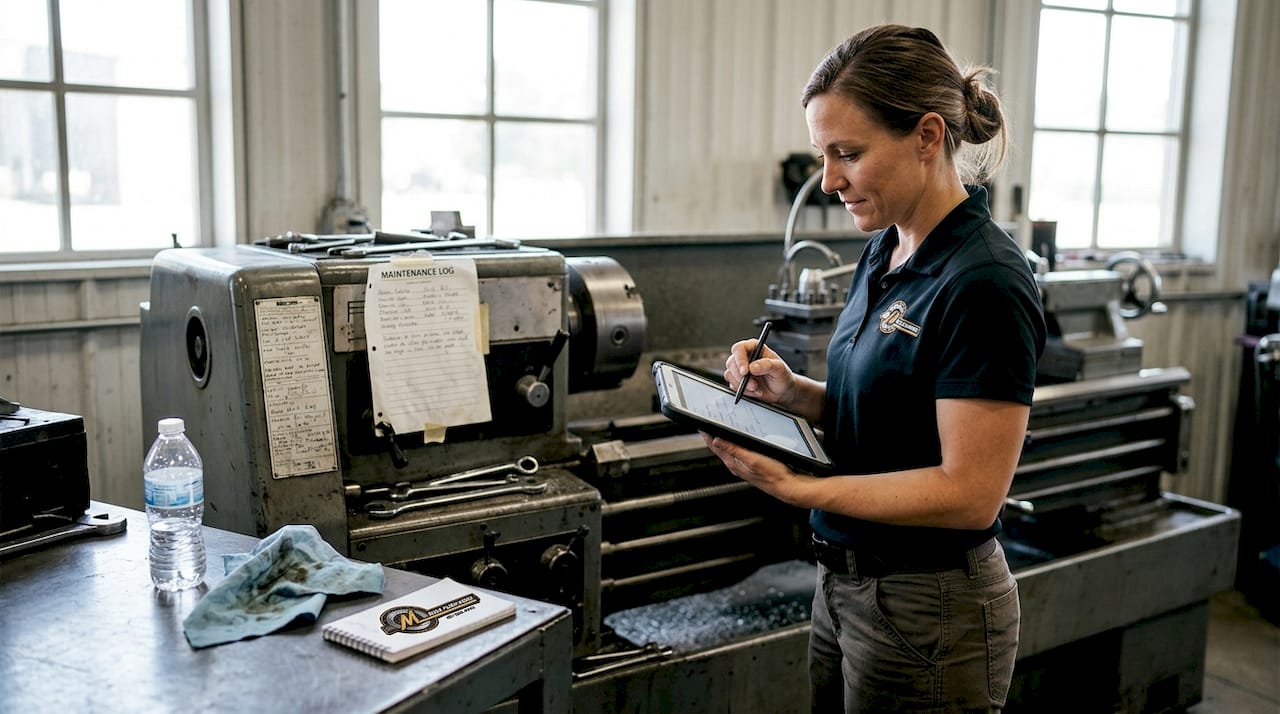
Sellers should also use the pre-auction checklist to ensure equipment documentation, maintenance records, and access logistics are ready before catalog production begins. Delays at this stage push back the entire timeline and extend carrying costs.
Typical recovery rates and value benchmarks
Setting realistic expectations around recovery rates prevents costly errors in financial planning. Empirical benchmarks show recovery rates of 28-35% of net book value for industrial equipment at auction, with used equipment typically selling for 50% or less of its original purchase price.
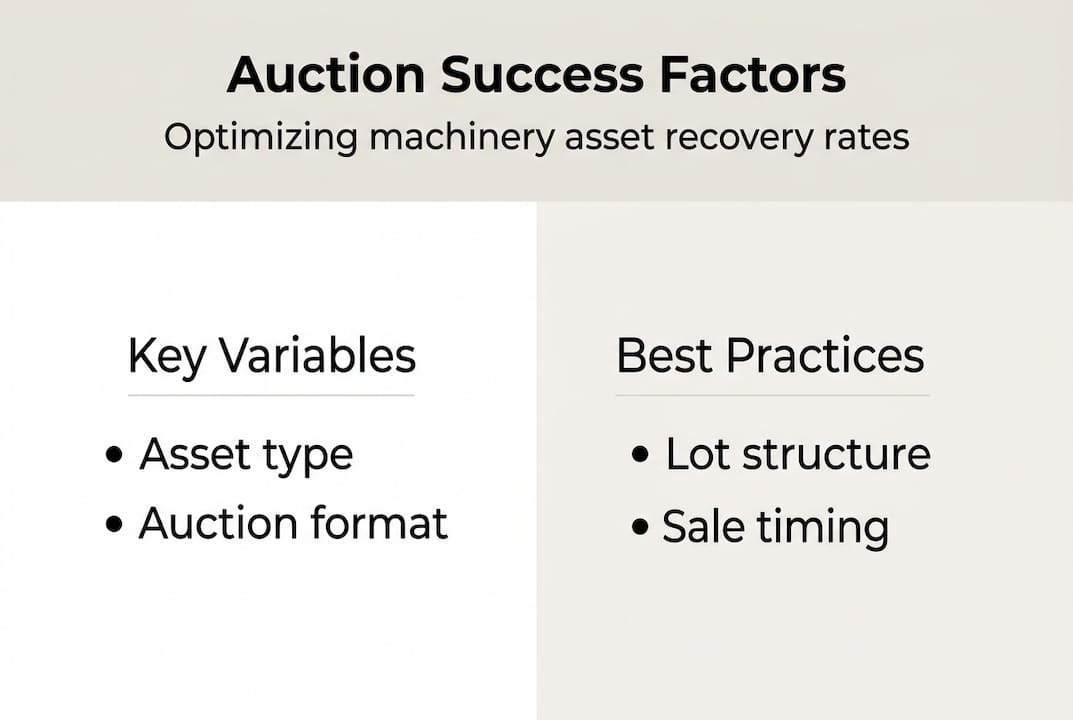
These figures are averages. Outcomes vary considerably based on four core variables:
| Variable | Effect on recovery |
|---|---|
| Asset type and demand | High-demand, versatile equipment recovers more |
| Equipment condition | Well-maintained assets command 15-30% premiums |
| Auction timing | End-of-quarter and seasonal cycles affect buyer activity |
| Lot structure | Strategic grouping can increase individual lot values |
Key benchmark: Hammer prices at auction typically run 15-25% below private retail values. That gap narrows significantly when marketing is aggressive and bidder participation is broad.
For sellers focused on maximizing asset recovery, the comparison point shouldn’t be new replacement cost. It should be what a realistic private sale would yield after accounting for time on market, broker fees, and carrying costs. When those factors are considered, auction recovery rates are frequently competitive with, and sometimes superior to, private sale outcomes.
Strategic auction lot structure also influences final returns. Grouping complementary equipment into logical lots can attract buyers who want operational packages rather than individual pieces, often producing stronger aggregate returns.
Risks, edge cases, and optimization strategies
The typical recovery rate is a useful baseline, but sophisticated sellers manage the variables that push outcomes above or below it. Edge cases involving reserves, staggered closing, disassembly costs, and specialized equipment regularly affect final results.
The most common risk categories include:
| Risk factor | Impact | Mitigation |
|---|---|---|
| Poorly set reserve prices | Assets pass without sale | Research comparable sales; set reserves at defensible minimums |
| Disassembly and rigging costs | Reduce buyer net value | Disclose costs upfront; price into reserve calculations |
| Low bidder turnout | Suppressed hammer prices | Invest in pre-auction marketing; target international buyers |
| Specialized equipment | Narrow buyer pool | Consider lotting with complementary assets or timing to industry cycles |
Reserve prices protect sellers from forced sales below acceptable thresholds, but setting them too high is a common mistake. Overprotective reserves reduce competitive pressure and can result in no-sale outcomes, which extend carrying costs and delay capital recovery.
Pro Tip: Review absentee bidding strategies before setting your reserve. Understanding how serious buyers operate remotely can help you calibrate the floor price to a level that attracts rather than discourages committed bidders.
Soft and staggered closings benefit sellers in most scenarios. They extend competitive tension and frequently drive final bids higher than static-close formats. Understanding auction channel pros and cons helps sellers select the format that best fits their asset mix and recovery goals.
Who should use machinery auctions and when?
Machinery auctions are not a universal solution, but they are the right tool for a clearly defined set of circumstances. Auctions provide a fast method for asset liquidation, especially for distressed or surplus equipment where time-to-cash matters.
The clearest triggers for pursuing an auction strategy include:
- Bankruptcy or restructuring: Court-supervised timelines demand speed and documented market-rate pricing.
- Equipment obsolescence: Assets being replaced by newer technology lose value over time. Delaying liquidation increases losses.
- Surplus inventory: Idle equipment generates carrying costs and ties up capital. Auctions convert it efficiently.
- Facility closure or consolidation: Complete plant dispositions benefit from the broad buyer exposure that auction marketing provides.
- Lender-directed sales: Banks and asset-based lenders often prefer auction outcomes for their transparency and documentation.
For faster asset disposition, most machinery auctions complete the full cycle, from listing to settlement, within 30-60 days. Private sales of comparable assets routinely take three to six months, accumulating carrying costs throughout.
There are scenarios where alternatives warrant consideration. Extremely high-value or one-of-a-kind assets may benefit from targeted private outreach before a public auction. Confidential transactions, such as those involving proprietary technology, may require sealed bid formats. Understanding why to choose industrial equipment auctions involves matching channel to asset type, not defaulting to one method. Real estate auction insights provide a useful parallel when facilities and equipment are being liquidated together.
Our perspective: What experienced sellers get right (and others miss)
After managing industrial asset dispositions across multiple market cycles, we’ve observed a consistent pattern: sellers who prepare thoroughly and market aggressively outperform those who treat the auction as a passive process.
The most impactful variable isn’t the auction format or the reserve price. It’s catalog quality. Buyers make decisions based on the information available to them. Clear photographs, accurate condition disclosures, and detailed specifications attract qualified bidders who are prepared to pay. Vague or incomplete catalog entries drive away serious buyers and leave the field to bargain hunters.
A second factor that separates strong outcomes from weak ones is timing. Sellers who align auction dates with seasonal buying cycles, industry events, or post-budget periods consistently see more competitive results. The maximize recovery insights principle here is simple: more prepared buyers mean more competitive bids.
Finally, experienced sellers treat reserve pricing as a strategic tool, not a protective reflex. Setting reserves at levels that encourage participation, rather than just preventing loss, creates the competitive environment where final hammer prices exceed expectations.
Get expert help with your next machinery auction
Navigating an industrial asset disposition involves more than listing equipment and waiting for bids. It requires precise catalog preparation, targeted marketing, and experienced management of auction timelines and logistics.
Maas Companies Inc. brings international reach and industry-specific marketing expertise to every assignment. Whether you’re managing a single-machine surplus or a complete facility liquidation, our team structures the disposition to maximize competitive exposure and recovery. Explore our selling process to understand how we approach each engagement, review our full auction services for a complete picture of what we offer, or browse active auction projects to see current opportunities in the market.
Frequently asked questions
How are reserve prices used in machinery auctions?
Reserves protect minimum prices by establishing a floor below which the auctioneer cannot sell, giving the seller control over the worst-case outcome. Setting reserves too high, however, can suppress competition and result in no-sale outcomes that extend carrying costs.
What are typical costs sellers should expect beyond buyer premiums?
Beyond the auctioneer’s seller fee, disassembly and rigging costs can exceed 10-25% of the hammer price, which buyers pay but which directly affect bidder willingness and net recovery. Sellers should disclose these costs clearly in the catalog.
How long does it usually take to liquidate equipment through auction?
Machinery auctions are a fast method for asset liquidation, and most complete the full cycle from listing to settlement within 30-60 days, significantly faster than private sale timelines. This speed reduces carrying costs and accelerates capital recovery.
Why do specialized machines often bring lower auction returns?
Niche or specialized equipment attracts fewer qualified bidders, which reduces competitive bidding pressure and ultimately lowers the final hammer price relative to more versatile assets. Strategic lotting with complementary equipment can partially offset this disadvantage.
Recommended
- Why companies auction machinery: maximize asset recovery | Blog | Insights on Asset Liquidation and Auction Trends
- Auction strategies for small businesses: Maximize asset recovery | Blog | Insights on Asset Liquidation and Auction Trends
- Auction absentee bidding: strategies for industrial equipment | Blog | Insights on Asset Liquidation and Auction Trends
- How Auctions Help Speed Up Industrial Asset Disposition | Blog | Insights on Asset Liquidation and Auction Trends