
Blog
Optimize plant equipment auction workflow: maximize recovery
TL;DR:
- Thorough preparation, including documentation and asset refurbishment, significantly increases auction recovery rates.
- A structured, repeatable workflow from inventory to post-sale ensures higher asset recovery and minimizes errors.
- Speed and efficiency in auction processes often yield better outcomes than extended private sales in distressed situations.
Disorganized asset liquidation is one of the fastest ways to erode value in a distressed portfolio. For private equity firms, lenders, and distressed asset managers, a poorly run plant equipment auction can mean recovering 20 to 30 percentage points less than a structured, well-prepared sale. The difference between a chaotic sell-off and a high-recovery event rarely comes down to luck. It comes down to process. This article walks through a proven, step-by-step workflow for plant equipment auctions, covering preparation, execution, post-sale reconciliation, and performance benchmarking, so you can protect asset value and meet stakeholder expectations.
Table of Contents
- What you need before starting an equipment auction
- Step-by-step plant equipment auction workflow
- Troubleshooting and common mistakes in plant equipment auctions
- Measuring auction success and post-sale actions
- The uncomfortable truth: Why speed beats max value for distressed asset sales
- Unlock more value with expert auction support
- Frequently asked questions
Key Takeaways
| Point | Details |
|---|---|
| Preparation is crucial | Proper documentation and asset preparation significantly increase auction recovery rates. |
| Structured workflow maximizes ROI | Following a step-by-step process can boost returns from 30% to over 50% of fair market value. |
| Avoid common pitfalls | Mistakes like incomplete records or rushed sales can reduce proceeds by up to 25%. |
| Benchmark your results | Compare auction outcomes with industry standards to validate your success. |
What you need before starting an equipment auction
To secure better auction outcomes, begin with thorough foundation and asset prep. Rushing into an auction without proper groundwork is one of the most expensive mistakes in industrial asset disposition. The preparation phase sets the ceiling on what you can realistically recover.
Start with documentation. Every asset moving through a plant equipment auction needs verified title, confirmed lien releases, and current compliance records. Missing or clouded titles delay the sale, reduce buyer confidence, and can eliminate competitive bidding entirely. Use a pre-auction checklist to track each document against each asset lot before marketing begins.
Cataloging is the next critical step. Accurate asset records, including make, model, serial number, age, operating condition, and high-resolution photographs, directly influence buyer participation. Incomplete descriptions discourage remote buyers and limit the reach of online bidding platforms, which now represent a significant share of auction volume.
Here is a summary of key preparatory tasks organized by priority:
- Title and lien verification: Confirm clear ownership for all lots before listing
- Compliance documentation: Gather environmental, safety, and operational records
- Asset cataloging: Create detailed inventory with photos and condition reports
- Refurbishment decisions: Clean, service, or make minor repairs where ROI is positive
- Platform and auctioneer selection: Match the auction format to the asset class and buyer pool
| Preparation activity | Impact on recovery | Typical time required |
|---|---|---|
| Title and lien clearance | High | 1 to 3 weeks |
| Professional photography | Moderate to high | 1 to 3 days |
| Asset refurbishment | Moderate to high | 1 to 4 weeks |
| Detailed catalog creation | High | 3 to 7 days |
| Platform selection | Moderate | 3 to 5 days |
As the maximize asset recovery guide explains, preparation boosts ROI and is critical for maximizing asset value. Refurbishment, accurate documentation, and professional presentation each contribute to measurable improvements in final sale prices.
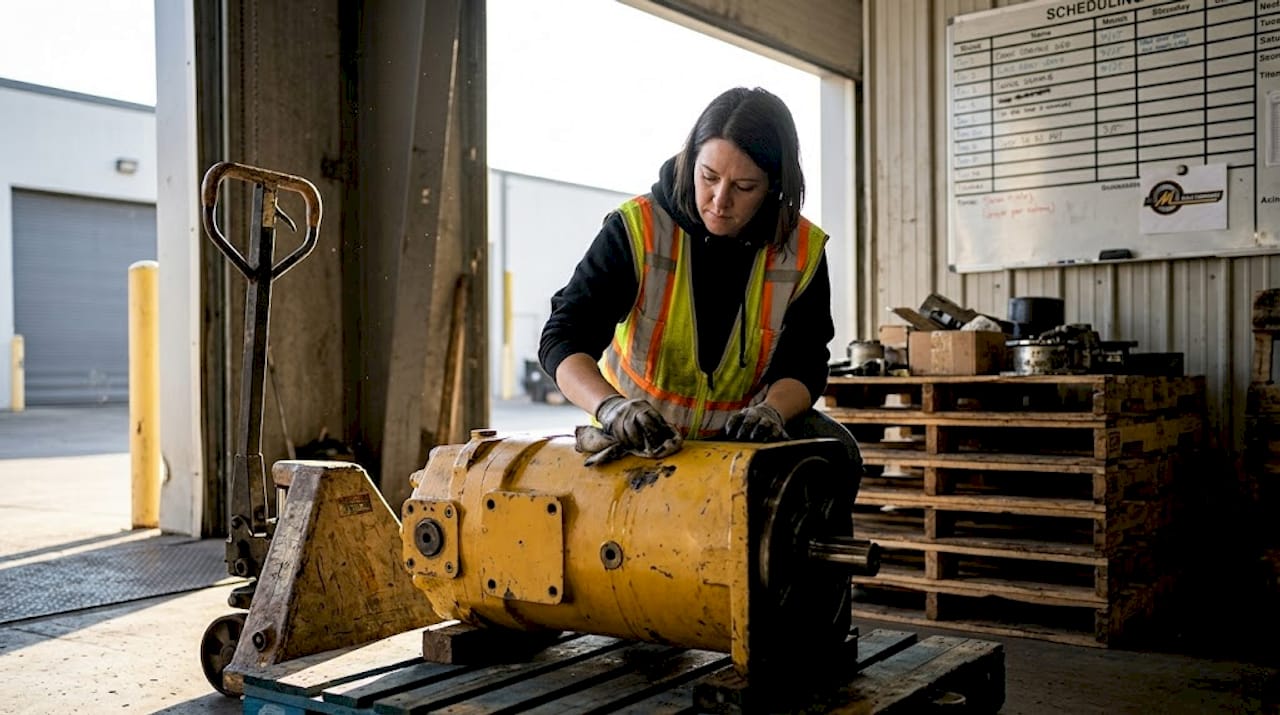
Pro Tip: Structured preparation consistently boosts recovery rates by 10 to 20% compared to forced, last-minute liquidation. The time invested upfront reduces carrying costs and increases the number of qualified bidders at the sale.
Step-by-step plant equipment auction workflow
Once the groundwork is laid, follow a proven sequence to streamline the auction process. A clear, repeatable workflow reduces errors, keeps timelines on track, and prevents the kind of last-minute scrambles that suppress final bids.
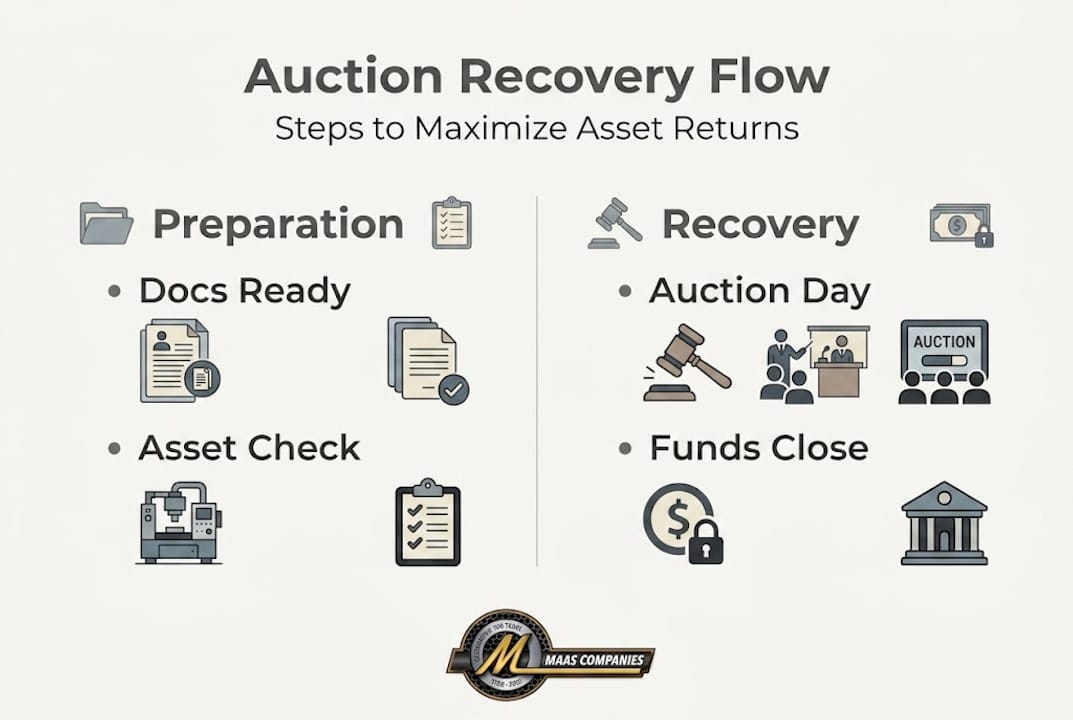
- Inventory and asset verification: Confirm the full asset list, cross-check against property records, and flag any items with title or compliance issues.
- Asset preparation: Execute refurbishment decisions, complete professional photography, and finalize catalog descriptions for every lot.
- Marketing and outreach: Launch the advertising campaign across relevant industry channels, buyer databases, and digital platforms. Target buyers by asset class and geography.
- Sale event management: Run the auction, whether online, onsite, or hybrid, with clear lot sequencing and bidder support in place.
- Post-sale reconciliation: Collect payments, transfer titles, release assets to buyers, and close out all financial and compliance documentation.
Choosing between online, onsite, and hybrid formats matters significantly for recovery. Choosing the right auction format depends on asset type, buyer geography, and timeline constraints.
| Auction format | Buyer reach | Best for | Timeline |
|---|---|---|---|
| Online only | Broadest | Portable equipment, smaller lots | 2 to 4 weeks |
| Onsite only | Regional | Heavy machinery, plant-wide sales | 3 to 6 weeks |
| Hybrid | Broadest plus local | Large plants, mixed asset types | 4 to 8 weeks |
Responsibility assignment is non-negotiable. Designate a project lead for each workflow phase, confirm handoff points in writing, and build contingency time into every milestone. Absentee bidding strategies can extend participation beyond the physical sale event, which is especially valuable for specialized or high-value equipment.
Auction recovery typically lands between 30 and 65% of fair market value, with structured preparation and private sale components pushing results toward the higher end. Understanding why companies auction machinery provides useful context for setting realistic recovery targets and communicating them to stakeholders.
For reference, fabrication workflow parallels in manufacturing demonstrate how sequencing and defined handoffs directly reduce costly rework. The same logic applies here.
Pro Tip: Stagger asset lots strategically during the bidding event. Leading with mid-range assets warms up the bidder pool before high-value lots hit the block, which frequently drives stronger competitive bidding and higher hammer prices.
Troubleshooting and common mistakes in plant equipment auctions
Even a well-laid process can falter. Here is how to sidestep common auction setbacks before they cost you recovery value.
The most frequent mistakes in plant equipment auctions are preventable with adequate planning:
- Incomplete paperwork: Missing titles, lien releases, or compliance records delay sales and erode buyer confidence
- Poor marketing reach: Underinvesting in advertising limits the buyer pool and reduces competitive tension
- Rushed timelines: Compressing the auction timeline reduces preparation quality and bidder awareness
- Unclear sale terms: Ambiguous buyer terms, removal schedules, or payment windows create disputes that delay closing
- Inadequate asset descriptions: Vague or inaccurate catalog entries drive away serious buyers, particularly remote bidders
To troubleshoot these issues systematically, assign a dedicated project lead who owns the full workflow from inventory to post-sale closeout. That person should conduct a documentation audit no later than two weeks before the sale event, verifying every asset lot against the catalog and compliance records.
“Preparation is the most controllable lever for better returns. Neglecting it lowers auction proceeds by up to 25%.”
Specialized equipment consistently recovers less than standard industrial assets, often falling below 50% of fair market value, particularly when documentation is incomplete or marketing is too narrow. For these asset classes, extend the marketing window, target industry-specific buyer databases, and consider reserve pricing to protect against distressed bids.
Knowing how to avoid equipment auction delays before they occur is as important as executing the sale itself. Delays compound carrying costs and reduce the urgency that drives competitive bidding. Reviewing your approach to maximizing auction lot value during the troubleshooting phase can also surface opportunities to regroup or resequence lots for better results.
Measuring auction success and post-sale actions
After the gavel falls, focus shifts to validation and critical post-sale processes. A successful auction is not complete at the close of bidding. The post-sale phase determines whether financial, legal, and operational obligations are properly met.
Start by calculating both gross and net recovery. Gross recovery is the total auction proceeds before fees, commissions, and costs. Net recovery subtracts those costs to produce the figure that matters most for portfolio reporting.
| Metric | Definition | Target benchmark |
|---|---|---|
| Gross recovery rate | Total proceeds divided by FMV | 30% to 65% of FMV |
| Net recovery rate | Gross proceeds minus all costs | 25% to 55% of FMV |
| Net book value recovery | Net proceeds divided by NBV | 28% to 35% of NBV |
| Days to close | Sale date to final funds transfer | 5 to 15 business days |
Recovery benchmarks for plant, property, and equipment (PPE) typically fall between 28 and 35% of net book value, with auction events recovering 30 to 65% of fair market value depending on preparation quality and market conditions.
The top three post-sale priorities are:
- Funds transfer and payment reconciliation: Confirm all buyer payments are received and posted before releasing any assets. Resolve payment disputes immediately.
- Title and ownership documentation: Execute title transfers for every lot sold. Confirm lien releases are filed and delivered to buyers as required.
- Regulatory and compliance reporting: Complete any environmental, safety, or financial reporting obligations tied to the asset disposition.
Benchmark your results against industry standards to assess performance and identify where future sales can improve. Reviewing options for speedy asset disposition after each event supports continuous improvement across your auction program.
The uncomfortable truth: Why speed beats max value for distressed asset sales
The industry default assumption is that holding out longer produces better prices. In distressed asset scenarios, that assumption is almost always wrong.
Industrial equipment depreciates whether it moves or not. Every month an asset sits unsold generates carrying costs: insurance, security, facility rent, and maintenance. Those costs accumulate against whatever premium you might eventually capture by waiting. In most cases, a well-organized, timely auction recovers more total value than a prolonged private sale effort, even if the hammer prices look similar on paper.
What we have observed across complex plant liquidations is that the orderly, structured process consistently outperforms the last-minute desperation sale. Buyers pay more when they have adequate time to inspect, finance, and plan for removal. A rushed timeline compresses all of that.
Speed and structure are not opposites. A repeatable auction workflow creates certainty, which is what buyers, lenders, and courts all need in a distressed situation. Navigating complex asset sales requires knowing when to move decisively rather than waiting for a higher bid that may never arrive.
Pro Tip: Build repeatable workflows now, before a distressed situation forces your hand. Firms that have documented processes in place consistently recover more than those improvising under deadline pressure.
Unlock more value with expert auction support
Executing a high-recovery plant equipment auction requires more than a checklist. It requires deep buyer networks, aggressive marketing, and hands-on project management across every workflow phase.
Maas Companies brings decades of international experience turning complex industrial liquidations into structured, high-recovery auction events. Whether you are managing a single-facility sale or a multi-site portfolio disposition, our team provides the technical knowledge, marketing reach, and auction expertise your stakeholders expect. If you are ready to sell your industrial equipment or want to learn more about our specialized auction services, connect with our team today to build a workflow that delivers measurable results.
Frequently asked questions
What is a plant equipment auction workflow?
A plant equipment auction workflow is a step-by-step process for preparing, marketing, and selling industrial assets through auction to maximize value and compliance. Structured workflows are proven to boost ROI and asset recovery rates.
How much value can I expect to recover from a plant equipment auction?
You can typically recover 30 to 65% of fair market value, with proper preparation and a solid workflow improving outcomes toward the higher end. Higher recovery is achievable with preparation or a private sale component layered into the process.
What preparation steps boost asset recovery in auctions?
Organizing titles and documentation, asset refurbishment, professional photography, and clear lot descriptions all increase auction returns. Refurbishment and documentation are the two highest-impact preparation activities for most industrial asset classes.
What are the most common mistakes in plant equipment auctions?
The most common mistakes include incomplete paperwork, poor asset marketing, unrealistic timelines, and unclear bidding terms. Poor preparation and documentation are the leading factors that decrease final auction returns.
How do I measure auction success after the sale?
Compare the auction’s net recovery against net book and market values, confirm clean title transfer, and complete all closing financial actions. Recovery benchmarks of 28 to 35% of net book value are the standard reference point for plant and equipment auction performance.
Recommended
- Avoid Surprises During a Biomass Plant Asset Sale | Blog | Insights on Asset Liquidation and Auction Trends
- Auction strategies for small businesses: Maximize asset recovery | Blog | Insights on Asset Liquidation and Auction Trends
- How Auctions Help Speed Up Industrial Asset Disposition | Blog | Insights on Asset Liquidation and Auction Trends
- Why companies auction machinery: maximize asset recovery | Blog | Insights on Asset Liquidation and Auction Trends
- Maximize ROI Archives - Alpha Solar Solutions, LLC
- Smart cost-saving strategies for UK garages in 2026